Solving the 'Last-Mile' of AgTech: How NearLink is Digitizing Smart Agriculture
In the conversation around smart agriculture, we frequently highlight the grandest innovations—autonomous combines guided by satellites, fields monitored by remote-sensing AI, and sprawling smart greenhouses.
But there is a silent roadblock that has plagued the Internet of Things (IoT) in farming for over a decade: the "last-mile" connectivity bottleneck.
In an environment characterized by deep soil, heavy moisture, dense leaf canopies, and concrete processing centers, traditional wireless signals like Bluetooth and Wi-Fi crumble.
What is the "Last-Mile" Challenge in Smart Farms?
The "last-mile" refers to the final, hyper-local link where data moves from physical objects—like an individual plant, a specific square meter of soil, or a plastic transport crate—to a farm's central gateway.
Historically, this has failed due to three main issues:
*The Battery Nightmare: Maintaining thousands of soil sensors across acres of land is impossible if the batteries drain every six months.
*Signal Attenuation: Water blocks radio frequencies. A field full of wet, dew-covered crops acts like a giant jamming wall for classic Bluetooth or Wi-Fi.
Massive Density Congestion: When a facility tries to scan or track hundreds of supply-chain crates at a single conveyor point, traditional networks freeze up under the sheer volume of concurrent connections.
How NearLink Rewrites the Rules
NearLink is a short-range wireless standard designed from scratch to blend the wide data capacity of Wi-Fi with the extreme energy efficiency of Bluetooth, supercharged with industrial-grade reliability.
Here is exactly how it transforms end-to-end digitalization in modern farming:
1. Real-Time Tracking of Digitalized Inventory
As seen in industrial logistics hubs, NearLink supports massive multi-device tracking. Rather than scanning barcode stickers one by one on a batch of harvested produce, a single industrial handheld reader can ping hundreds of NearLink-enabled smart tags simultaneously. This provides flawless, instantaneous end-to-end trace-ability from the precise greenhouse row to the supermarket shelf.
2. Power-Sipping Sensor Mesh Networks
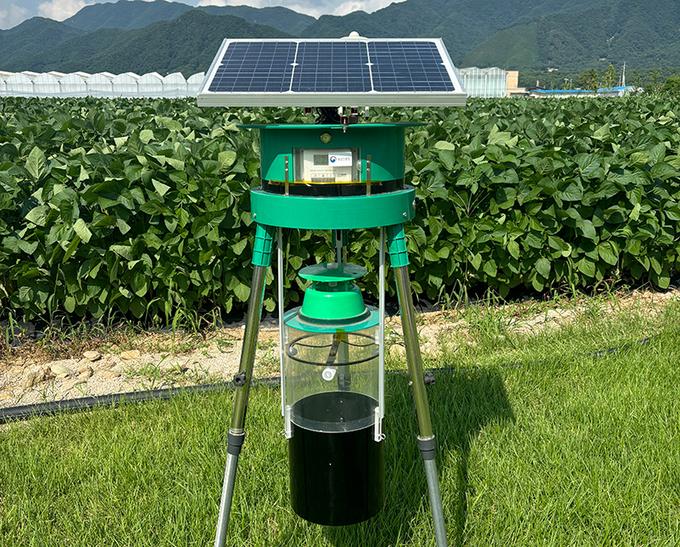
NearLink utilizes advanced directional sleep cycles. Sensors deep in the field can monitor soil NPK (nitrogen, phosphorus, potassium) or moisture levels while consuming almost zero power.
They wake up in microseconds, burst-transmit their data packets securely via high-speed connection, and go back to sleep. This extends sensor lifespan to several years, drastically lowering operational maintenance.
3. Bulletproof Intelligent Greenhouses
Inside modern vertical farms and greenhouses, metal frameworks and high humidity creates terrible wireless reflection. NearLink uses robust error-correcting mechanisms (such as Polar Coding, natively adapted from 5G cellular tech) to slice through interference. If an automated humidity sensor flags a sudden spike, it can instantly communicate with a NearLink misting valve or ventilation exhaust with sub-millisecond latency.
The Future: True End-to-End Precision Farming
By addressing the last-mile challenge, NearLink ensures that data is no longer siloed. A farm manager can map an exact micro-climate shift in Greenhouse Segment B, track how it impacted the harvest quality of that specific batch, watch it pass flawlessly through automated sorting, and guarantee its cold-chain freshness all the way to delivery.
Thanks to ecosystem innovations driven by companies like CDEBYTE, NearLink is proving that the greenest future for agriculture relies on the smartest, lowest-power connections.