The Power of Grassroots Innovation: How Farmer Kamlesh is Revolutionizing Agriculture
Innovation isn't always born in high-tech laboratories or silicon valleys; sometimes, it emerges from the dusty fields of rural India, fueled by necessity and a "never-give-up" spirit.
The story of Kamlesh, a humble farmer who turned his personal struggle into a mechanical solution, is a powerful reminder that real-world problems require real-world solutions.
The Struggle: A Daily Battle in the Fields
For years, Kamlesh faced the same grueling reality as millions of other farmers. Spraying pesticides wasn't just a chore; it was a physical and financial burden. He identified three critical pain points that the modern market failed to address
Physical Exhaustion: Carrying heavy pesticide tanks on one’s back for hours leads to chronic fatigue and long-term joint pain.
Health Risks:Constant, direct exposure to chemical mists during manual spraying poses severe respiratory and skin health risks.
The Price Gap: While advanced machinery exists, the high costs of fuel, electricity, and the machines themselves make them inaccessible to small-scale farmers.
The Solution: Innovation Through "Jugaad"
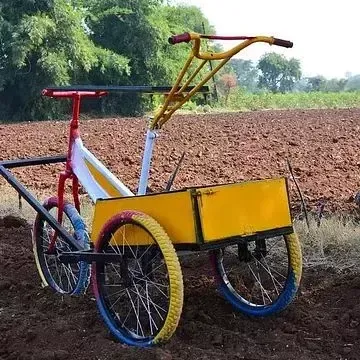
Instead of waiting for a corporate solution, Kamlesh relied on his practical knowledge and creative thinking—often called jugaad in India. He developed a Cycle-Based Pesticide Spraying Machine designed specifically for the grassroots level.
What makes his invention a game-changer?
*Manual Power : It operates without fuel or electricity, keeping running costs at zero.
*Ergonomic Design: By mounting the system on a cycle frame, the weight is shifted from the farmer's back to the wheels.
* Efficiency : The machine covers more ground in less time, ensuring an even distribution of pesticides across the crop.
* Safety First: The design increases the distance between the farmer and the chemical spray, significantly reducing health hazards.
More Than Just a Product: A Story of Grit
When Kamlesh shared his invention on a national platform, it wasn't just the mechanics that impressed the audience—it was his honesty. He didn't come with polished business jargon; he came with his struggles, his poverty, and his unwavering determination.
The "Sharks" and viewers alike were moved because Kamlesh represents the heart of Indian agriculture. He proved that *innovation doesn't require an elite education; it requires a deep understanding of the problem.*
Why This Matters for the Future of Farming
Kamlesh’s machine is a perfect example of Grassroots Innovation. It bridges the gap between high-end technology and the ground reality of small-scale farming.
* Affordability : It is priced for the farmer who counts every rupee.
*Usability : It is easy to maintain and repair in a village setting.
*Impact : It saves time, energy, and labor costs, allowing farmers to focus on growth rather than just survival.
The Takeaway: Lessons in Impact
The journey of this cycle-sprayer offers a vital lesson for all of us. Big ideas don't always come from big cities. Whether you are a student, an entrepreneur, or a fellow farmer, remember:
" *Understanding the problem deeply is more important than having the most expensive technology."*
Even with limited resources, if you have the heart to solve a problem for your community, you can create a lasting impact. Kamlesh isn't just a businessman; he is a visionary who proved that a simple cycle can drive a massive change in the agricultural landscape.
SOURCE:Better India