Mechanizing the Harvest: A Guide to Sugarcane Lifting Mechanisms
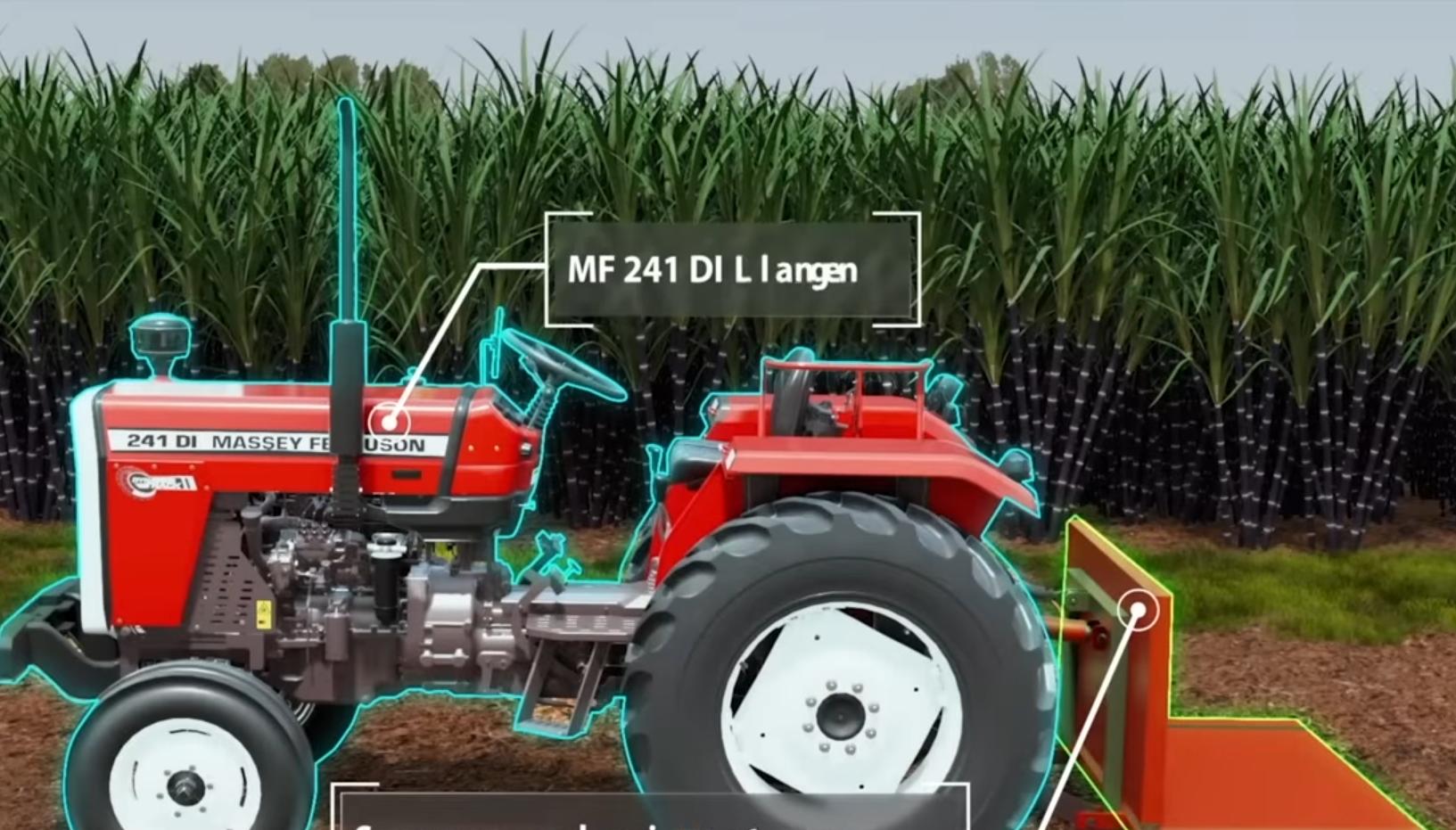
*The sugarcane harvest has long been one of the most labor-intensive periods in the agricultural calendar. *Traditionally, loading heavy bundles of cane onto trolleys required a massive workforce and hours of back-breaking manual labor. However, with the rise of modern agricultural engineering—much like the innovations showcased in the Massey DynaStar series—mechanization is changing the game.
Whether you are a student exploring agricultural tech or a farmer looking to optimize your workflow, understanding the different lifting mechanisms is key to increasing efficiency.
1. The Hydraulic Grabber :
The Field Favorite
The most widely used tool in modern sugarcane farming is the Hydraulic Grabber. Usually mounted on a 50–60 HP tractor, this mechanism acts like a giant mechanical arm.
*How it works: It utilizes a heavy-duty claw powered by dual hydraulic cylinders.
*The Advantage: It can pick up bundles weighing between 500 kg and 1,000 kg in a single go. With a 360^\circ swivel, an operator can load a full trolley in less than 30 minutes—a task that would otherwise take a dozen laborers several hours.
2. Chain and Sprocket Conveyors:
For Continuous Flow
While grabbers handle bulk bundles, conveyor elevators are designed for a steady stream of material. This mechanism is often found on smaller loaders or integrated into "stubble-shaving" equipment.
*How it works:A series of metal hooks or "slats" are attached to a chain drive. As the chain moves up an inclined track, it catches the cane stalks and carries them vertically to be dropped into a waiting truck.
*The Advantage: It provides a uniform loading process, which is excellent for transport vehicles that require even weight distribution.
3. Front-End Loaders:
Power and Stability
For those using high-torque tractors (like the 4WD DynaTrack models), a Front-End Fork is a powerful option. Instead of a standard bucket, a specialized sugarcane fork is attached to the front loader arms.
*How it works: The tractor uses its forward momentum to push into a pile of cane, lifts it using the front hydraulics, and tilts the fork to dump the load.
*The Advantage: This setup is incredibly fast for clearing large piles in open fields, though it requires a solid counterweight at the rear for safety.
The Future of Sugarcane Logistics
As agricultural technology continues to evolve, we are seeing a shift toward smart lifting systems that reduce fuel consumption and soil compaction. From automated "butt-lifters" in combine harvesters to the student-led innovations we see in national contests, the goal remains the same:to make farming smarter, faster, and more sustainable.
SOURCE:Massey Ferguson India