Robots in the Granary: How AI is Conquering Agriculture’s Most Dangerous Job
When we think of farming innovations, we usually imagine GPS-guided tractors cruising through lush fields or drones scouting crops from the sky. But some of the most groundbreaking advancements in modern agriculture are happening completely out of sight—deep inside massive, dark grain warehouses.
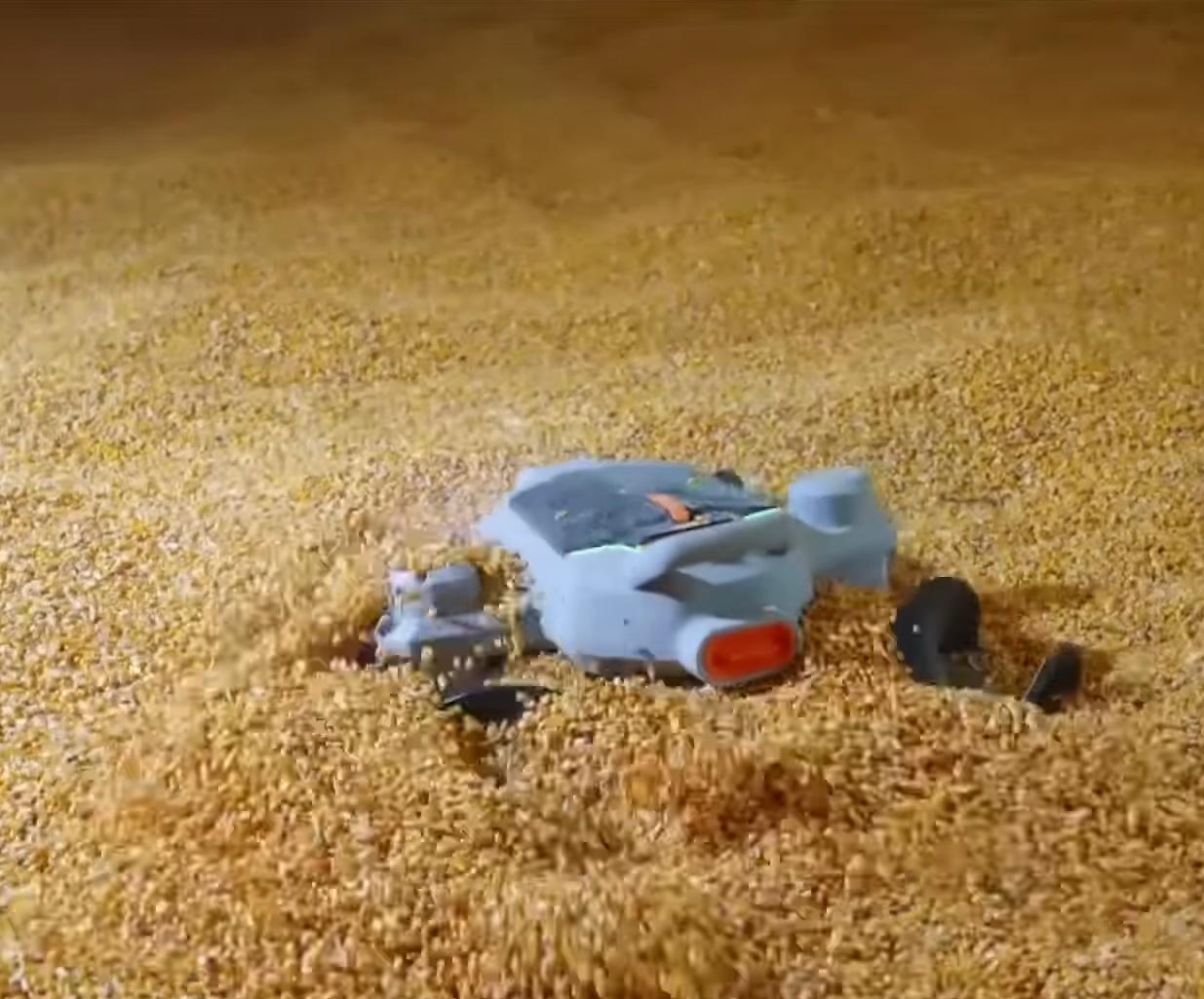
Recently, a fascinating piece of AgriTech has taken social media by storm: China has deployed its first intelligent grain-leveling and inspection robots inside high-risk granaries.
The Silent Danger Inside Grain Warehouses
Storing food for millions of people is a monumental task, but maintaining a granary is surprisingly hazardous. In fact, large-scale grain storage facilities are among the most dangerous work environments on Earth due to several key factors:
The "Quicksand" Effect: Grain piles are incredibly unstable. If a worker steps onto a hollow spot or a shifting pile, they can sink and suffocate within seconds—a tragic accident known as grain engulfment.
Extreme Environments: To prevent grain from spoiling, warehouses are tightly sealed, leading to pockets of extreme heat, low oxygen levels, and toxic gas buildup.
The Invisible Threat of Dust: Thick grain dust isn't just tough on the lungs; it is highly combustible. A single spark in a dusty, poorly ventilated silo can trigger a devastating explosion.
Traditionally, human workers had to walk these unstable surfaces, manually leveling the grain cones to ensure even airflow and checking for signs of spoilage.
Enter the AI Grain Robot: How It Works
The newly introduced AI robot is specifically designed to eliminate these human risks while skyrocketing operational efficiency. Equipped with an innovative spiral power system and a heavy-duty, dust-resistant chassis, this machine glides effortlessly over loose grain piles like a mini-tank on snow.
Here is how the technology works to protect both the grain and the people:
1. Centimeter-Level Navigation
Using a combination of advanced sensors, cameras, and autonomous navigation algorithms, the robot maps out the interior of the warehouse in real time. It can easily detect deep slopes, soft spots, and potential collapse zones without getting stuck.
2. High-Speed Surface Leveling
When grain is dumped into a warehouse, it naturally forms uneven cones. If left un-leveled, air cannot circulate properly, leading to moisture buildup and rot. This AI marvel can cover roughly 1,400 square meters per hour, spreading the grain perfectly flat. What used to take a human crew three grueling days to complete is now wrapped up by a single robot in just one day.
3. Continuous Smart Monitoring
Packed with thermal imaging, humidity sensors, and AI-driven computer vision, the robot acts as a 24/7 security guard for food security. It tracks internal temperature spikes (which indicate mold or insect activity), monitors moisture levels, and flags potential spoilage before it ruins tons of valuable harvest.
What This Means for the Future of Farming
While this high-tech machinery is currently being deployed in massive industrial reserve depots, it sets a powerful precedent for the entire agricultural supply chain.
As technology scales down and becomes more accessible, smart automated tracking and maintenance will help reduce post-harvest losses significantly. For a global agricultural landscape striving for food security, keeping our harvested grain safe, dry, and pest-free—without risking human lives—is a massive win.
The future of agriculture isn't just about growing more; it's about managing what we grow smarter. And right now, AI is proving to be a farmer's best ally from the field all the way to the silo.