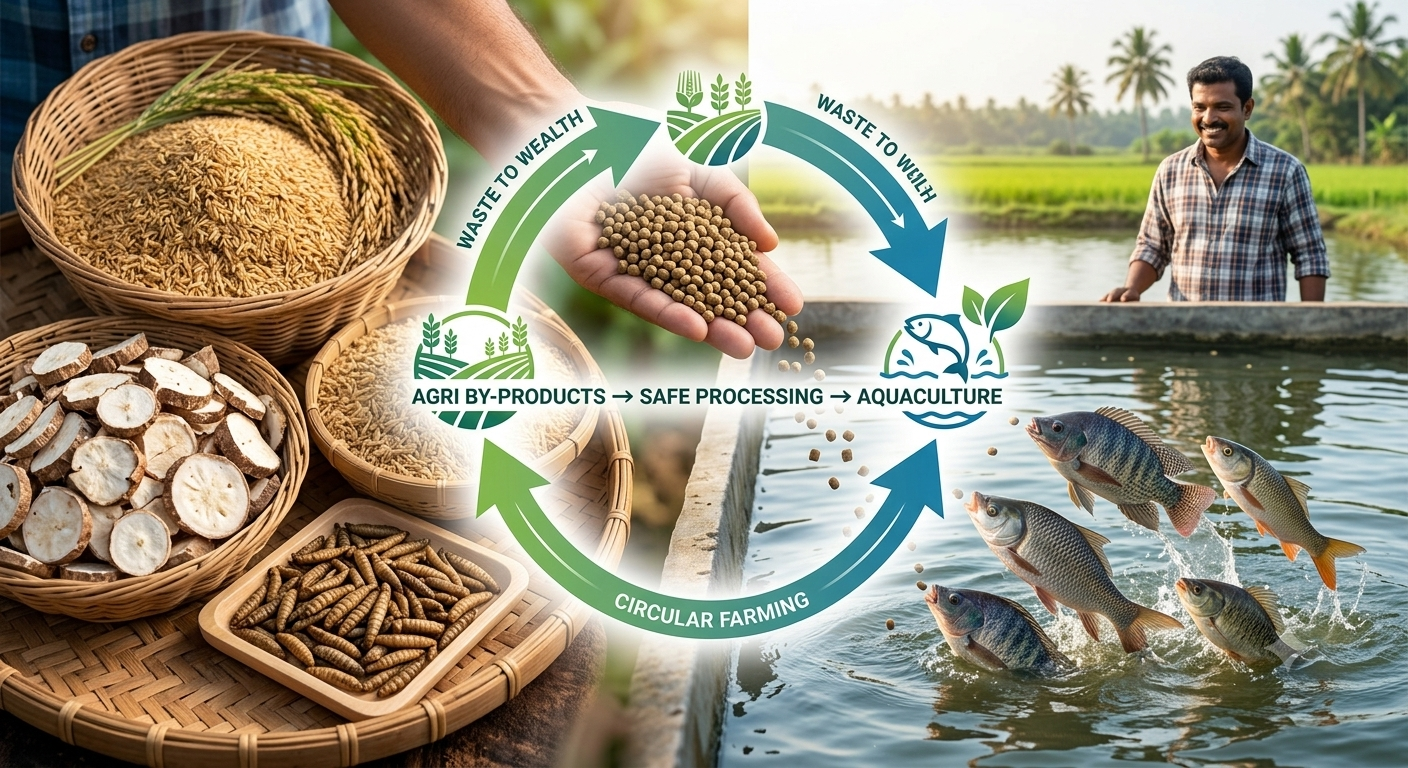
Agricultural and agro-industrial waste disposal is a growing concern for crop growers, while fish farmers face high expenses on commercial feeds. Converting farm by-products into nutritionally balanced fish feed creates a win-win "Waste to Wealth" opportunity for both sectors.
Key By-Products Suitable for Processing:
-
Rice bran and tapioca waste
-
Oil cakes and brewer’s spent grain
-
Black Soldier Fly (BSF) larvae and silkworm pupae meal
Crucial Note: Do Not Feed Raw Waste Directly Agricultural waste should never be fed raw to fish. Raw waste can pollute pond water, cause toxicity, and fail to provide required nutrient levels. Proper processing, safety checks, exact formulation, and pelleting are required to produce safe, high-quality feed matched to fish nutritional needs.
The 5-Step Production Flow:
-
Selection of suitable agricultural by-products
-
Safe processing and grinding
-
Species-specific balanced formulation
-
Pellet making and drying
-
Controlled feeding in aquaculture ponds
Key Benefits (Based on ICAR-CIFRI Field Demonstrations):
-
20–30% reduction in total feed costs
-
15–20% increase in total fish production
-
75–100% replacement of costly commercial fish meal in select formulations
-
Evaluated and proven for popular species like Catla, Rohu, Mrigal, Tilapia, Pangasius, and various ornamental fish
Best Practices for Farmers:
-
Formulate feed based on the specific nutritional requirements of the fish species being cultivated.
-
Ensure proper drying and storage of finished feed pellets to prevent fungal growth.
-
Consult local aquaculture experts or extension personnel before formulating feeds on a commercial scale.