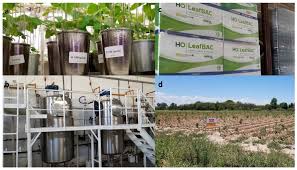
Innovations in Agricultural Bio-Inputs: Commercial Products Developed in Argentina and Brazil
The global agricultural sector faces an unprecedented double bind. Farmers must dramatically scale up food production to feed a growing population while simultaneously reducing their reliance on synthetic fertilizers and chemical pesticides due to environmental regulations and volatile chemical markets. Standing at the forefront of this shift is South America. Specifically, Argentina and Brazil have emerged as the premier global testing grounds and commercial leaders for agricultural bio-inputs—products derived from microbial, plant, or animal origins designed to nourish crops and defend against pests.
Driven by deep collaboration between public research institutions and an agile domestic private sector, both nations have successfully transitioned biological solutions from alternative, niche organic farms into mainstream, multi-million-hectare conventional farming operations.
The Evolution of Nitrogen-Fixing Inoculants
Large-scale commercial adoption of bio-inputs across the Southern Cone began with Biological Nitrogen Fixation (BNF). For decades, both nations leveraged the symbiotic relationship between legumes and soil bacteria to cut down on expensive nitrogen fertilizers. The bedrock of this industry is the bacteria Bradyrhizobium japonicum, applied directly to soybean seeds.
Over generations of technological refinement, what started as simple bacterial cultures has evolved into highly sophisticated commercial platforms. Companies in Argentina and Brazil have mastered "osmoprotection"—a formulation technology that allows bacteria to survive on dry seed surfaces for extended periods before planting. Furthermore, modern inoculants integrate bio-inductors, which are chemical signaling molecules that pre-activate communication between the plant root and the micro-organism, accelerating root nodulation.
In terms of specific commercial reach, companies like the Argentine-founded global leader Rizobacter have commercialized advanced inoculation systems through their specialized liquid platforms. In Brazil, public-private alliances have allowed domestic firms to bring highly efficient products to market, capitalizing on elite bacterial strains isolated by state research centers like EMBRAPA in Brazil and INTA in Argentina. Nearly 85% of Brazil’s massive soybean acreage utilizes biological inoculants, reflecting the immense commercial maturity of this sector.
Beyond soybeans, commercial innovations have expanded significantly into grasses, cereals, and vegetables. Products containing Azospirillum brasilense are widely commercialized for corn and wheat crops to promote root elongation and atmospheric nitrogen assimilation. For instance, commercial lines such as Azoscoop (developed by Coopavel and EMBRAPA) and AZOTROP (by Biotrop) provide farmers with highly reliable bio-fertilizers and bio-stimulants for corn, rice, and pastures.
Next-Generation Nutrient Management: Phosphorus Biosolubilizers
The most recent commercial breakthroughs extend beyond nitrogen fixation into the mobilization of locked soil nutrients, particularly phosphorus. Traditional chemical phosphorus fertilizers bond tightly with tropical soils, rendering them unavailable to plants and forcing farmers to over-apply chemicals.
To resolve this, companies have commercialized phosphorus solubilizing inoculants based on specialized bacterial blends. A standout example is the commercial product BiomaPhos, which utilizes specific Bacillus strains to break the chemical bonds holding phosphorus in the soil. This allows crops to tap into historical reserves of residual fertilizer already trapped in the ground.
The financial upside for growers is substantial. Field data indicates that utilizing these dual-strain Bacillus inoculants drastically lowers per-hectare expenditure compared to traditional chemical alternatives, offering a massive cushion against fluctuating international fertilizer prices while reducing the carbon footprint associated with heavy chemical synthesis.
The Rapid Expansion of Biodefensives and Biopesticides
As crop pathogens and destructive insects build rapid resistance to traditional chemical molecules, biocontrol agents—including biofungicides, bionematicides, and bioinsecticides—have witnessed exponential market growth.
In Brazil and Argentina, commercial formulations utilizing the fungal genus Trichoderma are widely distributed to combat soil-borne pathogens like Fusarium and Rhizoctonia. For insect management, products formulated with Bacillus thuringiensis (Bt) and specific Baculoviruses are deployed on an industrial scale to suppress caterpillar populations in soybean and cotton fields, cleanly substituting for legacy carbamate insecticides.
Furthermore, the industry is entering the commercial frontier of phytovaccines and bio-herbicides. Phytovaccines utilize microbial fragments or elicitors to trigger the crop’s systemic acquired resistance (SAR), essentially inoculating the plant's immune system against impending fungal and bacterial blights before they strike. Concurrently, bio-herbicides are being designed to suppress weeds organically, mitigating the herbicide-resistant weed epidemic plaguing conventional no-till farming systems.
Regulatory Transformations and "On-Farm" Biofactories
The rapid commercialization of bio-inputs in South America is heavily tied to pioneering legislative action. In Brazil, the implementation of landmark regulations—such as Law No. 15,070 passed in December 2024—has established a highly structured federal framework for the production, registration, and use of biologicals.
This regulatory environment explicitly addresses two major paths: highly controlled industrial manufacturing by dedicated private companies, and "on-farm" multiplication by independent growers. To lower costs, many large-scale South American farmers have constructed on-property biofactories to multiply microbial strains. Law 15,070 neatly governs this practice, waiving strict registration rules for inputs brewed strictly for own-consumption, provided the base strain is sourced from registered suppliers and produced under strict quality control standards. This balance safeguards public health and biosecurity while drastically lowering operational overhead for rural cooperatives and family farmers alike.
A Shared Blueprint for Global Sustainable Agriculture
The trajectory of agricultural bio-inputs in Argentina and Brazil proves that biotechnology can be successfully commercialized at a multi-million-hectare scale without sacrificing yield or profitability. By systematically isolating localized strains, mastering advanced stabilization formulations, and backing the industry with clear, modern regulatory frameworks, these South American nations have designed a self-sustaining bio-economy model. They have effectively transformed bio-inputs from an environmental novelty into a core pillar of modern, resilient, and highly productive industrial agriculture.