Invisible Protection: How Silk Protein is Doubling the Shelf Life of India’s Harvest
Imagine walking through a bustling wholesale vegetable market in India. The air is thick with the scent of fresh mangoes, bananas, and tomatoes—but it is also a race against time. Because of India’s intense tropical heat and a severe lack of cold-storage infrastructure, nearly a third of all harvested fruits and vegetables spoil before they ever reach a kitchen table.
For decades, the only ways to fight this decay were heavy refrigeration or artificial chemical waxes that consumers understandably worry about eating.
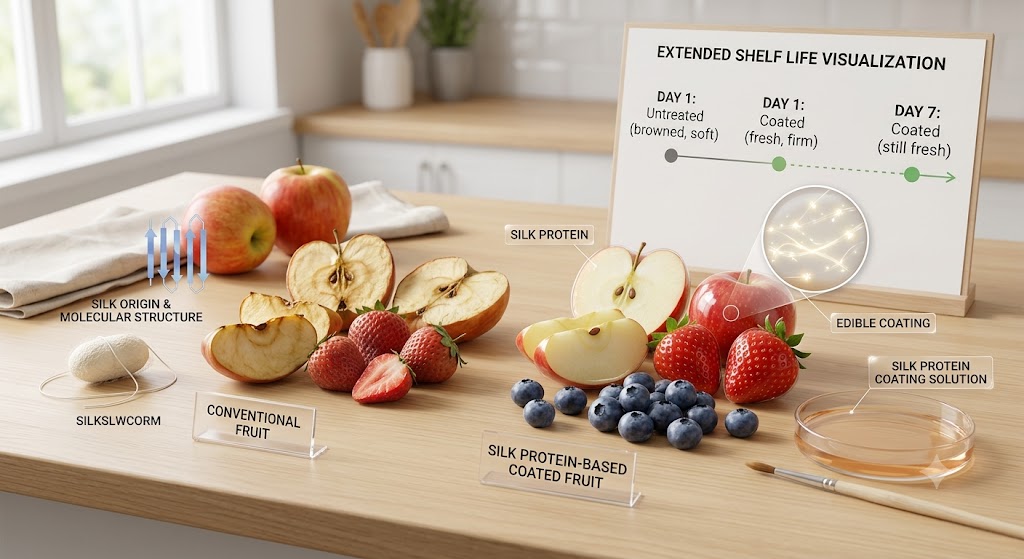
Today, a breathtaking breakthrough from the world of deep-tech and biotechnology is offering a third way. Indian researchers and innovators are utilizing silk fibroin proteins—extracted from organic silkworm cocoons—to create a completely invisible, tasteless, and edible protective barrier. When sprayed or dipped onto freshly picked crops, this natural shield slows down spoilage and allows delicate produce to stay fresh up to twice as long at room temperature.
The Science: Giving Fruits a Natural "Second Skin"
At the heart of this innovation is a protein called silk fibroin, a structural protein naturally produced by silkworms (Bombyx mori). Through a gentle, water-based extraction process, scientists break down this protein into an odorless liquid solution.
When a tomato or banana is dipped into this solution, the silk proteins self-assemble into an incredibly thin, transparent membrane—roughly a fraction of the thickness of a human hair.
How it Stops Spoilage
Fruits and vegetables are living organisms; even after being harvested, they continue to "breathe" by taking in oxygen and releasing carbon dioxide and water vapor. This respiration process is what causes them to over-ripen, lose firmness, and eventually rot.
-
The Gas Barrier: The crystalline structure of the silk coating acts as an ultra-precise filter. It restricts the amount of oxygen entering the fruit and slows down the escape of moisture and carbon dioxide.
-
Moisture Retention: By locking moisture inside, it prevents dehydration, keeping produce plump, glossy, and crisp without needing chemical preservatives.
-
Antimicrobial Action: Advanced formulations often blend the silk solution with natural elements like chitosan or herbal extracts (like curcumin), creating a powerful natural barrier that stops airborne fungi and bacteria from taking hold.
On-the-Ground Programs: Transforming Academic Research into Field Reality
This deep-tech solution has moved rapidly from high-tech laboratories into active agricultural field trials across India.
The Institutional Push: IIT Guwahati Field Trials
A leading force in this space is a dedicated team of chemical engineering researchers at the Indian Institute of Technology (IIT) Guwahati. They developed a specialized edible coating combining plant-based polysaccharides with organic extracts to protect highly sensitive local horticultural varieties.
-
The Program Structure: The research team conducted rigorous biosafety and preservation trials directly on staple commodities like potatoes, green chilies, tomatoes, strawberries, and regional specialties like the Khasi Mandarin orange.
-
The Results: In field-simulated room temperature storage (up to 40°C), coated items retained their texture, color, and nutritional profile beautifully. Strikingly, items that typically spoil within days remained vibrant, firm, and market-ready for several weeks, demonstrating that a simple dip treatment at harvest could easily survive the long, grueling journey through rural distribution chains.
The Human & Economic Benefits for Smallholder Collectives
When this technology scales out to local Farmer Producer Organizations (FPOs) and smallholder collectives, it shifts from an engineering triumph to a life-changing economic tool:
-
Bypassing the Cold-Chain Bottleneck: Setting up a refrigerated warehouse requires massive electricity and millions of rupees in capital. A silk-protein dipping station can be set up directly at a village collection center for a fraction of the cost, giving small farmers immediate preservation capabilities.
-
Unlocking Premium Markets: Perishable items like strawberries or premium mangoes can now be transported over longer distances without rotting. This allows rural farmer collectives to bypass local middlemen and sell directly to distant urban supermarkets where prices are much higher.
-
Zero Waste Consumption: Because the coating is made entirely from natural, FDA-compliant proteins and food-grade ingredients, it is 100% safe to eat. It leaves no chemical residue in the soil, requires no synthetic packaging, and washes off easily with water if desired—though you could eat it straight off the vine safely.
The Path to a Sustainable Food Supply
The use of silk protein coatings beautifully exemplifies the philosophy of circular agriculture. By taking a natural byproduct of India's robust sericulture (silk farming) industry and using it to protect food crops, innovators are constructing a sustainable, plastic-free shield around our food supply. For the millions of smallholders across India, this invisible layer of protection means fewer wasted crops, lower market stress, and a far more stable livelihood.
The innovative work behind these natural preservatives shows how far agricultural science has come in addressing food loss. For a deeper look into how Indian institutions are leading these breakthroughs on the ground, you can explore this IIT Guwahati Edible Coating Feature. This report covers the real-world performance of these biopolymer barriers and how they preserve the natural appearance and texture of fruits over long periods.