The Future of Farming: Autonomous Drones That Pluck Oranges and Basket Them
For generations, harvesting citrus crops has been a grueling, labor-intensive process. Farmworkers navigate heavy ladders, stretch into dense branches, and manually pull down fruit under the blazing sun. However, a major technological shift is taking place in modern orchards.
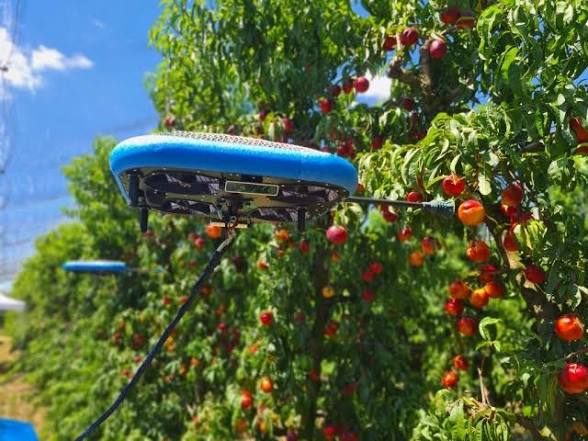
Driven by advanced robotics and artificial intelligence, the agricultural industry has introduced Flying Autonomous Robots (FAR)—specialized drones designed to identify, pluck, and basket oranges entirely on their own.
By combining drone maneuverability with industrial robotics, this technology offers a scalable solution to global agricultural labor shortages while maximizing crop yields.
How the Fruit-Plucking Drone Works
Unlike traditional agricultural drones used solely for crop spraying or aerial mapping, harvesting drones are heavy-duty, tethered systems that operate in coordinated groups (or "swarms") around a centralized ground management vehicle.
The process from detecting an orange to placing it safely in a bin follows a highly complex, automated sequence:
1. AI Computer Vision and Ripeness Analysis
As the drone hovers alongside the orange tree, its onboard high-definition cameras and LiDAR sensors scan the foliage. Driven by advanced machine learning algorithms, the drone's "eyes" instantly differentiate between leaves, branches, and fruit.
The AI classifies each orange based on specific parameters:
-
Size and Diameter: Ensuring the fruit meets commercial market standards.
-
Color Grading: Assessing the precise orange-to-green ratio to guarantee optimal maturity.
-
Disease Detection: Skipping damaged or diseased fruits to prevent contamination in the bin.
2. Precision Trajectory and Stabilization
Once a ripe orange is targeted, the drone's maneuver algorithms calculate the most efficient path of approach. Because pulling a fruit applies physical resistance, the drone utilizes rapid-response balancing algorithms. These algorithms adjust the drone's rotor speeds in milliseconds, keeping the aircraft completely stable and balanced against the tree's branches.
3. The Soft-Touch Pluck
The drone extends a mechanical arm designed to mimic the human hand. For fresh-market oranges, the arm uses a soft rubber suction cup that grips the fruit firmly without bruising the rind. The arm then applies a precise twist-and-pull motion to cleanly disconnect the stem from the branch. For juice-market oranges, the drone can be equipped with a minor cutting attachment to snip the stem cleanly.
4. Controlled Basket Placement
After successfully plucking the orange, the drone flies back a few feet to the mobile ground unit. It hovers over the integrated collection basket or landing pad and gently releases the fruit. Because the ground unit controls the logistics, it automatically keeps track of data analytics—such as the total weight, size distribution, and exact geolocation of the harvest—before the oranges are sent to the packing house.
The Operational Advantages for Growers
The transition to autonomous aerial harvesting provides distinct economic advantages for industrial orchards:
-
Harvesting High Canopies: Traditional orchards often trim their trees to a height of 3.5 meters just so human workers can safely reach the fruit. However, taller trees yield far more oranges. Drones allow farmers to let their trees grow to their full, high-yielding potential because the robots can effortlessly harvest fruit at the very top of the canopy.
-
Continuous 24/7 Operations: While a single drone takes roughly 12 seconds to pluck a fruit, an integrated fleet of six or more drones operating continuously—day and night—can match or exceed manual harvest volumes.
-
Zero Fruit Bruising: Soft-touch robotics and controlled placement pads ensure that the oranges sustain far fewer impacts and blemishes compared to traditional mechanical shaking methods, preserving the premium value of fresh produce.
The Next Step in Smart Orchards
The deployment of fruit-plucking drones marks a significant shift from raw mechanical automation to highly intelligent, data-driven farming. By successfully bridging AI perception with delicate robotic execution, these autonomous systems are transforming orchards into efficient, predictable production environments, ensuring that food moves from the branch to the basket with unprecedented precision.