How a Grandson's Grief Became an AI Innovation for Odisha's Farmers
In the quiet farming village of Repur Patna, on the banks of the Mahanadi river in Odisha, a young boy watched his grandfather's face
fall every season a crop failed. He didn't understand agriculture then. He understood grief.
That boy, Rishikesh Amit Nayak, grew up to study at VIT Chennai and he never forgot what he saw. Years later, after losing four fellow farmers in his community to suicide, driven by the same crushing weight of crop failure, Nayak decided he wasn't going to just study engineering. He was going to use it to save lives.
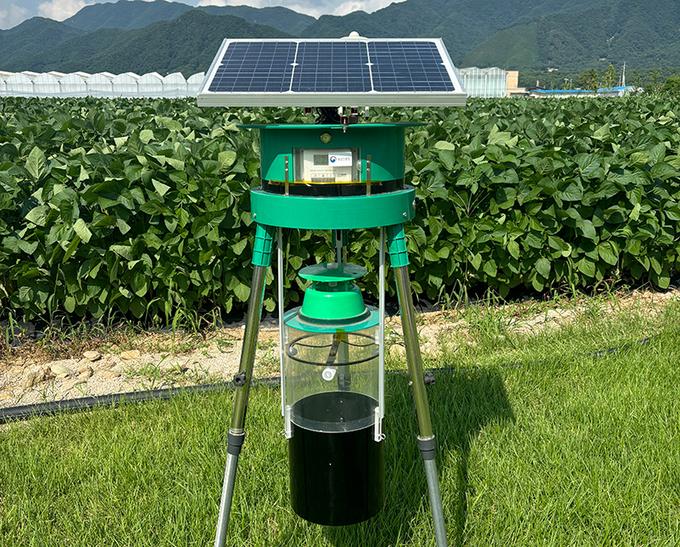
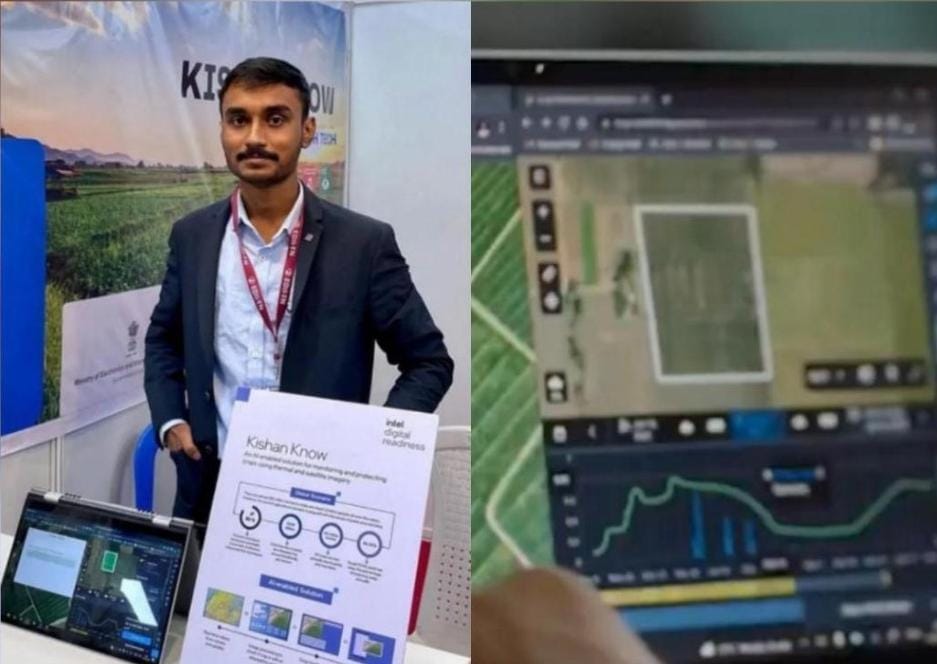
Along with his teammates Niharika Haridas and Gideon Jacob, he built Kisan Know an AI-powered IoT device that costs just ₹85 (about $1) and can detect crop diseases up to 12 days before any visible symptoms appear.
The Problem: By the Time You See It, It's Too Late
For generations, Indian farmers have had one major disadvantage and they can only respond to crop disease after it's visible. By then, the infection has often spread too far, and the damage is done. For small and marginal farmers operating on thin margins, a single failed season can mean debt, hunger, or worse.
The Innovation: Reading a Plant's Heat Before It "Shows"
Kisan Know works on a simple but powerful biological insight: every microbe and pest leaves a thermal trace.
When a plant is infected whether by a pest or a microbial pathogen it experiences hormonal and water stress long before any visible spots, wilting, or discoloration shows up. This stress alters the plant's heat pattern in ways invisible to the naked eye, but detectable by a thermal sensor.
Here's how the system works, step by step:
Field workers carry the device into the crop fields.
Thermal and environmental data is collected every 12 hours.
AI analyzes the patterns, pinpointing exactly which crops are affected, where in the field, and why.
Farmers receive an early alert with enough lead time to treat the problem before it spreads.
This data is combined with satellite imagery for broader field-level accuracy, turning a farmer's smartphone alert into an early-warning system that used to only exist for large industrial farms now available for ₹85.
Why This Matters: The Numbers
Device cost: ₹85 (~US $1)
Early warning window: Up to 12 days before symptoms
Farmers already using it: 3,000+
Data collection frequency: Every 12 hours
Core tech: Thermal sensor + AI + satellite imagery
Recognition and Validation
Kisan Know has already earned recognition at Intel's OpenVINO festival, and has been covered by respected platforms including The Better India, YourStory, Swarajya Mag, and shared widely across LinkedIn's innovation community.
How Can Farmers Access It?
Kisan Know is still an early-stage, community-driven initiative. Farmers interested in the device are encouraged to:
Connect with local agriculture extension cells or cooperatives in Odisha
Watch for NGO-supported pilots and local rollouts
Follow updates through VIT Chennai and Intel partnership channels for wider availability
Kisan Know is part of a wider wave of Indian innovations trying to bridge the gap between cutting-edge technology and the country's most vulnerable farmers. A few others worth knowing about:
Nano Ganesh — lets farmers remotely control irrigation pumps via mobile phone
Kisan e-Mitra — an AI voice chatbot that helps farmers access government scheme information in 11 regional languages
E-NAM, PM-KUSUM, Fasal Bima — government-backed platforms supporting agricultural markets, solar-powered pumps, and crop insurance
Final Word
"Sometimes, the most powerful innovations aren't built in Silicon Valley boardrooms. They're built by people who've actually watched the problem happen up close, and too many times."
What makes Kisan Know remarkable isn't just the technology thermal sensing, AI, satellite data it's that a student turned personal grief into a ₹85 tool that could quietly prevent the next family tragedy in a farming village like the one he grew up in.