Optimizing Row Crop Center Pivot Irrigation Systems for Higher Yields
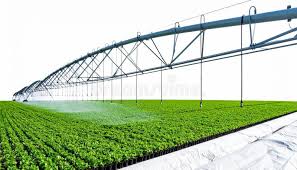
In the arena of large-scale commercial farming, managing water efficiently while maximizing yield is a constant balancing act. For farmers cultivating rows of corn, soybeans, cotton, and potatoes, the row-crop center pivot irrigation system has shifted from a convenience to an absolute baseline requirement.
While center pivots natively excel at uniform water distribution over broad, circular fields, configuring them specifically for row crops requires a deep understanding of nozzle height, soil intake rates, and wheel track dynamics. When fine-tuned correctly, these automated systems drastically cut labor costs, protect soil integrity, and drive up per-acre profitability.
Aligning Machine Components with Row Configurations
A standard center pivot consists of a series of pipe spans supported by wheeled "A-frame" mobile towers that rotate slowly around a fixed central pivot point. However, when adapting this setup to structured rows, the primary challenge is matching the system's fixed movement with the linear crop pattern.
. Row Orientation: Circular vs. Straight Rows
Growers must choose between planting crops in straight, parallel lines or in concentric circles matching the pivot's travel path. Planting in circles minimizes the instances where tower wheels cross directly over crop rows, reducing physical plant damage. However, if standard straight-row planting is preferred for conventional harvesting equipment, growers must implement specialized management techniques at the wheel-row intersections.
2. Low-Elevation Precision Application (LEPA & LESA)
To prevent extreme water loss from evaporation in row crops, modern systems have swapped out old-style, top-of-pipe impact sprinklers for flexible drop tubes. These tubes bring the water application right into or just above the crop canopy:
-
LESA (Low Energy Spray Application): Drops hang roughly 1 to 2 feet above the ground, delivering a localized spray directly into the crop rows.
-
LEPA (Low Energy Precision Application): Tubes drop completely down into the furrows between rows, depositing water at very low pressure directly onto the soil surface via bubble emitters. This practically eliminates wind drift and ensures water goes straight to the root zone.
Overcoming Topography and Soil Compaction Challenges
Because a pivot system gets progressively faster the further it extends from the central point, the outer spans must discharge water at a much higher rate than the inner spans to achieve uniform coverage. On heavy soils or uneven row topographies, this high-velocity application can outpace the soil's natural intake rate, leading to water runoff, pooling, and soil erosion.
To mitigate this, row-crop pivots utilize wide-angle spray pads and rotators that distribute the droplet impact over a broader surface area, effectively mimicking natural, gentle rainfall. Additionally, proper row tillage—such as reservoir tillage or creating small retention basins within the furrows—helps catch and hold the water long enough for it to infiltrate the root zone safely.
Managing Tower Wheel Tracks in Row Crops
One of the main operational headaches with row-crop pivots is the deep rutting caused by heavy tower wheels moving repeatedly over wet soil. As the tires roll through muddy row intersections, they compress the earth, creating deep trenches that can strain the system’s drive train and damage passing tractors during harvest.
Modern operators combat wheel-track rutting with a few key strategies:
-
Boom Extensions: Utilizing offset booms to position sprinklers several feet behind or ahead of the drive tower, ensuring the tires always roll over dry soil rather than freshly watered ground.
-
Aggressive Tire Profiles: Swapping narrow rubber tires for ultra-wide, high-flotation tires or rugged plastic tracking segments that distribute the machine’s weight more evenly across rows.
-
Track Dryers: Installing targeted, low-volume nozzles that intentionally skip spraying the immediate path of the oncoming wheels.
Precision Control via Variable Rate Irrigation (VRI)
The ultimate evolution in row-crop pivot management is the integration of Variable Rate Irrigation (VRI). Fields are rarely uniform; they feature varying soil textures, sandy patches, and natural slopes.
Using GPS guidance and smart digital control panels, VRI allows farmers to program individual sprinkler nozzles along the span to open, close, or pulse at variable intervals. If the pivot crosses a sandy row zone that drains quickly, it can deliver extra water. Conversely, when passing over a heavy clay depression or an unplanted access road, the system automatically shuts off targeted nozzles. This level of precise, data-driven automation maximizes water use efficiency and unlocks the full genetic yield potential of every single row.