Farming with Light: The Night-Crawling Robots Replacing Chemicals in the Vineyard
When you think of a pristine vineyard, you probably picture sun-drenched hills, lush green vines, and traditional stone cellars. What you likely don't picture is a silent, electric robot slowly rolling down the vine rows in pitch-black darkness, glowing with a futuristic purple hue.
Yet, this is exactly what the future of premium viticulture looks like.
Vineyards around the world—from the organic estates of California to the historic valleys of Europe—are increasingly deploying autonomous robots like the Thorvald platform by Saga Robotics. Their mission? To wage a chemical-free, high-tech war against one of the wine industry’s oldest and most devastating enemies: powdery mildew.
Here is how these automated night-crawlers are changing winegrowing forever.
The Problem: The Chemical Treadmill of Disease Control
Fungal diseases like powdery mildew, botrytis, and sour rot can devastate a vineyard, ruining berry quality, throwing off acidity, and slashing crop yields by up to 45%.
To fight it, traditional growers rely heavily on heavy tractors pulling massive chemical spray rigs. Even organic and biodynamic vineyards aren't off the hook; they have to continuously douse their fields with massive amounts of organic sulfur or copper to keep the fungus at bay.
This cycle comes with steep costs:
-
Soil Compaction: Massive 10,000-pound tractors crush the soil structure, killing beneficial biology and making it hard for vine roots to breathe.
-
Fungal Resistance: Over time, mildew evolves to tolerate chemical sprays, requiring higher doses and more frequent passes.
-
Environmental Impact: Tractor emissions, chemical drift, and tractor-operator fatigue during tight spraying windows.
The Solution: Zapping Fungal DNA with UV-C Light
The vineyard robot tackles this crisis by ditching chemicals entirely and replacing them with basic physics: Ultraviolet (UV-C) light.
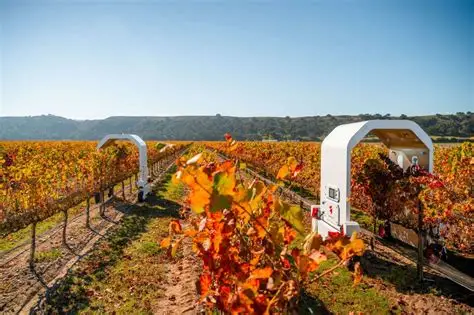
As the lightweight, fully electric robot moves autonomously down the rows, it passes specialized light canopies directly over the vines. This specific wavelength of ultraviolet light penetrates the cells of powdery mildew and shatters its DNA, stopping the fungus from reproducing and spreading.
The Nighttime Secret: Why do the robots only work in the dark? Fungi have a natural, built-in defense mechanism triggered by sunlight (specifically blue and UV-A light) that allows them to rapidly repair damage to their DNA. By treating the vines at night when the fungus is "sleeping" and its defenses are down, the UV-C light is incredibly lethal to the mildew while remaining completely harmless to the vine itself.
Why Top Wineries are Adopting Vineyard Robots
1. Up to 100% Reduction in Fungicides
Pioneering wineries utilizing this technology are successfully replacing 60% to 100% of their traditional chemical or sulfur spray programs. The result is perfectly clean, residue-free fruit, which is the ultimate holy grail for high-end and organic winemaking.
2. Radical Soil Protection
Unlike a massive industrial tractor, these electric robots are engineered to be incredibly lightweight (often weighing less than 1,000 pounds). They glide across the vineyard floor without packing down the dirt, protecting the delicate soil structure and preserving the natural cover crops growing between the rows.
3. Continuous "Eyes on the Crop" Data
These robots aren’t just treating disease; they are data-collection powerhouses. Equipped with high-definition cameras and AI vision, the robots scan the vineyard on every single pass. They count flowers, monitor fruit development, and track ripeness—providing winemakers with ultra-accurate yield forecasting data weeks before harvest.
4. Zero Re-Entry Restrictions
When a tractor sprays traditional fungicides, workers are legally barred from entering the vineyard for days due to chemical safety regulations. Because UV-C light leaves absolutely zero chemical residue, field crews can safely walk the rows and manage the canopy the very next morning.
The Verdict: A Win for the Soil, the Vine, and the Glass
The rise of the autonomous vineyard robot proves that the next era of agriculture isn't about creating harsher chemicals—it's about creating smarter systems. By blending robotics, clean electric energy, and precision light technology, winemakers are creating a more resilient, sustainable ecosystem.
The next time you enjoy a glass of your favorite vintage, toast to the fact that a quiet, autonomous robot might have kept those grapes clean while protecting the earth they grew in.