Farming Without Borders: How Heavy-Payload Cargo Drones are Conquering Mountain Agriculture
When we think of farming drones, we usually picture sleek little quadcopters buzzing over flat Midwestern fields, taking multispectral photos or lightly spraying crops with fertilizer.
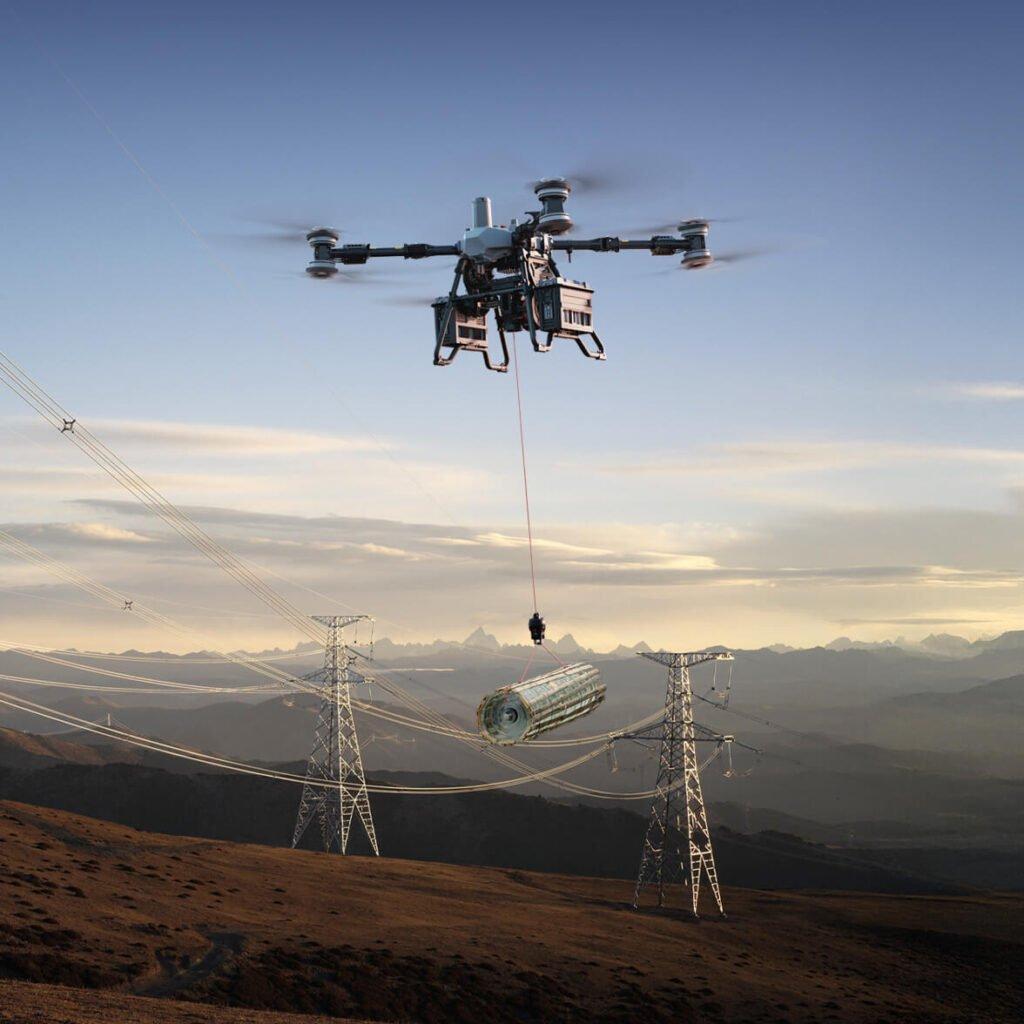
But a viral video from @oddlyengineering shows a completely different beast: a massive, heavy-duty agricultural cargo drone hoisting heavy bags of produce straight up a steep mountain slope.
For farmers working on rugged, terraced hillsides, this isn't just a cool tech upgrade—it’s a massive logistical breakthrough. Let’s look at how heavy-payload drone tech is solving one of the oldest, most back-breaking problems in agriculture.
The Steepest Problem in Farming: The Last Mile Terrain
In places like southern China, Japan, and parts of Europe, some of the most valuable crops—like terrace-grown rice, premium tea, and mountain fruits—grow on extreme inclines.
Traditional machinery like tractors or wheeled carts are entirely useless here. Historically, getting supplies up and the harvest down meant relying on:
-
Manual labor: Workers carrying 50-to-100-pound baskets on their backs up slippery, vertical mud trails.
-
Pack animals: Expensive to maintain and limited by narrow paths.
-
Improvised ziplines: Rigid, dangerous, and expensive to set up across changing terrains.
This extreme physical toll explains why mountain farms are facing a critical labor shortage as younger generations head for the cities. Enter the heavy-payload cargo drone.
Heavy Lifting: The Anatomy of a Mountain Cargo Drone
The drone captured in the video is a specialized industrial multi-rotor aircraft designed specifically for vertical logistics. Unlike consumer tech, these industrial workhorses are engineered for raw power and stability.
Massive Payload Capacities
These high-capacity cargo drones are built to lift payloads ranging from 40 kg up to over 100 kg (88 to 220+ lbs). Using a heavy-duty tether and sling-net system, they can hoist massive bundles of freshly picked crops or heavy bags of fertilizer directly from the valley floor.
Defying Mountain Winds
Mountain air is notoriously unstable, with unpredictable updrafts and shifting crosswinds. These drones use high-voltage propulsion systems, massive carbon-fiber propellers, and advanced GPS/sensor arrays to maintain a perfectly steady hover, even when carrying off-center, swinging cargo.
Minutes vs. Hours
What used to take a human worker an hour of grueling, dangerous climbing now takes a cargo drone roughly 60 to 90 seconds. The drone flies straight up, hovers safely above the handler, drops the payload exactly where it's needed, and zips back down for the next load.
Why This Tech is Changing Rural Economies
The adoption of heavy agricultural cargo drones does more than just save a farmer's back—it radically changes the economics of remote farming.
-
Preventing Crop Spoilage: Delicate fruits and veggies get bruised or ruined when carried down a bumpy mountain path. Drones provide a smooth, fast flight, preserving the premium quality of the produce.
-
Lowering Production Costs: By slashing the hours required for transport, farmers can reinvest their time into crop care and expansion, making small-scale terrace farming financially viable again.
-
Enhanced Worker Safety: Slips and falls on steep terraces are a major source of injury. Moving the heavy lifting to the air keeps workers safely on stable ground.
The Verdict
While tech headlines focus on autonomous cars and delivery drones dropping off fast food in suburban neighborhoods, the real revolution is happening in the mountains. High-capacity agricultural cargo drones are breathing new life into traditional terrace farming, proving that the right tech can make even the most challenging terrain workable.