Sky-High Efficiency: How Spraying Drones are Saving Farmers Time and Health
If you have ever carried a heavy knapsack chemical tank on your back, walking row by row under a blazing midday sun, you know that crop spraying is arguably the most brutal job on a farm.
Finding reliable field labor for this grueling work is getting harder every season, and manual labor costs continue to rise. More importantly, walking directly through a chemical mist means farmers constantly breathe in and touch harsh substances, creating long-term health risks.
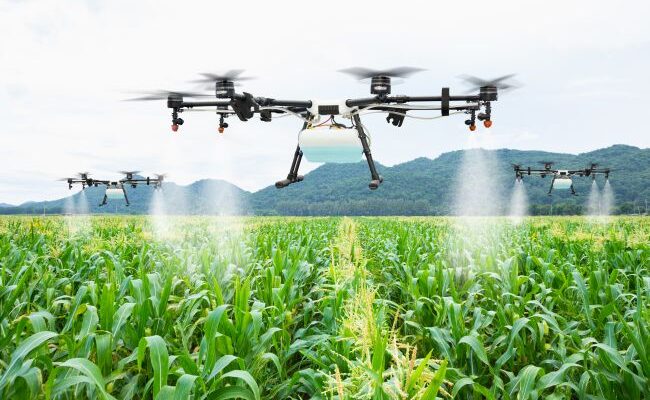
To solve this, progressive fields are trading heavy backpacks for remote controllers. Agricultural spraying drones are moving rapidly from a futuristic luxury into a practical, everyday farming tool.
How Drone Spraying Actually Works in the Field
Using a spraying drone does not require advanced technical programming skills. In a typical field operation, the workflow runs on an automated loop:
-
Mapping the Boundary: The operator uses a handheld controller or remote interface to digitally mark the outer corners of the field.
-
Flight Path Autopilot: The drone's intelligent software automatically calculates the tightest, most efficient flight grid over the crops, moving back and forth in perfectly straight lines.
-
Terrain Management: It does not matter if the field below is a muddy swamp, uneven terrace, or densely packed rows. The drone hovers safely at a fixed height above the crop canopy, delivering a fine, targeted mist directly to the foliage.
A Quick Look at Leading Farming Drones
Top tech brands have built rugged, highly capable platforms tailored specifically for harsh field environments. Here is how some of the leading models compare on paper:
Why Farmers Are Making the Switch
The massive surge in drone adoption across crops like paddy, cotton, and wheat comes down to three basic reasons:
-
Unmatched Speed: A task that typically takes a manual crew a full, exhausting day of physical labor can be completed by a drone in just a few short hours.
-
Health Protection: The farmer stands safely on a clean border path or ridge, completely separated from direct chemical exposure.
-
Zero Waste: Traditional nozzle-spraying drenches fields unevenly. Drones break liquid down into ultra-fine droplets, using up to 90% less water and 30% fewer chemicals because the downwash from the propellers pushes the mist deep into the crop roots and leaves.
Financing Your Drone: Government Subsidies
The Indian government actively supports drone adoption through the Kisan Drone Yojana (SMAM Portal). Small, marginal, and women farmers can unlock a massive 50% subsidy (up to ₹5 Lakh) to purchase certified drones. Registered Women Self Help Groups can even leverage the Namo Drone Didi Scheme, which offers an 80% subsidy (up to ₹8 Lakh) alongside comprehensive, free pilot training to launch local drone service businesses.
Find and Compare Your Flight Setup on Kisan360
Spraying drones are not replacing the human farmer; they are acting as the ultimate field assistant to handle the most exhausting chore on the land.
If you are trying to find the perfect drone payload, compare local pricing, or figure out which models comply with official DGCA certification standards, Kisan360 is here to simplify your search. Our digital platform lets you browse, filter, and compare top-tier agricultural drone models side by side, making it easy to choose the ideal water-saving, labor-slashing upgrade for your acreage.