The Mind in the Machine: How AI Robotic Harvesters are Transforming the Orchard
For generations, the soft fruit harvest has been one of the final frontiers of purely manual farm labor. While field crops like wheat, corn, and soy were mechanized decades ago, delicate fresh produce—like apples, strawberries, grapes, and citrus—still required the human hand.
Why? Because a machine couldn’t tell a ripe red apple from a green leaf, nor could a heavy iron claw pick a strawberry without crushing it into jelly.
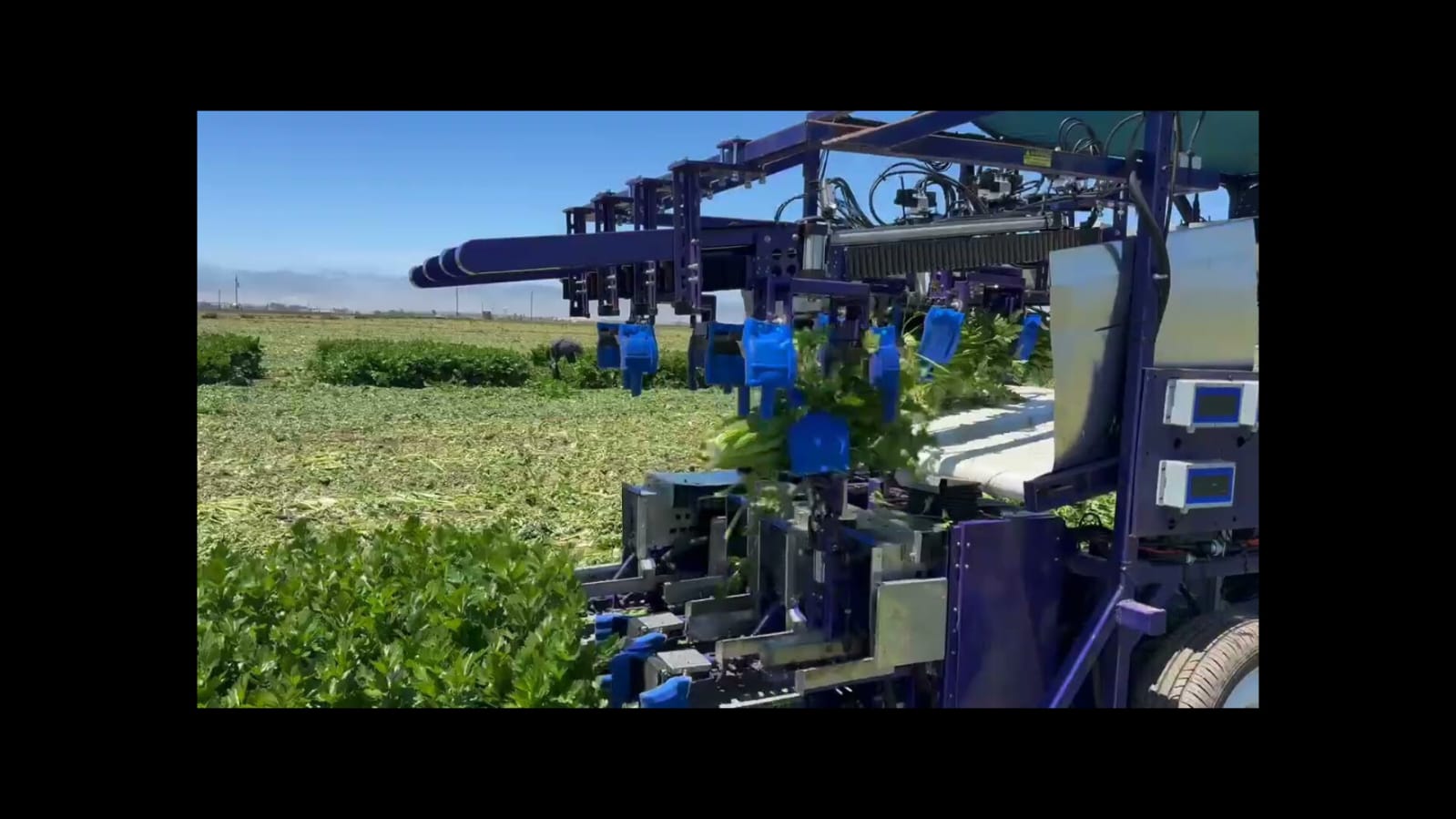
But the introduction of Artificial Intelligence has broken this barrier down entirely. AI robotic harvesters are rolling directly into orchards and commercial greenhouses, utilizing human-like perception paired with tireless mechanical stamina to pick fresh food safely and efficiently.
The Technology: How a Robot Sees and Feels
An AI harvester does not blindly grab at a tree. It navigates a complex, constantly shifting environment by using three interconnected tech layers:
1. Computer Vision and Deep Learning
The robot is equipped with 3D LiDAR sensors and high-resolution stereoscopic cameras that act as its eyes. As the robot glides down a crop row, its onboard AI brain runs deep learning neural networks. In milliseconds, it identifies the fruit, judges its maturity based on color spectrum analysis, and calculates its exact 3D spatial coordinates.
2. Gentle Robotic Grippers (Soft Robotics)
To avoid bruising delicate produce, engineers have largely abandoned hard metal claws. Instead, modern AI harvesters use soft, food-grade silicone grippers that inflate with air pressure or flexible polymer fingers. Some models designed for apples or citrus use specialized vacuum suction cups that gently pull the fruit backward while rotating it, perfectly mimicking the wrist twist of a human picker.
3. Real-Time Obstacle Mapping
A tree is a maze of random branches and leaves. The AI instantly computes the most efficient, collision-free path for its robotic arms to reach the target fruit without scraping the bark or snapping vital branches.
Why Farmers are Deploying AI Harvesters
The transition to autonomous picking is being driven by severe global pressures across the agricultural sector.
-
Solving Chronic Labor Shortages: Farms worldwide face a massive deficit in seasonal labor. Crops routinely rot in fields simply because there aren't enough hands to pick them. AI robots bridge this gap, ensuring food makes it to market.
-
24/7 Operational Capability: Unlike human crews, a robot doesn't need sleep, breaks, or optimal daylight. Equipped with active LED lighting systems, these machines work straight through the night, allowing farmers to pull in crops at peak maturity before a major storm hits.
-
Micro-Level Sorting: Because the AI grades the fruit right on the vine, it only picks items that meet specific size and quality standards. Unripe fruit is left on the branch to mature for a later pass, drastically reducing food waste at the packing house.
The Precision Factor: Advanced AI picking systems can analyze, reach, pluck, and store a piece of fruit in under two seconds, maintaining this exact rhythm continuously for a 20-hour shift.
The Challenges Left to Conquer
While companies like Advanced Farm Technologies (strawberries) and Tevel Aerobotics (flying fruit-picking drones) are proving the concept, a couple of major roadblocks remain for widespread adoption.
The primary hurdle is upfront equipment cost, which can keep this technology out of reach for small, family-owned operations. Additionally, humans are still unmatched in adapting to unexpected field conditions—such as dealing with a tangled branch or working through a sudden muddy downpour.
Nonetheless, as hardware costs decline and machine learning algorithms grow more sophisticated, autonomous harvesting is quickly moving from an experimental luxury to an industry standard. By taking the guesswork and physical strain out of the harvest, these intelligent machines are securing our global food supply chain, one precise pick at a time.