From Terroir to Tech: How AI and Robots Are Revolutionizing the Vineyard
For centuries, winemaking has been viewed as a sacred blend of tradition, patience, and human touch. Winemakers rely on a lifetime of intuition—feeling the soil, assessing the leaf canopy, and tasting the grapes at just the right moment to decide when to harvest.
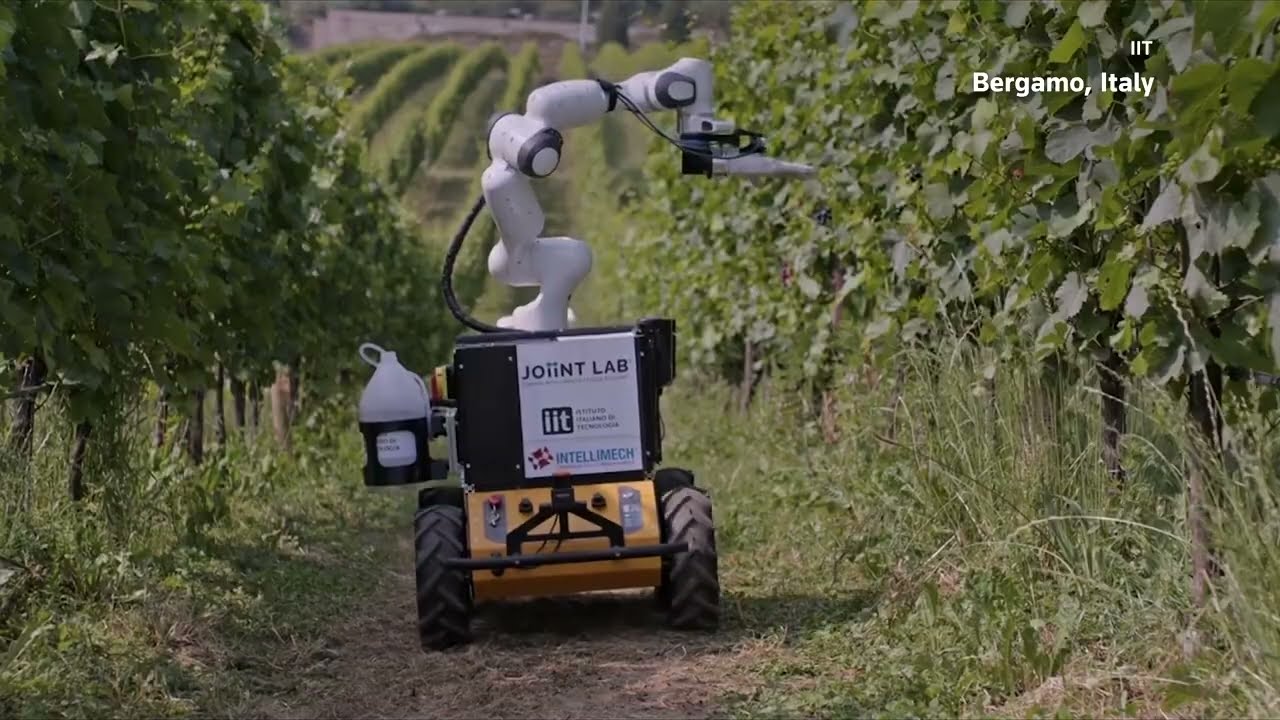
But as climate change brings unpredictable weather and labor shortages make manual field work increasingly difficult, tradition is getting a high-tech assistant. Enter the autonomous vineyard robot. Powered by artificial intelligence (AI) and machine learning (ML), these rugged machines are rolling into rows of grapevines worldwide, changing the face of viticulture forever.
The Ultimate Off-Road Challenge
Vineyards are notoriously difficult environments for standard robots. Unlike a flat warehouse floor or even a flat Midwestern cornfield, vineyards are full of obstacles: steep slopes, rocky terrain, muddy soils, and dense, tangled foliage.
To overcome this, engineers are building robots with heavy-duty mechanical bodies—some even utilizing designs inspired by Mars rovers—integrated with advanced AI brains. These bots don't just drive; they think their way through the vineyard.
How AI and Machine Learning Power the Vineyard Robot
An autonomous vineyard robot isn't just a self-driving tractor; it is a mobile data center. Here is a look under the hood at the specific AI technologies making them work.
1. Computer Vision: Seeing the Vines
Using high-definition cameras, LiDAR (laser scanning), and stereo vision, robots can "see" their surroundings in 3D.
-
The ML Connection: Machine learning models, specifically Convolutional Neural Networks (CNNs) and Vision Transformers (ViTs), are trained on millions of images of grapevines.
-
The Result: The robot can distinguish between a healthy grape cluster, a dead leaf, a wooden post, and a harmful weed in milliseconds, even while moving.
2. Micro-Targeted Weed Control
Traditionally, keeping weeds at bay meant blanket-spraying chemical herbicides or driving massive, heavy tractors that compact the soil.
-
The AI Edge: Autonomous weeders use computer vision to identify specific weeds growing between the vines. They then deploy precise mechanical blades to pull them up or apply a micro-dose of organic spray directly to the weed. This drastically reduces chemical usage and protects the surrounding ecosystem.
3. Hyper-Accurate Yield Forecasting
Predicting how many grapes a vineyard will produce is historically inaccurate but vital for wineries planning their production and marketing. Humans usually do this by manually counting clusters on a few random vines and guessing the rest.
-
The AI Edge: Robots patrolling the rows use AI to count individual grape clusters hidden behind leaves, analyzing berry size, color consistency, and occlusion patterns. Some advanced systems achieve less than a 5% error rate in predicting yield, giving winemakers unprecedented data before harvest even begins.
4. Precision Pruning and Leaf Management
Pruning is one of the most labor-intensive tasks in a vineyard, requiring skilled human hands to know exactly where to cut a vine to optimize next year's growth.
-
The AI Edge: Equipped with robotic arms and advanced deep learning, next-generation robots can map out the complex 3D "skeleton" of a vine. The AI calculates the optimal cutting point and executes the prune with human-like precision, ensuring the plant receives perfect sunlight exposure.
The Benefits: Why Wineries are Subscribing to AI
| Benefit | How the Robot Achieves It |
| Sustainability | Eliminates the need for harsh herbicides (like glyphosate) via mechanical weeding, and reduces the carbon footprint by running on electric batteries or solar power. |
| Soil Protection | Robots are much lighter than massive traditional tractors, preventing soil compaction and keeping the vineyard's microbiome healthy. |
| Labor Resiliency | Fills critical gaps caused by a shrinking agricultural workforce, allowing human workers to pivot to higher-level winery management and winemaking roles. |
| Water Conservation | By linking robot-collected data with AI-driven drip systems, vineyards can reduce water use by up to 28% during droughts. |