The Game Changer for Small Farms: Why the Water Wheel Transplanter Rules the Field
If you have ever spent an afternoon bending over a garden bed, manually poking holes into plastic mulch to plant hundreds of delicate vegetable seedlings, you already know the meaning of back-breaking labor. For small-to-medium-scale vegetable growers, transplanting season is often the most exhausting and time-consuming part of the entire year.
But there is a brilliantly simple piece of agricultural machinery that has transformed this painful chore into a fast, highly efficient process: the water wheel transplanter.
If you are looking to scale up your market garden or farm without sacrificing your lower back, here is a breakdown of why this mechanical workhorse is an absolute game changer.
What is a Water Wheel Transplanter?
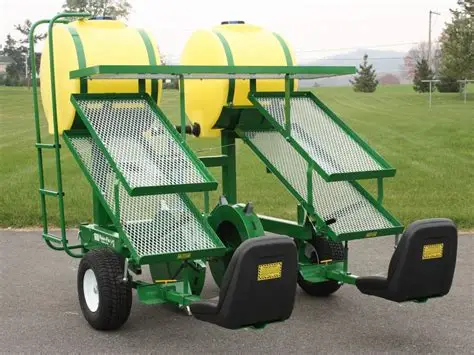
A water wheel transplanter is a tractor-pulled farm implement designed to plant starter plugs into the ground—most notably through plastic mulch beds.
The machine consists of three main components working in harmony:
-
Large Water Tanks: Mounted on the frame to hold water or a liquid starter fertilizer mix.
-
The "Water Wheel": A heavy, hollow metal drum outfitted with sharp, hollow spikes.
-
Worker Seats & Tray Racks: One or more low-set seats at the rear where workers sit comfortably, facing downward toward the soil with easy access to racks of plant trays.
How It Works: The Simple Three-Step Process
The beauty of the water wheel transplanter lies in its mechanical simplicity. It requires no complex electronics or computer programming—just gravity, water pressure, and a couple of pairs of hands.
As the tractor pulls the implement slowly down the crop row, the machine completes three tasks simultaneously:
-
Puncture and Fill: The heavy metal wheel rolls directly over the soil or plastic mulch. The weight of the wheel forces the hollow spikes to puncture the plastic and dig into the dirt. Simultaneously, water from the onboard tanks automatically releases through the spikes, filling each freshly made hole with a puddle of water.
-
Drop the Plug: The human operators sitting on the back of the machine grab seedlings from the tray racks and drop them directly into the muddy, pre-watered holes as the wheel rolls forward.
-
The Set: Because the hole is already saturated with water, the soil naturally collapses around the roots of the seedling plug, setting it securely in place without requiring the worker to manually pack down the dirt.
The Big Benefits for Small-to-Mid Scale Farms
Switching from hand-planting to a water wheel transplanter offers massive upgrades in efficiency and plant health.
-
Staggering Speed: A two-person crew on a water wheel transplanter can easily plant 2,000 to 3,000 seedlings per hour. Attempting to do that by hand would require a massive crew or days of grueling labor.
-
Unmatched Ergonomics: Instead of bending over, kneeling in the dirt, or crawling down rows for eight hours, workers sit comfortably in low-slung, adjustable seats just inches from the ground.
-
Zero Transplant Shock: Planting into a dry hole and watering later is a recipe for high crop mortality. The water wheel dumps a concentrated dose of water directly into the root zone before the plant arrives, ensuring the roots make immediate, hydrated contact with the soil.
-
Perfect, Consistent Spacing: The spikes on the water wheel are interchangeable. If you need to plant tomatoes 24 inches apart, you use fewer spikes. If you need to plant onions or garlic 6 inches apart, you add more spikes. This ensures perfectly uniform rows every single time, making future weeding and cultivating a breeze.