Shaking Off the Freeze: How Orchard Wind Machines Protect Your Crops
Every spring, orchardists and vineyard owners play a high-stakes game with Mother Nature. You watch the buds swell, the blossoms open, and then—the forecast drops. A late-season frost threatens to wipe out an entire year’s harvest in a single night.
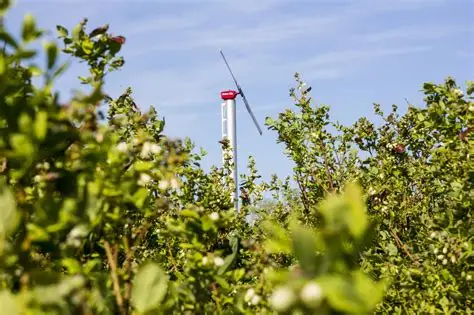
While you can't control the weather, you can control the microclimate around your plants. Enter the orchard wind machine (or frost fan). These giant, tower-mounted fans look like modern windmills, but instead of generating power, they consume it to save millions of dollars in crops worldwide.
Here is a deep dive into how these agricultural lifesavers work, why they are so effective, and what you need to know about them.
The Enemy: Understanding Radiational Frost
To understand why a giant fan works, we first have to understand the specific type of threat it fights: radiational frost.
On clear, calm nights, the earth radiates heat back into space. The air closest to the ground cools rapidly, becoming dense and heavy. Meanwhile, a layer of warmer air stays trapped higher up in the atmosphere (usually 30 to 50 feet above the ground). This meteorological phenomenon is called a thermal inversion.
Without any wind to mix these layers, the freezing air sits right at the bud level, turning moisture into ice crystals and destroying plant tissue.
The Solution: How Wind Machines Fight the Freeze
A wind machine doesn't actually "warm" the air like a heater; instead, it acts as a giant blender for the atmosphere.
-
Pulling Down the Heat: The massive blades, angled slightly downward, pull the warm air from the inversion layer down into the orchard.
-
Displacing the Cold: As the warm air is forced down, it displaces the freezing air settling around the vines or trees.
-
Continuous Rotation: The entire head of the fan rotates 360 degrees, sweeping a massive circle of protection across the field.
By mixing the air, a wind machine can raise the temperature at the plant level ). In the world of farming, that tiny margin is often the exact difference between a bumper crop and total financial loss.
Key Components of an Orchard Wind Machine
These aren't your average household fans. They are heavy-duty pieces of industrial engineering:
-
The Tower: Usually standing 30 to 35 feet tall, constructed of heavy-duty galvanized steel to reach well into the inversion layer.
-
The Blades: Typically made of fiberglass or carbon composite, spanning 18 to 20 feet in diameter. They are aerodynamically optimized to move maximum air volume with minimal fuel.
-
The Power Source: Most machines are powered by stationary ground engines running on diesel, propane, or natural gas, pushing anywhere from 100 to 150 horsepower.
-
Auto-Start Sensors: Modern systems feature digital thermostats. When the ambient temperature hits a critical threshold the machine starts automatically, ensuring protection even if the frost hits in the dead of night.
-
The Bottom Line
Orchard wind machines are the ultimate insurance policy for high-value crops like grapes, almonds, citrus, and apples. While the mechanical roar of a frost fan at 3:00 AM might not be the most peaceful sound, to a farmer, it’s the sweet sound of a harvest being saved.