Preserving the Harvest: The Ultimate Guide to Bale Wrapping Machines
For livestock farmers and commercial hay producers, timing is everything. Once forage is cut, the clock starts ticking. If moisture levels aren't managed perfectly, or if oxygen gets into the feed, a high-quality crop can quickly turn into a moldy, low-nutrient waste of money.
That is where the bale wrapping machine steps in.
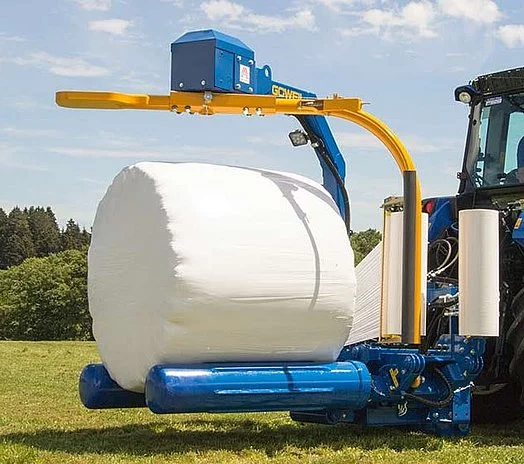
Far more than just an automated dispenser of plastic wrap, these machines are essential biochemical gatekeepers. They transform raw forage into high-quality, fermented silage that can feed livestock through the coldest winter months. Let's dive into how bale wrappers work, the different types available, and why they are a must-have on the modern farm.
The Science Behind the Wrap: Why We Wrap Bales
To appreciate the machine, you have to understand the science of silage. When green crops (like grass, alfalfa, or maize) are baled at a high moisture content ($40\%$ to $60\%$) and wrapped airtight, an anaerobic (oxygen-free) fermentation process begins.
-
The Air Barrier: The plastic wrap seals out oxygen.
-
The Acid Drop: Beneficial bacteria consume the remaining sugars in the crop and convert them into lactic acid.
-
The Preservation: This acid drops the pH of the bale, pickled-preserving the nutrients and preventing spoilage, mold, and rot.
Without a tight, high-quality wrap from a reliable machine, oxygen punctures the bale, aerobic spoilage takes over, and the feed value plummets.
Types of Bale Wrapping Machines
Bale wrappers generally fall into two primary structural categories depending on your farm's layout, volume, and budget:
1. Turntable Wrappers (Individual Bales)
The most common sight on medium-sized farms, these machines pick up an individual round or square bale and place it onto a rotating turntable. As the table spins, the bale rotates along two axes, completely enveloping it in overlapping layers of stretch-film plastic.
-
Best For: Farms that need to transport and store bales in multiple different locations.
2. Inline Wrappers (Continuous Tubes)
Instead of wrapping individual bales, an inline wrapper places bales end-to-end on a platform. The machine pushes the bales forward through a ring that spins plastic wrap around the joint, creating one continuous, long tube of bales.
-
Best For: High-volume commercial operations and custom operators who store all their feed in one centralized yard. It saves up to $50\%$ on plastic costs.
Key Features to Look For in a Bale Wrapper
Investing in a wrapper is a long-term commitment. When shopping around, keep these critical features in mind:
-
Pre-Stretcher Units: High-quality wrappers feature aluminum pre-stretch rollers that stretch the plastic film by $55\%$ to $70\%$ as it is applied. This activation is what makes the film cling together tightly for a waterproof seal.
-
Automatic Film Cut and Tie: Look for machines that automatically slice the plastic and hold it for the next bale once the wrapping cycle is finished. This keeps the operator inside the tractor cab, boosting efficiency and safety.
-
Computer Control Systems: Modern wrappers feature electronic counters that ensure the exact same number of layers (usually 4 to 6 layers) are applied to every single bale, regardless of tractor RPM.
-
Bale Dampeners: When an individual wrapped bale is dropped onto the ground, it risks puncturing against sharp stubble. A hydraulic bale dampener gently lowers the bale to prevent tears.
The Final Verdict: Is It Worth the Investment?
While a bale wrapping machine represents a notable upfront capital expense, the return on investment is often realized within just a few seasons.
-
By converting forage into perfectly preserved silage, you eliminate weather risk (no more waiting days for hay to dry completely in unpredictable rain), reduce feed waste to nearly zero, and significantly boost the nutritional intake—and milk or beef production—of your livestock.
In modern agriculture, efficiency is the name of the game, and a bale wrapper is one of the tightest seals on profit a farmer can buy.