Streamlining the Vineyard: Why a Tractor-Mounted Shoot Binder is a Game-Changer
In the world of viticulture, canopy management is one of the most labor-intensive, time-sensitive, and back-breaking tasks of the season. As spring rolls into summer, grapevine shoots grow at an astonishing rate. If left to their own devices, they will sprawl outward, creating a tangled mess that blocks sunlight, traps moisture, and makes harvesting a nightmare.
Traditionally, crews of workers had to walk miles of rows, manually lifting parallel trellis wires and stapling or tying shoots vertically.
The tractor-mounted shoot binder (often called a frost-free canopy binder or vine stapler) changes everything by transforming this slow chore into a high-speed, mechanical drive-by operation. Here is how these innovative machines work and why they are becoming a staple in modern vineyards.
The Goal: Perfect Vertical Shoot Positioning (VSP)
To appreciate a shoot binder, it helps to understand Vertical Shoot Positioning (VSP). VSP is a trellising system where the grape shoots are trained to grow straight upward in a narrow, vertical wall.
Maintaining a clean VSP setup yields vital viticultural benefits:
-
Sunlight Exposure: Maximizes the leaves' ability to photosynthesize, improving grape quality and sugar levels.
-
Air Circulation: Dries out the canopy quickly after rain, dramatically reducing the risk of fungal diseases like powdery mildew and botrytis.
-
Machinery Access: Keeps the rows wide open for tractors doing late-season spraying, hedging, or mechanical harvesting.
When shoots start drooping, you have a very narrow window to tuck and bind them before the wood hardens and becomes brittle.
How a Tractor-Mounted Shoot Binder Works
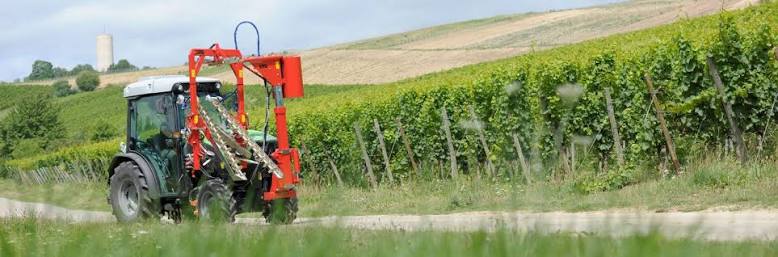
Instead of relying on a dozen workers with hand-staplers, a tractor-mounted shoot binder mounts directly to the front or side of a narrow row tractor. As the operator drives down the row at a steady pace, the machine executes three tasks simultaneously:
-
Lifting the Canes: Two long, angled conveyor belts or guide-wheels gently gather the drooping, floppy shoots and lift them vertically into the trellis center.
-
Dispensing Twine: The machine dispenses two parallel strands of standard biodegradable or polypropylene twine—one on each side of the vine row—to box the shoots into a tight vertical structure.
-
Mechanical Stapling: At regular intervals, an automated stapling head clips the two twines together. This pinches the twine tight, creating a "basket" that locks the shoots in their upright position.
Key Technical Features
If you are looking to invest in a shoot binder, look for these standard industrial specifications:
-
Hydraulic Adjustability: The best models allow the operator to adjust the frame’s height, lateral position, and tilt on the fly to match uneven terrain or varying vine ages.
-
On-Demand Stapling: Most modern units feature an electronic push-button trigger or automated proximity sensor so the driver can apply clips precisely around vine posts or thick growth.
-
Eco-Friendly Twine Options: Many binders can run on biodegradable paper or natural fiber twine, meaning the binding material safely breaks down into the soil during winter pruning.
-
Low Hydraulic Demand: High-efficiency models require minimal oil flow, allowing them to operate perfectly on smaller, specialized vineyard tractors.