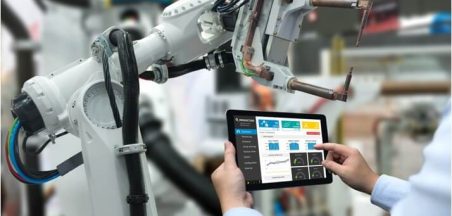
The industrial world is undergoing a profound digital transformation. As global supply chains face increasing volatility, manufacturing and specialty mineral leaders can no longer rely on legacy industrial frameworks. ICL Group, a leading global manufacturer of specialty minerals and fertilizers, is meeting this challenge head-on by deeply embedding Industry 4.0 applications across its operations.
By merging its decades of chemical expertise with Artificial Intelligence (AI), the Internet of Things (IoT), and autonomous systems, ICL is setting a global benchmark for smart manufacturing, efficient logistics, and data-driven AgTech solutions.
The Three Strategic Pillars of ICL’s Industry 4.0 Operations
ICL’s deployment of Industry 4.0 technologies is designed to create a fully connected, highly responsive industrial ecosystem. This strategy is executed through three critical functional categories:
1. Artificial Intelligence, Big Data, and IoT
At the heart of ICL’s smart factories is a continuous stream of real-time operational data.
-
Predictive Maintenance: By applying machine learning models to Big Data harvested from plant machinery, ICL can analyze historical trends and patterns. This enables the company to automate error detection and predict exactly when a machine component will fail, eliminating costly unplanned downtime.
-
Efficient Process Control: Smart IoT sensors continuously monitor environmental variables, chemical concentrations, and resource consumption, allowing algorithms to optimize production lines for peak energy and water efficiency.
2. Autonomous Logistics and Drone Surveillance
ICL is actively reducing human intervention in hazardous and highly repetitive operational environments:
-
Autonomous Fleet Logistics: At facilities like the Ladenburg site in Germany, ICL has deployed cutting-edge autonomous trucks that safely transport industrial materials across the facility entirely on their own.
-
Drone Inspection Routines: Equipped with advanced GPS and remote communication abilities, autonomous drones are used for structural inspections, safety monitoring, and emergency assessments—saving time and preventing manual errors.
3. Immersive Technologies (AR & VR)
Wearable tech has transitioned from a consumer novelty to a vital industrial asset at ICL:
-
Hands-Free Field Operations: Augmented Reality (AR) and Virtual Reality (VR) headsets enable field technicians to overlay digital diagnostic data onto physical machinery in real-time.
-
Remote Supervision: Experts located anywhere in the world can visually and auditorily support on-site maintenance crews via synchronized sensors, drastically speeding up troubleshooting cycles.
Extending Industry 4.0 to the Field: The AgTech Revolution
ICL doesn't confine its digital revolution to factory floors. The company is actively driving the global agricultural sector from basic exploration into a mature era of digital execution. This is achieved through its dedicated open-innovation networks and flagship digital platforms:
-
Agmatix: Operating as an advanced data hub for agricultural professionals, this revolutionary platform uses machine learning to ingest, standardize, and analyze massive volumes of agronomic data, turning raw data points into actionable insights to optimize crop nutrition.
-
Growers: An AgTech software platform developed to seamlessly link farmers and agricultural advisors to the broader digital ecosystem, making sustainable, precise, and profitable farming accessible.
-
Smart Diagnostic Apps: Tools like the Nutrient Deficiency Guide and PeKacid Advisor leverage targeted algorithms to allow growers to instantly browse crop stress, identify specific nutrient issues, and make micro-targeted fertilizer adjustments on smartphones.
The Broad Visual Impact of ICL’s Smart Network
To understand how these advanced systems interconnect, consider the unified data loop that fuels ICL's sustainable model:
Driving Toward a Sustainable, High-Yield Future
By successfully commercializing next-generation digital applications, ICL Innovation proves that the principles of Industry 4.0 are vital to resolving global environmental and agricultural pain points. Whether it is minimizing the carbon footprint of chemical processing through AI or empowering a smallholder farmer with precise soil nutrient tools, ICL Group is turning the promise of digital industrialization into verified, sustainable results.