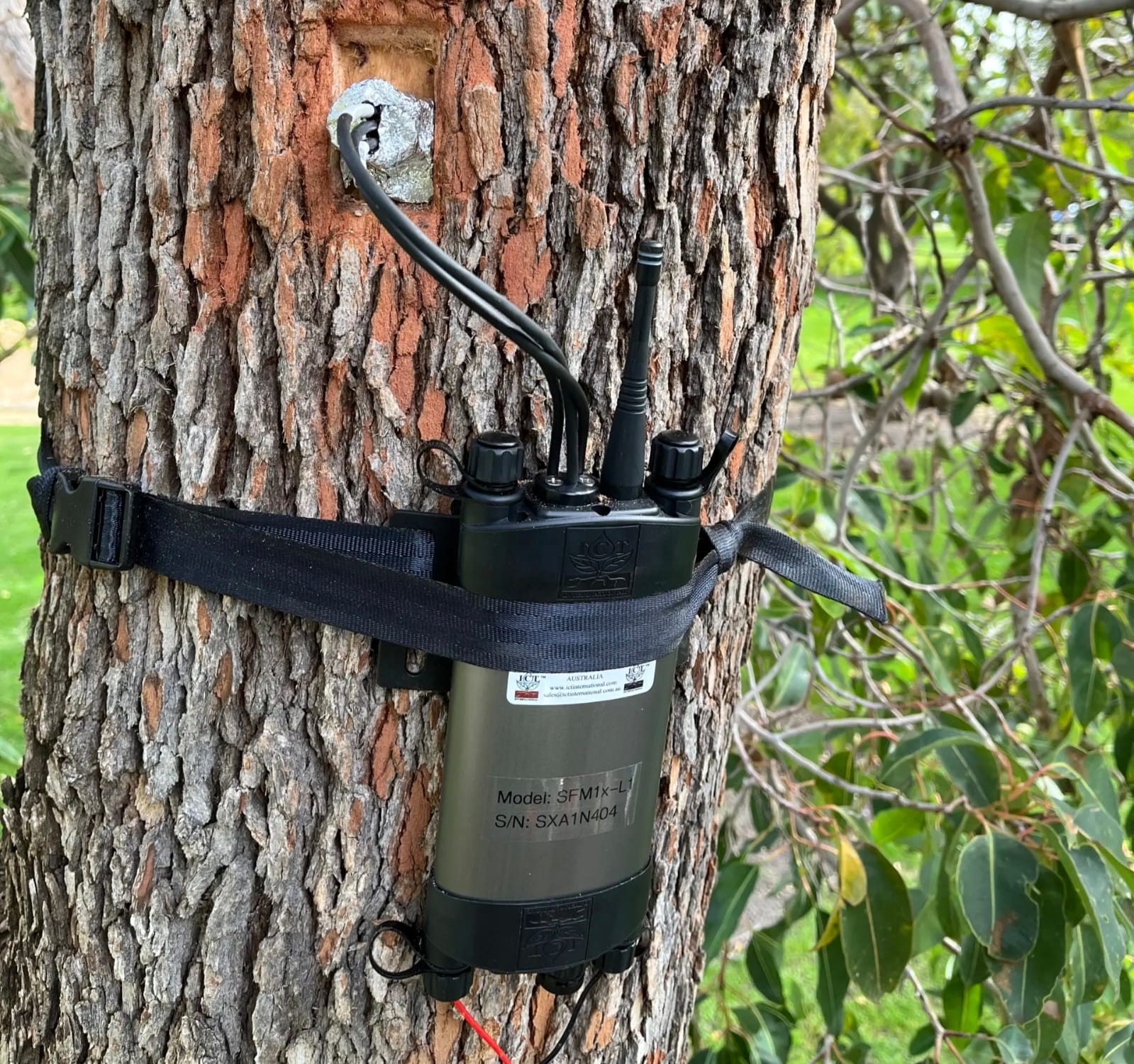
For decades, determining when and how much to water crops has been a game of indirect measurements. Farmers typically rely on soil moisture probes or regional weather stations to estimate a field's water needs. While helpful, these methods have a major drawback: they measure the environment, not the plant itself. Just because the soil holds moisture doesn't mean a plant's root system is successfully absorbing it.
To eliminate this guesswork, agritech researchers and engineers have introduced a breakthrough in bio-wearable technology: Micro-Needle Sap Flow Sensors. Often compared to a "fitness tracker for crops," these tiny, non-destructive devices pierce the outer stem layers to monitor the actual speed of water moving up the plant in real time.
The Science: Monitoring Plant Hydraulics
Water movement in plants operates like an internal plumbing system. Roots absorb water from the soil, and as the leaves open their pores (stomata) to breathe during daylight, tension pulls that water upward through tissue channels called the xylem. This movement is known as the sap flow rate.
Traditional sap flow sensors used bulky, thick needles that required drilling deep into tree trunks. This caused severe internal tissue scarring, making them impossible to use on delicate, high-value specialty crops like tomatoes, grapes, berries, or corn.
Next-generation micro-needle sensors solve this limitation by shrinking the entire sensor package down to the millimeter scale. Using advanced microscopic fabrication, these tiny needles smoothly slide past the rough outer bark or stem skin without triggering a wound response, keeping the plant perfectly healthy while capturing precise data.
How the Technology Works on the Ground
Most micro-needle systems operate using a highly precise thermodynamic principle called Heat Pulse Velocity (HPV):
-
The Thermal Pulse: The micro-needle contains a microscopic heating element that releases a tiny, harmless pulse of heat into the sap stream lasting just a fraction of a second.
-
The Downstream Measurement: A secondary micro-needle positioned just millimeters above the heater contains an ultra-sensitive temperature sensor (thermistor).
-
The Speed Calculation: As the sap flows upward, it carries the heat pulse along with it. The system calculates exactly how long it takes for the temperature sensor to register the warmth. If the sap is moving fast, the heat arrives quickly; if the plant is dehydrated and struggling, the heat arrives slowly or dissipates entirely.
Key Technical Pillars and Advantages
Integrating micro-needle sap tracking into a commercial farming operation introduces several distinct technological advantages:
1. True Direct Crop Stress Detection
Because the sensor tracks internal sap velocity, it registers dehydration stress hours—or even days—before visual symptoms like wilting or leaf yellowing appear, allowing growers to intervene before crop yields drop.
2. Automated IoT & Wireless Connectivity
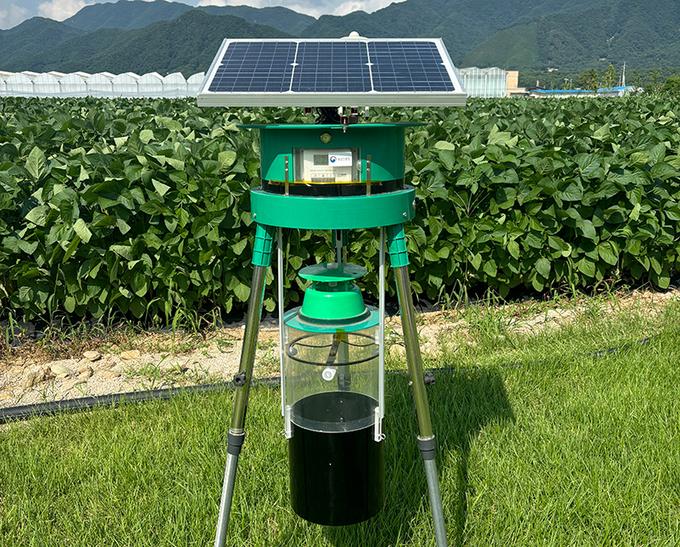
The micro-needles are wired to compact, ultra-low-power wireless transmitters clipped onto the plant or trellis. These modules beam live hydration metrics to cellular field hubs, sending clean, readable data dashboards directly to a farmer’s smartphone.
3. True Micro-Irrigation Control
When paired with automated irrigation valves, the sensor network can automatically trigger watering lines the moment sap flow drops below a healthy threshold. Once internal fluid movement stabilizes, the system shuts off the water, eliminating over-irrigation and fertilizer leaching.
The Economic and Sustainable Payoff
Transitioning from soil-based estimations to internal plant diagnostics delivers immense structural benefits for modern agricultural operations:
-
Up to 40% Water Savings: By watering only when the plant's internal data demands it, commercial farms drastically reduce water waste, a critical factor in drought-prone cultivation regions.
-
Maximum Fruit Quality and Yield: Controlled, precision water stress is vital for premium crops like wine grapes and tomatoes to maximize sugar concentrations ($Brix$ levels). Micro-needles give managers the exact data needed to perfectly balance fruit quality and size.
-
Slashed Pumping Energy Costs: Less wasted water directly translates to fewer hours running heavy electrical irrigation pumps, significantly lowering seasonal utility expenses.
The Future of Wearable Plant Tech
As global water resources tighten and climate volatility increases, the agricultural industry must move toward highly efficient, data-driven systems. Micro-needle sap flow sensors prove that the most accurate source of information on a farm is the crop itself. By unlocking a direct, real-time communication line with plant tissue, this technology ensures growers can comfortably maximize crop yields while preserving vital environmental resources.