Science on the Ground: Tracking Agricultural Greenhouse Gases with Eosense Chambers
The push for sustainable agriculture has moved past simple guesswork. As carbon markets expand and global supply chains demand lower carbon footprints, precision is everything. To truly understand how different farming practices impact our atmosphere, scientists need accurate, real-time data straight from the dirt.
At the Simcoe Research Site, a crucial new season of field measurements is underway to crack this exact code.
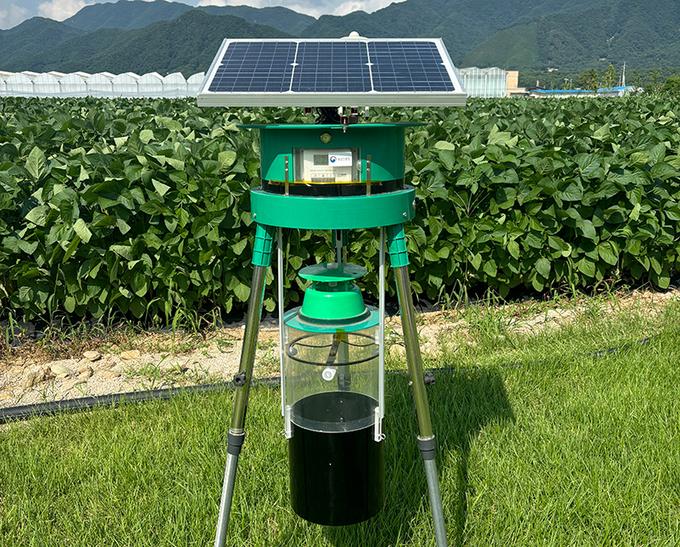
In a collaborative effort between environmental tech pioneer undocarbon and the University of Guelph, researchers have deployed advanced Eosense gas chambers directly onto the agricultural landscape. As captured in image_2eb1b8.jpg, these specialized, dome-like chambers are working on the frontlines of soil science to capture the invisible gases shaping our climate.
The Target: Monitoring the "Big Three" Greenhouse Gases
When people think about agricultural carbon footprints, carbon dioxide ($CO_2$) is usually the only gas that comes to mind. However, soil ecosystems are incredibly complex, releasing a variety of compounds based on tilling practices, fertilizer application, and moisture levels.
The Eosense automated chamber setups shown in image_2eb1b8.jpg are carefully distributed across both control and treatment plots to monitor three critical greenhouse gases simultaneously:
-
Carbon Dioxide ($CO_2$): Tracking the natural respiration of soil microbes and root systems to understand overall soil biological activity.
-
Nitrous Oxide ($N_2O$): A gas with a global warming potential nearly 300 times greater than $CO_2$, heavily linked to how crops process nitrogen-based fertilizers.
-
Methane ($CH_4$): Monitoring localized soil flux variations to see whether the land is actively absorbing or releasing this highly potent gas.
By comparing the gas flux between standard fields (control plots) and fields using regenerative practices (treatment plots), researchers can definitively prove which methods actually pull carbon down and which release it back into the sky.
Strengthening the MRV Framework
Why is this field data so incredibly valuable right now? It all comes down to a three-letter acronym driving the future of green finance: MRV (Measurement, Reporting, and Verification).
For a farm to successfully qualify for carbon credits or corporate sustainability incentives, they cannot just claim they are helping the environment; they have to verify it with unassailable data.
The high-frequency datasets generated by these Eosense gas chambers, paired with continuous soil and water monitoring matrixes, provide the foundational evidence required to refine and strengthen global MRV frameworks. It bridges the gap between theoretical computer models and real-world dirt.
Scaling the Future of Carbon-Negative Farming
As the field season progresses at the Simcoe Research Site, the insights gathered will play a direct role in shaping future agronomic advice. When farmers have access to verified, sensor-driven data, they can make smarter decisions regarding crop rotations, cover crops, and targeted fertilizer applications—minimizing atmospheric leakage while optimizing soil structure and yield health.
may look simple, but it represents the very peak of data-driven agtech, paving a transparent path toward a truly verifiable, net-zero agricultural industry.