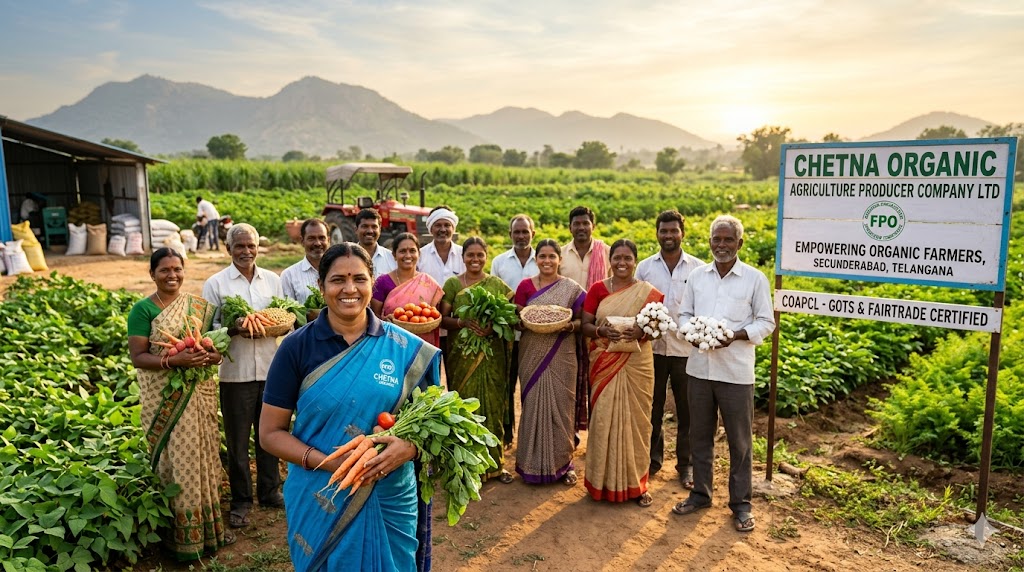
In the rain-fed agricultural landscapes of India, smallholder and tribal farmers frequently grapple with high debt, escalating chemical input costs, and volatile market prices. Chetna Organic Agriculture Producer Company Limited (COAPCL) addresses these challenges by transforming vulnerable, small-scale farming into a sustainable, collective enterprise.
Established in 2009 and headquartered in Hyderabad, Telangana, COAPCL operates as a farmer-owned commodity trading enterprise. It functions as the crucial commercial and marketing arm of the broader Chetna Organic program, ensuring that grassroots growers retain ownership and profits from their hard work.
How COAPCL Helps Farmers: Turning Collectivism into Prosperity
COAPCL unites thousands of isolated smallholders under a structured, democratic business model. Here is exactly how the Farmer Producer Organisation (FPO) delivers value to its members:
1. Promotion of Premium Non-GMO Organic Cotton
Conventional cotton farming relies heavily on expensive, genetically modified seeds and chemical pesticides that deplete soil health and strain farmer finances. Chetna flips this script by specializing in Certified Non-GMO Organic Seed Cotton. They provide farmers with local, resilient seed varieties and train them in eco-friendly farming practices, drastically reducing initial cultivation costs.
2. Higher Profits via Fairtrade Certifications
COAPCL handles the rigorous compliance and paperwork required for international standardizations, including Organic, Fairtrade, and Regenerative Organic Certification (ROC). By validating that the crops are grown ethically and sustainably, Chetna enables farmers to sell their yields at premium price rates on the global textile and food markets.
3. Community Development via Fairtrade Premiums
Because of its integration with global Fairtrade supply chains, the cooperative receives a "Fairtrade Premium"—extra sums of money paid on top of the selling price. These funds go directly into community-managed funds. The farmers themselves vote on how to spend this money, investing it back into local infrastructure like clean drinking water plants, schools, and medical checkup camps.
4. Bypassing Middlemen through Bulk Marketing
On their own, a marginal farmer with a few acres has zero bargaining power. COAPCL aggregates the harvest of thousands of families into large commercial volumes. By sorting, grading, and selling in bulk directly to major spinning mills, sustainable garment brands, and food processors, the FPO completely bypasses local exploitative brokers.
5. Year-Round Technical Training
In coordination with the Chetna Organic Farmers Association (COFA), the FPO operates a robust field-training network. Agronomists conduct regular field trials and hold seasonal workshops (pre-season, mid-season, and post-harvest) to help farmers manage soil health, optimize natural composts, and prepare for climate variations.
Membership: How Many Farmers Have Joined?
The scale of Chetna's impact is monumental:
-
The Humble Beginning: The initiative originally started as a small pilot project in 2004 with just 234 tribal farmers spread across 19 remote villages in Maharashtra and undivided Andhra Pradesh.
-
Current Scale: Growing rapidly over the decades, the collective network now empowers well over 15,000 to 20,000+ farmer members grouped into multiple cooperative clusters.
-
Geographic Reach: The FPO spans across rain-fed agricultural belts in three major Indian states: Telangana, Maharashtra, and Odisha.
The Way Forward
Chetna Organic Agriculture Producer Company Ltd stands as a powerful proof point that ecological sustainability and commercial profitability can go hand-in-hand. By transforming marginal growers into active shareholders of their own marketing company, COAPCL ensures that the true value generated from the soil flows directly back into the hands of rural families.