Empowering Rural Telangana: The Impact of Nizamabad Intideepam MACS
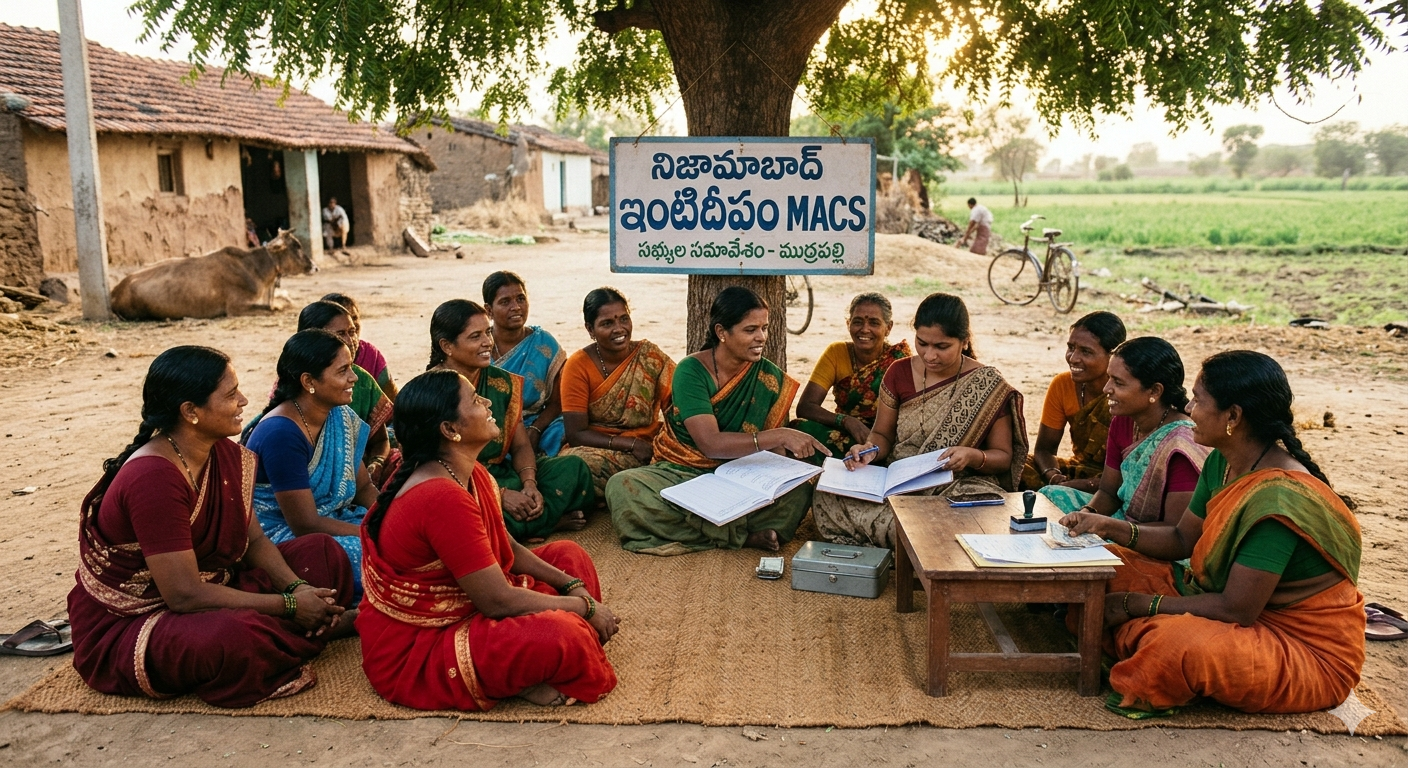
When we talk about shifting economic paradigms in rural India, we often look at large scale policy actions. However, the truest, most sustainable transformations usually happen quietly at the grassroots level. In the Nizamabad district of Telangana, this change is being driven by a highly effective, community-led model: the Intideepam Mutually Aided Cooperative Societies (MACS).
By bridging the gap between mainstream banking systems and rural communities, these cooperatives have evolved into a vital safety net for thousands of families.
What is Nizamabad Intideepam MACS?
A Mutually Aided Cooperative Society (MACS) operates under a specific legal framework designed to promote self-help and mutual aid among its members. Unlike standard commercial banks, a MACS is entirely owned, managed, and funded by the community members it serves—primarily small-scale farmers, rural artisans, and women's self-help groups.
In the Nizamabad area (often operating under regional umbrellas like the Indur Intideepam MACS Federation), these societies function at a village and mandal level—including hubs in Mudakpalli, Dichpally, Pitlam, and Dharpalle.
The Three Pillars of Impact
The success of the Intideepam model rests on providing practical, targeted financial and agricultural tools that address local vulnerabilities:
1. Accessible Micro-Financing
Traditional banks often require collateral or extensive documentation that rural villagers simply cannot provide. Intideepam MACS offers flexible micro-loans with tailored repayment terms (typically ranging from 11 to 30 months). This allows smallholders to purchase seeds, buy livestock, or establish small businesses without falling into the trap of predatory local money lenders.
2. Critical Social Security & Micro-Insurance
What sets the Intideepam network apart is its focus on holistic financial security. By partnering with major providers like LIC and regulatory bodies like the PFRDA, these societies manage:
-
Micro-Insurance Premiums: Protecting families against sudden crop failures or medical emergencies.
-
National Pension Scheme (NPS) Contributions: Providing a structured pathway for informal workers to save for old age.
3. Boosting Farmer Producer Organizations (FPOs)
Many of these cooperative societies function natively as Farmer Producer Organizations. By pooling their primary yields—such as paddy, maize, soyabean, and cotton—local farmers gain collective bargaining power. They can bypass middlemen, buy fertilizers at wholesale rates, and secure fairer market prices for their harvests.
Why the Cooperative Model Succeeds Where Others Fail
The secret weapon of the Intideepam MACS framework is local trust. Because the administrators are neighbors rather than distant corporate entities, there is a deep, mutual accountability.
The Grassroots Reality: When financial systems are designed by the people using them, the focus shifts from maximizing corporate profit to maximizing community stability.
As Telangana continues to invest heavily in rural infrastructure, local institutions like the Nizamabad Intideepam MACS prove that sustainable economic growth doesn't always trickle down from cities—it grows from the ground up.