Roots of Self-Reliance: The Story of Swayam Krushi Organic Cooperative
The phrase "Swayam Krushi" roughly translates to "Self-Effort" or "Self-Cultivation." In the realm of modern Indian agriculture, it represents a powerful philosophy: empowering small and marginal farmers to break free from the expensive, chemical-heavy cycles of industrial farming and build self-reliant livelihoods.
Through the Swayam Krushi Organic Cooperative model, farmers are pooling their resources, reviving ancestral farming wisdom, and bringing fresh, toxic-free food directly to health-conscious consumers.
What is the Swayam Krushi Cooperative Model?
At its core, a Swayam Krushi Organic Cooperative is a democratic association of smallholder farmers who have collectively transitioned away from synthetic fertilizers and harmful pesticides.
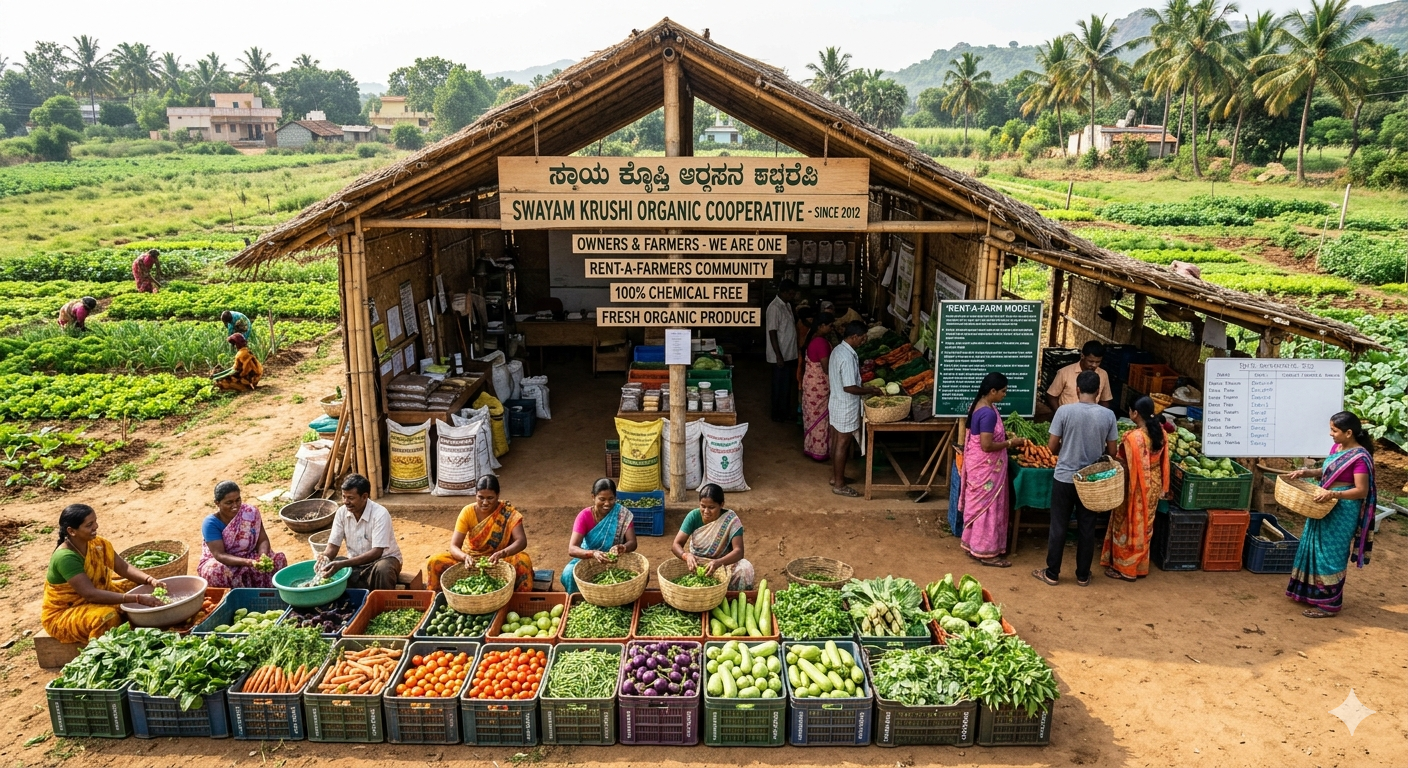
Instead of waiting for heavy corporate backing or navigating complicated supply chains alone, these growers combine their efforts. By operating as a cooperative, they handle everything from manufacturing bio-inputs to post-harvest aggregation, packaging, and ultimate direct-to-consumer sales.
The Core Strategy: True Sustainability via Collective Effort
The cooperative framework tackles the major pain points that traditional, independent organic farmers face on a daily basis:
1. Decentralized In-House Bio-Inputs
Purchasing commercial organic inputs can be incredibly expensive. Swayam Krushi members solve this by producing their own local bio-fertilizers and pest repellents—such as Jeevamrutham, Beejamrutham, and neem-based extracts—collectively at the village level. This drastically drops the cost of cultivation while naturally improving soil health and microbial life.
2. Fair Prices and Direct Markets
When an organic farmer sells to a conventional middleman, their premium produce gets lumped in with chemical crops, eroding its value. The cooperative sets up direct retail hubs, mobile organic vans, and neighborhood delivery boxes. By bypassing the traditional wholesale chain, more revenue flows straight into the pockets of the producers, while urban consumers get access to highly authentic, transparently sourced food.
3. Diversity in Cultivation
Instead of falling into the trap of risky mono-cropping (growing just one cash crop), the cooperative guides farmers to implement diverse multi-cropping systems. On a typical Swayam Krushi farm, you will see traditional paddy or millets grown alongside native pulses, oilseeds, and seasonal vegetables. This diversity protects the farmer against crop failures and provides a steady, year-round income stream.
What You’ll Find in the Swayam Krushi Basket
Because the cooperative focuses on local, clean nutrition, their inventory features a rich assortment of everyday kitchen essentials:
-
Native Grains: Unpolished, heirloom rice varieties and nutrient-dense millets.
-
Pure Pulses: Locally processed, chemical-free dals that retain their natural protein coats.
-
Cold-Pressed Oils: Groundnut and sesame oils extracted using traditional wood-pressed methods without chemical solvents.
-
Fresh Harvests: Daily hand-picked organic leafy greens and seasonal vegetables.
The Verdict: Healing the Soil, Feeding the Future
The Swayam Krushi Organic Cooperative model is a living testament that the future of agriculture isn't corporate-driven; it is community-driven. By championing the power of self-effort and mutual cooperation, these farmers are not only reclaiming their financial freedom but are also offering a healthier, greener blueprint for the plates of tomorrow.
Supporting local initiatives: Choosing to buy from a local organic cooperative means investing directly in groundwater preservation, chemical-free soil, and fair wages for the hands that feed us.