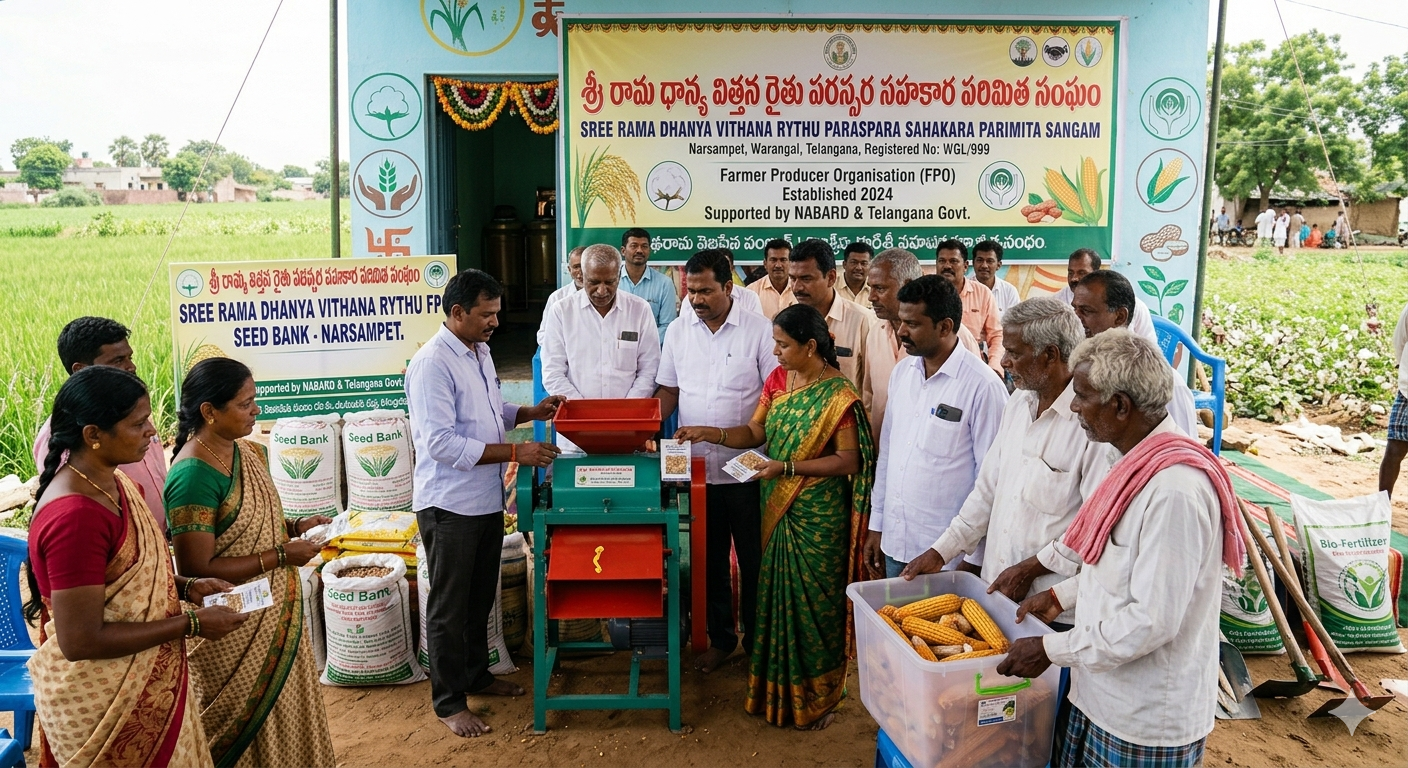
Seeds of Self-Reliance: How Sree Rama Dhanya Rythu Co-op is Empowering Warangal’s Farmers
In the heart of Telangana’s vibrant agricultural belt lies Narsampet, a region in the Warangal district celebrated for its sweeping fields of paddy, resilient cotton crops, and golden maize. But behind the scenic landscapes is a community of hardworking, small-scale farmers who navigate the unpredictable worlds of changing weather, fluctuating market rates, and the tricky logistics of sourcing high-quality inputs.
Enter Sree Rama Dhanya Vithana Rythu Paraspara Sahakara Parimitha Sangam.
Don’t let the lengthy, formal name twist your tongue—its core meaning translates beautifully to the Sree Rama Grain & Seed Farmers' Mutually Aided Cooperative Limited. This grassroots cooperative is quietly reshaping how local farmers do business, shifting the power dynamic back into the hands of the people who pull food from the soil.
What is a "Paraspara Sahakara Parimitha Sangam"?
In Telangana and Andhra Pradesh, a Paraspara Sahakara Parimitha Sangam is a Mutually Aided Cooperative Society (MACS). Unlike top-down corporations or government-run boards, this is a Farmer Producer Organisation (FPO) entirely owned, governed, and operated by the farmers themselves.
By banding together into a legal cooperative entity, individual smallholders—who might only own one or two acres of land—gain the collective bargaining power of a multi-million rupee enterprise.
Driving Rural Change: The Three Core Pillars
The Sree Rama Dhanya cooperative focuses its operations heavily on the primary lifelines of Warangal's rural economy: Paddy, Cotton, and Maize. They uplift the community through three essential mechanisms:
1. Eliminating the Middleman (Procurement & Market Links)
For generations, small farmers fell prey to local middlemen who bought crops at rock-bottom prices during harvest gluts. Sree Rama Dhanya aggregates the harvests of all its member farmers. By selling bulk volumes directly to large processors or government procurement centers, they bypass predatory agents and command significantly higher market returns for the growers.
2. Sourcing Authentic Inputs and "Vithana" (Seeds)
The inclusion of Vithana (Seed) in their name highlights a critical objective: ensuring seed security. Crop failure often starts with low-quality, counterfeited, or overpriced seeds bought from unauthorized dealers. The cooperative works to source certified, high-yield seeds, fertilizers, and bioproducts directly from trusted manufacturers, distributing them to members at fair, transparent rates.
3. Financial Shielding
Farming requires upfront cash for every single season. By pooling financial resources and utilizing cooperative credit lines, the Sangam provides low-interest financial pathways, protecting vulnerable farmers from local moneylenders who charge usurious, debt-trapping interest rates.
The Big Picture: Why Co-ops are the Future of Indian Farming
Indian agriculture is unique because the vast majority of farmland is broken into tiny fragmented plots. An individual farmer cannot afford a heavy tractor, a massive storage warehouse, or the transport costs to ship their goods to a major urban hub.
When organizations like Sree Rama Dhanya bring hundreds of these individuals under one digital and financial roof, everything changes. They can share machinery, build localized storage facilities, and weather the storms of market volatility together.
Organization Quick-Facts
If you are an agricultural researcher, corporate buyer, or a local farmer looking to connect, here are the official registry details for this cooperative:
-
Entity Type: Cooperative Society / Farmer Producer Organisation (FPO)
-
Primary Location: Narsampet Village & Mandal, Warangal District, Telangana, India
-
Key Agricultural Focus: Paddy (Rice), Cotton, and Maize
-
Contact Point: Primary administrative outreach is managed locally via designated coordinator Jai Pal Reddy (Contact: +91 9866074944 / Email: rsambareddy@yahoo.co.in).
Final Thoughts
The path to a resilient, self-sufficient rural India isn't paved by massive corporate buyouts; it is built steadily by organizations like Sree Rama Dhanya Vithana Rythu Paraspara Sahakara Parimitha Sangam. Through mutual aid, trusted inputs, and unity, they prove that when small farmers stand together, they can cultivate a thriving future.