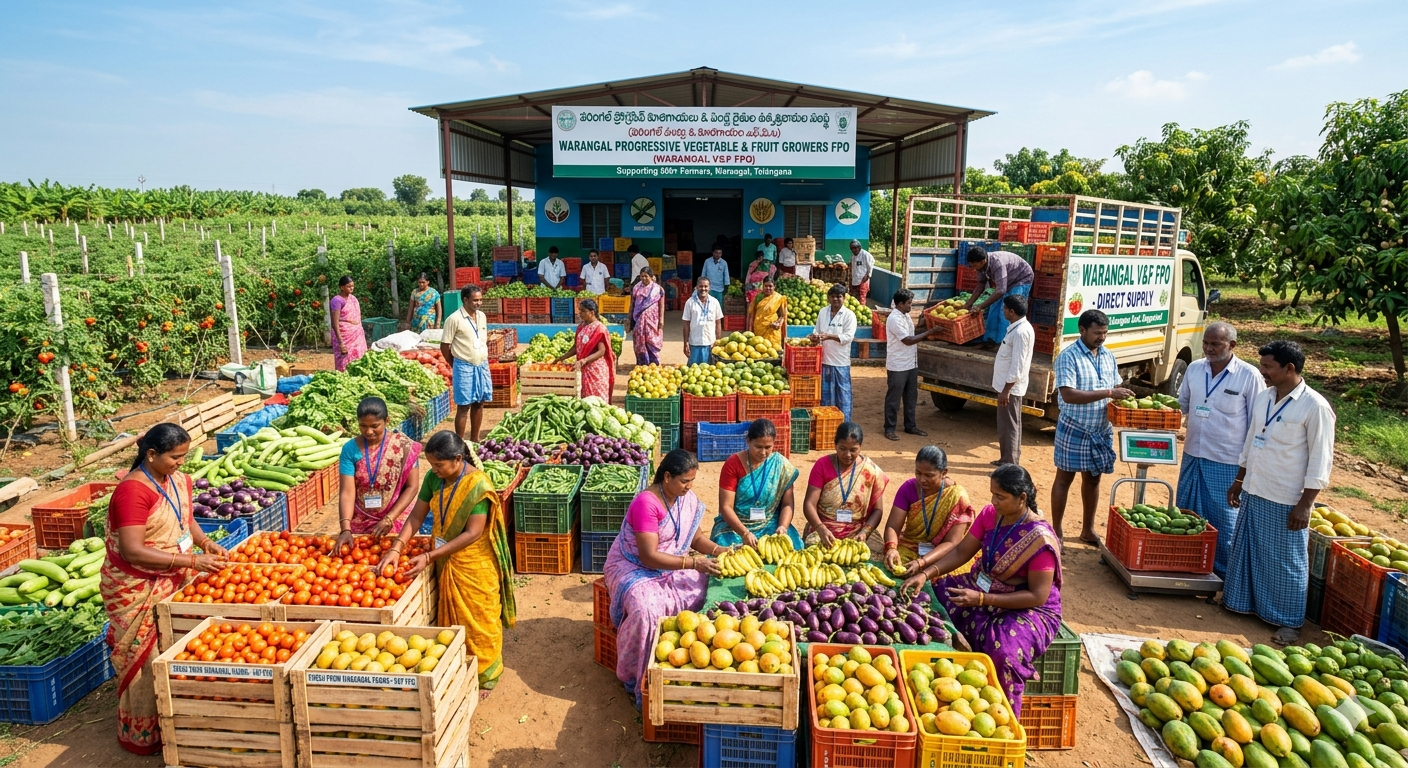
From Farms to Food Bowls: How Vegetable and Fruit Growers FPOs are Revolutionizing Horticulture
When we walk into a supermarket or a local market and pick up a crisp apple, a bright red tomato, or a bunch of fresh bananas, we rarely think about the complex, often chaotic journey that food took to get to us.
For smallholder farmers, cultivating fruits and vegetables (horticulture) is a high-risk, high-reward gamble. Unlike grain crops like paddy or wheat, which can be stored in gunny bags for months, fruits and vegetables are highly perishable. If they aren't sold within days—sometimes hours—of harvest, they rot, and the farmer's hard work turns into a financial disaster.
This is exactly where Vegetable and Fruit Growers Farmer Producer Organisations (FPOs) come into play, serving as a game-changing solution for rural communities.
The Core Problem with Perishable Supply Chains
Before FPOs, small-scale fruit and vegetable farmers faced several systemic hurdles:
-
The Race Against Time: Without access to cold storage, farmers are forced to sell their produce immediately, even if the market price that day is incredibly low.
-
Exploitative Middlemen: A long chain of intermediaries and agents often squeeze the farmer's margins, buying low and selling high to urban markets.
-
Logistical Nightmares: Transporting delicate produce in non-refrigerated, bumpy trucks leads to massive post-harvest losses—sometimes up to 30% of the entire harvest.
How Fruit & Vegetable FPOs Move the Needle
A Fruit and Vegetable Growers FPO aggregates hundreds of small farms under a unified cooperative business model. By working as a collective, they solve the critical challenges of perishability and market access:
1. Cold Chain and Infrastructure Setup
By pooling resources and securing government grants (from bodies like NABARD or SFAC), FPOs can invest in collective infrastructure. This includes localized cold storage units, pre-cooling chambers, and refrigerated transport vans. This vital infrastructure stretches the shelf-life of fresh produce, allowing farmers to wait for favorable market prices rather than selling out of desperation.
2. Value Addition and Processing
When a market is oversaturated with fresh tomatoes, prices crash. An FPO can step in to process the excess yield into tomato puree, paste, or sauces. By transforming raw fruits into juices, jams, or dried snacks, FPOs create "value-added products" that boast long shelf-lives and significantly higher profit margins.
3. Direct-to-Consumer (D2C) & Corporate Contracts
FPOs give small farmers a corporate identity. This allows them to bypass traditional wholesale markets entirely and sign direct supply contracts with major supermarket chains, e-grocers, and institutional buyers. Some FPOs even run their own mobile vending vans or retail kiosks in nearby cities, delivering fresh "farm-to-fork" produce directly to citizens.
Empowering the Grassroots Economy
Beyond the financial metrics, Vegetable and Fruit Growers FPOs are engines of social transformation. They frequently organize workshops on modern agricultural techniques, introduce high-yield organic farming methods, and provide farmers with vetted, top-tier seeds.
Furthermore, because sorting, grading, packing, and processing happen locally at the FPO collection centers, these organizations create sustainable, non-farm employment opportunities right inside the villages—particularly for rural women and youth.
Conclusion
The future of sustainable food systems depends heavily on localized, collective empowerment. By turning individual, vulnerable growers into a organized business collective, Vegetable and Fruit Growers FPOs ensure that farmers receive a fair share of the consumer's rupee, while urban centers enjoy a steady supply of fresh, nutritious food.