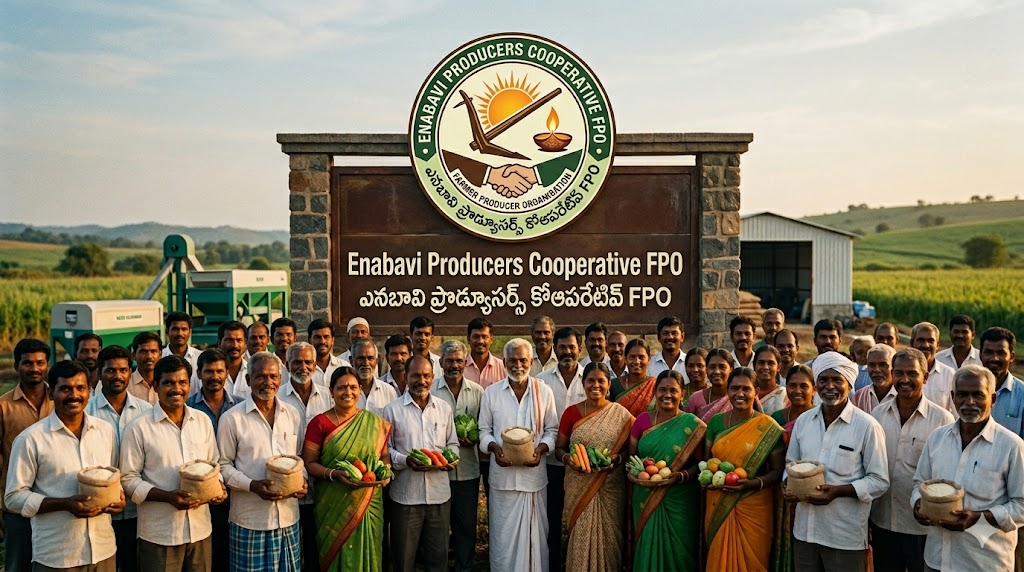
From Distress to Sustainable Abundance: The Story of Aadharsa Enabavi Organic Producers Cooperative
In the early 2000s, like many parts of rural India, a small village located in the Jangaon district of Telangana was locked in a vicious cycle of severe agricultural distress. Skyrocketing expenditures on chemical fertilizers, expensive synthetic pesticides, and constant crop failures left nearly every household burdened with debt.
Instead of succumbing to the crisis, the resilient community took complete control of their destiny. By 2006, Enabavi made history by becoming Telangana's very first 100% organic, chemical-free village. To manage this landmark transition and build long-term economic stability, the community integrated into a formal collective system, known today as the Aadharsa Enabavi Farmers Producer Company / Organic Cooperative.
Member Base: A Close-Knit Revolution
Unlike massive, corporate-style regional cooperatives, the strength of the Enabavi model lies in its complete community unity. The cooperative encompasses all 51 to 52 farming households of the entire Enabavi village ecosystem, managing a combined cultivable area of 210 to 282 acres.
While the core registry started with the original village families, the surrounding cluster villages in the Lingala Ghanapur Mandal have progressively joined hands with the cooperative network (Aadharsa Enabavi FPO) to learn, adopt, and scale these zero-chemical methods.
How it is Useful to Farmers: The Blueprint for Debt-Free Success
The utility of the Enabavi Cooperative goes far beyond simple seed and fertilizer sales. It acts as a comprehensive socio-economic framework that has effectively eliminated farmer debt in the community.
. Near-Zero Production Costs
Before the cooperative was formed, a farmer spent thousands of rupees per acre on commercial chemical inputs. The cooperative replaced these completely with community-managed ecological alternatives. Farmers use tank silt, poultry manure, vermicompost, and liquid bio-manures created using cow dung and cow urine. The input expense dropped down to practically zero, meaning even at standard market prices, a crop is never grown at a loss.
. Social Regulation and Zero Contamination
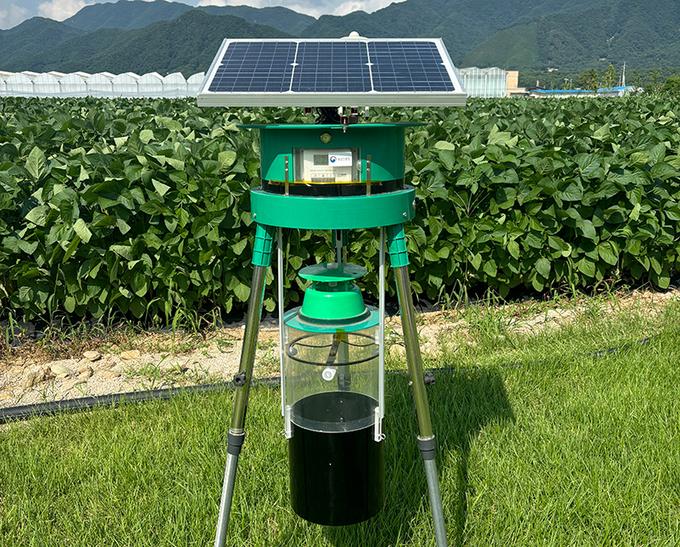
One of the hardest elements of organic farming is avoiding pesticide drift from neighboring fields. The cooperative established a strict village-wide social pact: no chemical sales or usage allowed within the boundary. If pests emerge, the entire community acts together using light traps, bonfires to catch moths, and organic neem-oil formulations.
. Alternative Revenue Streams
The move to natural farming has triggered a massive increase in local livestock health and population. Farmers within the cooperative now generate consistent alternative revenue by breeding earthworms, producing vermicompost units, and selling organic cow-dung manure to neighboring villages.
. Direct Premium Market Channels
Instead of relying on local mandis where traders dictate unfair prices, the Enabavi Cooperative aggregates its entirely organic yields. They process their grain directly and have established direct-to-consumer pipelines, partnering with eco-friendly marketing channels like Sahaja Aharam in Hyderabad, and have even shipped specialty produce to niche international buyers.
Cultivation Focus: Balancing Biodiversity and Profits
Monoculture (growing just one crop repeatedly) depletes soil nutrients and invites pest infestations. To prevent this, the Enabavi Cooperative utilizes strict crop rotation across its acreage, focusing on a diverse layout:
-
Paddy (Approx. 100 Acres): The absolute staple of the village. The cooperative relies heavily on traditional, hardy rice varieties that require significantly less chemical assistance and fetch premium rates in urban health-conscious markets.
-
Pulses and Grains (Approx. 50 Acres): Leguminous crops such as pigeon pea (Tur/Red Gram) are systematically grown to naturally fix nitrogen back into the soil, keeping the earth fertile without synthetic additives.
-
Vegetables (Approx. 35 Acres): Cultivated year-round using strict bio-pest control, providing daily food security and a rolling source of direct cash flow for village households.
-
Commercial Cotton (Approx. 25 Acres): While cotton farming historically pushed regional farmers into heavy pesticide traps, Enabavi grows cotton utilizing Non-Pesticidal Management (NPM) protocols, making it a highly profitable enterprise.