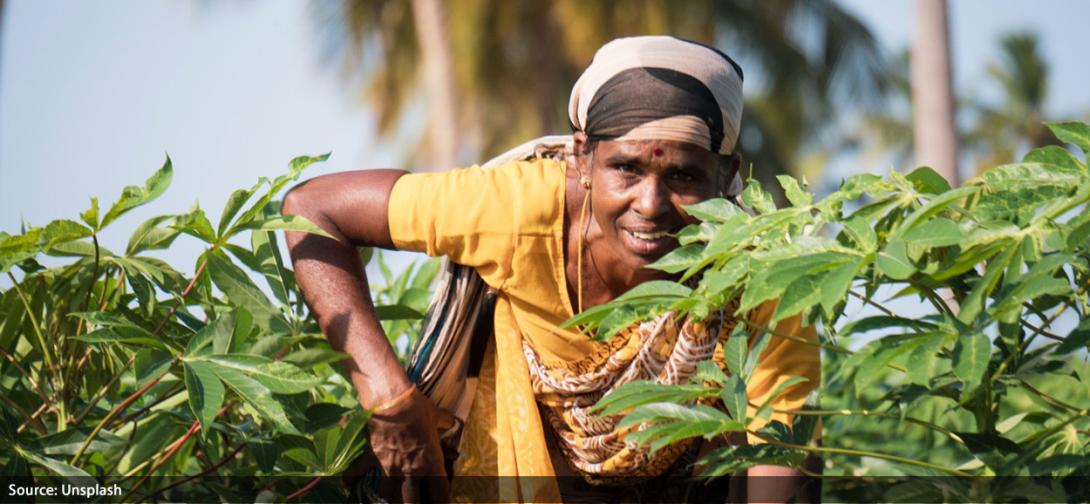
NITI Aayog member bats for better access for rural women to markets
The agricultural sector stands at a critical crossroads, facing the triple challenge of modernizing supply chains, bridging historical gender gaps, and adapting to unpredictable weather patterns. Addressing these interconnected issues head-on, the Agricultural Economics Research Association (AERA) recently hosted a milestone international conference centered around a timely and powerful theme: ‘Innovations in Agribusiness, Empowering Women and Climate-Resilient Agriculture’.
The event brought together an elite panel of global thought leaders, policymakers, and agricultural economists to deliberate on the structural transformations needed to future-proof farming communities.
A Powerhouse of Leadership and Vision
The international session commenced with insightful addresses from some of the most prominent names in agricultural development, finance, and research. Key dignitaries who shared their strategic visions included:
-
P.K. Joshi, President of AERA
-
Anjani Kumar, Secretary of AERA
-
A.K. Sood, Deputy Managing Director of NABARD
-
Samarendu Mohanty, Former Asia Regional Director of the International Potato Center (CIP)
-
Gopal Lal, Acting Director of NAARM
These leaders collectively emphasized that sustainable agricultural growth cannot happen in silos; it requires a unified approach that leverages financial technology, localized crop science, and robust institutional support.
Deep-Dive Technical Sessions: Framing the Future
Following the high-level plenary discussions, the conference transitioned into specialized technical sessions designed to spark actionable solutions. The deliberations were carefully divided into three critical pillars:
-
Innovations in Agribusiness (Empowering Start-ups & Promoting Exports): This session focused heavily on creating a thriving ecosystem for agritech startups. Experts discussed how streamlining regulatory pathways and providing better access to venture capital can help young enterprises scale up. Additionally, significant emphasis was placed on improving quality standards to boost India's agricultural export footprint in highly competitive global markets.
-
Empowering Women in Agriculture (Bridging Gender Gaps & Advancing Equity): Acknowledging that women form the backbone of rural labor yet rarely hold land titles or decision-making power, this session addressed systemic inequalities. Panelists mapped out frameworks for improving women's access to credit, agricultural extension services, and leadership roles within Farmer Producer Organizations (FPOs).
-
Climate-Resilient Agriculture (Strategies for Adaptation & Food Security): With shifting monsoons and rising temperatures threatening crop yields, this segment explored immediate strategies for climate adaptation. Discussions ranged from scaling up weather-smart farming techniques and drought-resistant seed varieties to implementing data-driven policies that guarantee national food security.
A Collaborative Academic Ecosystem
The conference served as a vibrant melting pot of ideas, attracting agricultural economists, industry professionals, veteran scientists, young scholars, and enthusiastic students from every corner of the country. By blending the wisdom of seasoned experts with the fresh perspectives of young researchers, the event successfully generated a forward-looking roadmap aimed at building an equitable, tech-driven, and climate-secure agricultural economy.