For years, India’s booming agritech sector was primarily celebrated for its software solutions. Startups excelled at building intuitive mobile applications, localized marketplace platforms, and digital lending algorithms for smallholder farmers. While these digital tools successfully brought transparency to supply chains, they left the physical realities of field labor largely unchanged.
That narrative shifted completely on the global stage. At the Bharat Innovates 2026 deep-tech conclave held in Nice, France, Indian agritech commanded center stage, marking a major transition from digital dashboards to heavy-duty Physical AI. Leading this charge was home-grown pioneer Niqo Robotics, selected as a core global innovator and proving that India is ready to export elite, scalable agricultural hardware to the world.
What is Physical AI in Agriculture?
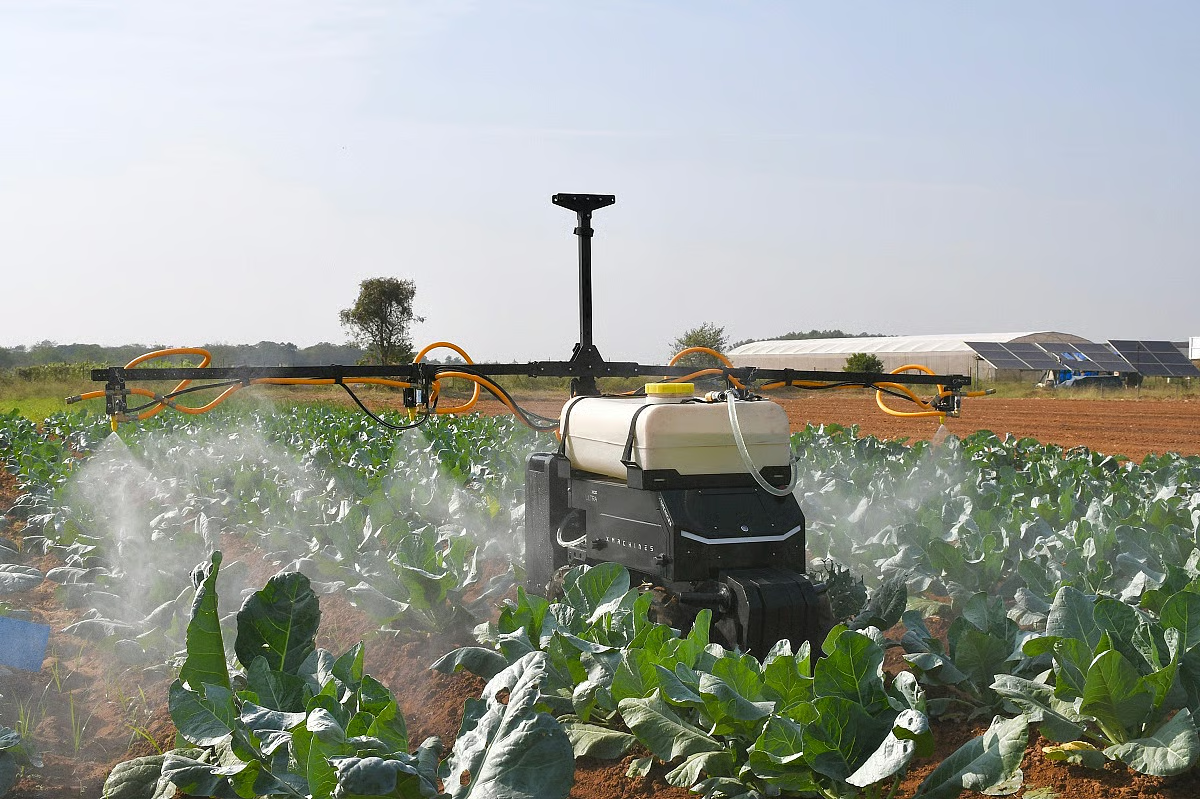
The transition to Physical AI means embedding advanced machine learning algorithms directly into real-world, moving farm machinery. Instead of a farmer looking at a satellite alert on a phone and then manually spraying a field, the machine itself sees, thinks, and acts in real-time.
At the heart of this hardware revolution is proprietary computer vision tech. As these farm robots traverse crop rows, their high-speed camera modules analyze the canopy frame-by-frame. Using deep-learning models trained on millions of agricultural images, the robot distinguishes between a healthy cash crop and an unwanted weed or early-stage disease cluster in milliseconds.
The Financial and Ecological Impact
This level of automated intelligence enables true spot-spraying. Instead of generic blanket spraying that blankets an entire farm in chemicals, the robot's micro-nozzles fire strictly at target weeds or infected leaves.
The real-world implications are staggering:
-
60% Reduction in Chemical Usage: By applying inputs only where absolutely necessary, farmers drop their chemical volumes by up to 60%.
-
Massive Cost Savings: For commercial farms and smallholder cooperatives alike, cutting chemical expenses by more than half directly improves seasonal profit margins.
-
Soil and Crop Protection: Limiting chemical runoff preserves the soil's natural microbial activity, ensuring long-term field fertility and preventing chemical toxicity in food supplies.
India as a Global Hardware Exporter
The global debut of companies like Niqo Robotics proves that Indian agritech is no longer just copying Western technology or building hyper-local software. By engineering rugged, cost-effective, and highly intelligent robots capable of operating in the world's most demanding agricultural environments, Indian innovators are positioning the nation as a premier global hub for deep-tech hardware manufacturing. The future of global farming isn’t just smart—it is being built, calibrated, and shipped directly from India.