Teaching Old Tractors New Tricks: The Rise of Retrofit Autopilot Kits
For years, precision agriculture felt like an exclusive club. If you wanted sub-inch accuracy, hands-free steering, and optimized field patterns, the unwritten rule was simple: buy a brand-new tractor. But dropping six figures on a new rig just to get the latest tech package doesn't make sense for most medium-scale or budget-conscious operations. Thankfully, the AgTech industry shifted its focus.
Instead of demanding that farmers buy new machines, companies are building aftermarket hardware to upgrade the ones they already own. Retrofit autopilot and autosteer kits have exploded in popularity, giving older, mechanical tractors the brains of a factory-fresh model at a fraction of the cost.
What Exactly is a Retrofit Autopilot Kit?
A retrofit kit is a universal bundle of hardware and software designed to bypass your tractor’s legacy steering controls and plug directly into a modern GPS network.
A standard kit consists of three main components:
-
The Brain (GNSS/RTK Receiver): Usually mounted to the roof of the cab, this receiver communicates with satellites to track your tractor’s exact position down to the centimeter (when utilizing Real-Time Kinematic, or RTK, corrections).
-
The Muscle (The Mechanical Driver): This is either an automated electric steering wheel that completely replaces your factory wheel, or a motorized ring gear that clamps onto your existing steering column to physically turn it.
-
The Interface (The In-Cab Console): A rugged touchscreen tablet where you map your field boundaries, set your "A-B guidance lines," and monitor passes.
The Benefits: Why Farmers Are Retrofitting
Upgrading your existing fleet with a universal autosteer kit offers immediate operational advantages:
-
Massive Cost Savings: A premium retrofit kit ranges from $2,500 to $18,000, depending on accuracy needs and steering mechanisms. Compare that to the price tag of a brand-new, factory-guided tractor, and the ROI speaks for itself.
-
Eliminating Overlaps and Gaps: Human drivers naturally overlap their passes by about 10% to avoid skipping spots. Autopilot kits drop that error down to less than 2.5 cm (1 inch). Over hundreds of acres, eliminating that 10% waste significantly reduces fuel, fertilizer, and seed costs.
-
Reduced Operator Fatigue: Driving a straight line for 14 hours while watching an implement behind you is exhausting. Autopilot allows the operator to focus entirely on the quality of the job—monitoring spray pressure or planter depth—while the machine handles the pathing.
-
Defeating "Vendor Lock-In": If your fleet is a mix of older John Deere, Case IH, and New Holland machines, buying proprietary tech locks you into one ecosystem. Brand-agnostic retrofit systems allow you to move the core tech from tractor to tractor regardless of its paint color.
Electric Motor vs. Hydraulic Kits: Which is Right For You?
When looking at aftermarket autopilot systems, you will generally run into two types of steering mechanisms:
| Feature | Motor-Driven Wheel (e.g., FJDynamics AT2, CHCNAV NX510) | Integrated Hydraulic System (e.g., AllyNav AF201, Trimble Autopilot) |
| Installation Time | Fast: 4 to 6 hours. Swap out the steering wheel or bolt a motor to the column. | Complex: 1 to 2 days. Requires tapping into the tractor’s actual hydraulic steering lines. |
| Transferability | High: Easily uninstalled and moved to a different tractor or combine next season. | Low: Permanent or semi-permanent installation tied to that specific machine. |
| Torque & Terrain | Better for flat to moderately rolling fields and standard utility tractors. | Massive steering force; ideal for heavy-draft work, articulated tractors, and steep hillsides. |
| Price Point | Entry to Mid-Tier budget friendly. | High-Tier / Premium investment. |
Turning Autopilot into True Autonomy
The market has advanced past basic straight-line steering. The latest aftermarket upgrades bridge the gap between "driver-assisted" and fully autonomous.
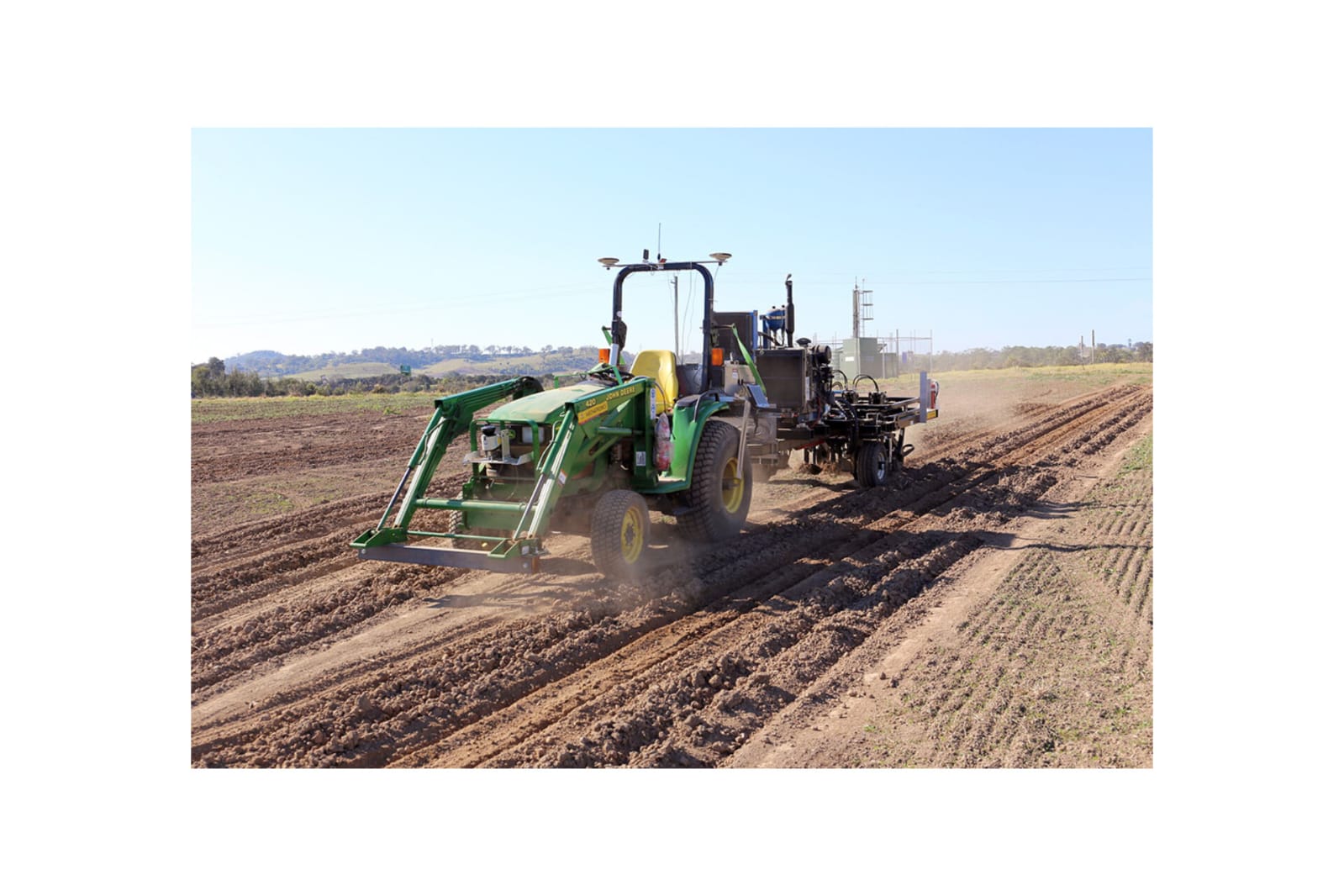
Major brands—including the newly formed PTx (an Agco joint venture with Trimble and Precision Planting) and John Deere with their Next-Gen Perception Kits—have introduced aftermarket autonomy packages. By mounting a perimeter of camera arrays, LiDAR sensors, and rugged processing units onto existing machines, farmers can retroactively configure older tractors to execute tillage, orchard spraying, and grain-cart trailing entirely driverless.
The Bottom Line
You don't need a factory-fresh machine to run a high-tech operation. If your older tractor has a solid engine, a reliable transmission, and plenty of life left in the iron, retrofitting it with an aftermarket autopilot system is one of the smartest upgrades you can make. It proves that in modern agriculture, efficiency isn't about the age of your tractor—it’s about the intelligence of your steering wheel.