.webp)
Roots & Robots: How AI is Quietly Revolutionizing the Indian Farm
For decades, the standard mental image of Indian agriculture has been defined by tradition: a farmer wading through a flooded paddy field behind a pair of oxen, or entire families under a scorching sun manually pulling weeds row by row.
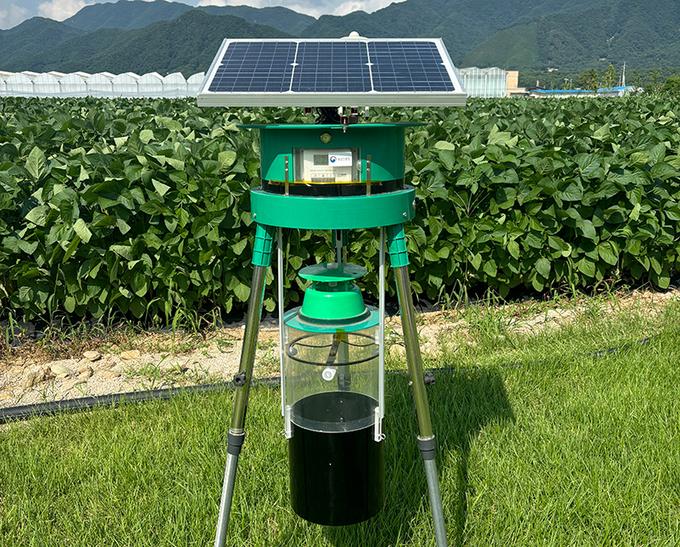
But if you walk into a village farm today, you are increasingly likely to hear a completely different sound—the low hum of a drone overhead, or the gentle whir of a rugged, solar-powered rover scanning soil moisture.
India is quietly emerging as a global powerhouse in agricultural AI. Driven by a massive wave of homegrown startups and aggressive government support like the Digital Agriculture Mission, artificial intelligence and robotics are moving out of elite research labs and directly onto small family farms.
Here is how these high-tech innovations are solving age-old farming challenges across India.
1. The Multilingual AI Advisories: Breaking the Literacy Barrier
The absolute smartest AI in the world is useless if a farmer can’t read the data. In a country with dozens of major languages and hundreds of regional dialects, tech adoption has historically hit a massive language wall.
The latest push in Indian agritech is entirely focused on democratizing data through voice and native languages.
-
Kisan e-Mitra: This AI-powered government chatbot speaks 11 regional languages. It handles over 8,000 queries a day from everyday farmers checking on their PM-KISAN benefits or asking for immediate crop health advice.
-
Bharat-VISTAAR: Introduced in the Union Budget, this massive multilingual AI tool integrates scientific packages from the Indian Council of Agricultural Research (ICAR) with a farmer's specific land profile. A farmer can simply ask a question in their native tongue—like Marathi or Telugu—and receive a tailored, AI-backed action plan.
2. Low-Cost Robotics Made for Indian Dirt
When people think of agricultural robots, they usually imagine massive, multi-million rupee autonomous tractors built for thousands of flat acres in America or Europe. Those don't work on small, uneven, fractioned Indian land holdings.
Instead, Indian startups are designing smaller, modular, hyper-affordable robots tailored to real-world field conditions.
The Homegrown Innovators
| Company / Product | What it Does | Major Impact |
| Niqo Robotics (RoboSpray) | Uses proprietary AI camera technology to turn conventional sprayers into "spot-sprayers." | Reduces chemical and pesticide use by up to 60%. |
| AI AgriRover | A compact, rugged smart robot built specifically for rough terrain and small holdings. | Achieves 3x faster operations for automated seeding and fertilizer spreading. |
| Farm Again | Uses localized, affordable solar sensors and AI to micro-manage irrigation. | Doubled coconut yields for local farmers while saving 4,00,000 cubic meters of water. |
These machines use computer vision to look at individual leaves. Instead of blanketing an entire field in expensive, toxic pesticides, the AI robot "sees" a specific weed or pest, calculates the exact dose needed, and zaps only that spot.
3. Demolishing the Lab Infrastructure Bottleneck
Historically, if a farmer wanted to know why their crops were failing, they had to collect soil samples, send them to a distant government lab, and wait weeks for a paper report to come back. By then, the crop might already be dead.
Deep learning is bypassing the physical lab entirely. Using advanced image recognition, platforms like the National Pest Surveillance System (NPSS) allow a farmer to take a simple smartphone photo of an unhealthy leaf. The AI instantaneously analyzes the visual pattern against a database of over 432 pest species and 66 different crops, giving the farmer an accurate diagnosis and treatment plan within seconds.
Similarly, satellite arrays are utilizing AI to analyze spectral signatures from the soil, mapping out nitrogen, phosphorus, and potassium deficiencies from orbit.
The Bottom Line: Fusing Innovation with Tradition
What makes India's agricultural AI revolution so unique is its focus on frugal engineering.
An imported precision irrigation system can easily cost up to ₹25 Lakh—completely out of reach for a typical smallholder. Homegrown, indigenous AI setups are hitting the market at a fraction of that cost (around ₹2.5 Lakh), making sustainable, high-yield farming accessible to everyday communities.
AI is not replacing the wisdom of the Indian farmer; it is giving them an unbreakable safety net. By pairing generations of cultural farming knowledge with the predictive power of artificial intelligence, India is securing its food supply—one smart acre at a time.