From Spreadsheets to Soil: The Banker Who Built a Rs 21 Crore Green Empire
The fluorescent lights of the corporate tower used to feel like security. For nearly eight years, Amith Kishan lived the high-stakes rhythm of the banking sector, managing portfolios for giants like ICICI, HDFC, and Axis Bank in Bengaluru. But a turning point arrived during an insurance claim. A client tragically passed away from cancer just eighteen months into their policy. It was a massive wake-up call about the toxic, chemical-heavy food loop modern society is trapped in.
Amith started asking himself: Is this it?
In 2016, he decided the answer was a resounding no. Leaving behind the comfort of a steady corporate paycheck, Amith and his brother Ashrith decided to return to their grandfather’s roots. Today, that leap of faith has blossomed into Hebbevu Farms—a Rs 21 crore agriculture empire spanning 650 acres in Penukonda, Andhra Pradesh.
But this isn't just a story about a massive balance sheet. It’s a story about healing the soil, rediscovering ancient wisdom, and lifting up an entire community.
1. Trading the Cubicle for the Countryside
Stepping away from a lucrative corporate job is terrifying. Everyone tells you you're crazy. In fact, the first three years (2016–2019) were a grueling learning phase filled with trial, error, and heavy skepticism from neighbors as the brothers worked to master crop seasons like Kharif and Rabi.
But the pull toward Zero Budget Natural Farming (ZBNF) was stronger than the doubt. The idea behind it is beautifully simple: farming in harmony with nature, using local resources instead of expensive, toxic chemical fertilizers.
-
The Initial Struggle: The soil was tired, compacted by decades of intensive chemical farming.
-
The Turning Point: Nature is incredibly resilient. Once the chemicals stopped, the earthworms returned, the birds came back, and the soil grew rich, dark, and alive again.
2. Scaling up a Closed-Loop, 650-Acre Ecosystem
What started as a modest 15-acre trial completely disproved the myth that organic farming can't compete at a commercial scale. By applying a banker’s eye for optimization to sustainable agriculture, Hebbevu Farms grew into a massive, self-sustaining empire.
Here is how a spreadsheet mindset actually helped save the land:
-
The Livestock Backbone: The farm hosts over 700 indigenous cows and buffaloes (including Gir, Sahiwal, and Jafarabadi breeds). Their dung and urine form the foundation of all natural fertilizers used on-site, cutting out chemical costs entirely.
-
A Zero-Tractor Policy: Instead of heavy machinery that compacts and destroys fragile soil microbiology, the farm relies strictly on traditional bull-ploughing.
-
Energy Wisdom: By transitioning heavily to solar power, the farm slashed its massive grid electricity costs from ₹3 lakh per month down to just about ₹40,000.
-
Crop Diversity & Scale: Today, they grow nearly 40 varieties of indigenous crops, ranging from daily pulses to rare coconut varieties like Gangabhavani. They now harvest roughly 6 tonnes of fresh produce and 1,500 liters of milk every single day.
-
Direct-to-Consumer Supply: By cutting out exploitative middlemen, they serve over 3,000 retail customers daily through physical outlets in Bengaluru and online delivery, keeping the profits exactly where they belong—with the farm.
3. The Real Heart of the Farm: Empowering 3,000 Rural Women
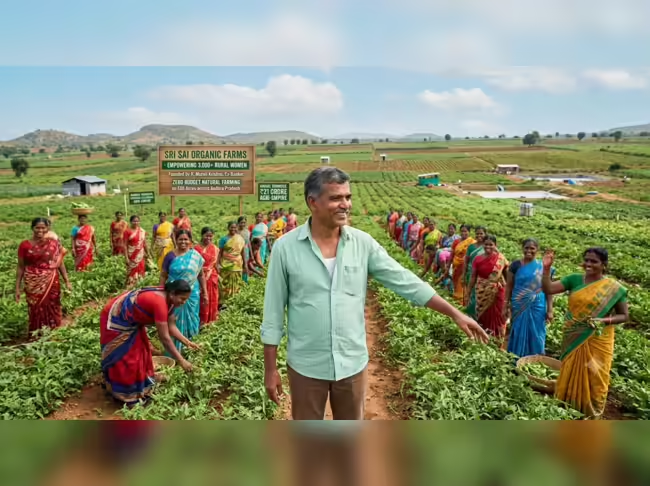
If you ask Amith what the most rewarding asset on the balance sheet is, the answer isn’t the Rs 21 crore valuation. It’s the 3,000 rural women across 18 villages (including Chinnamanthur, Mavutur, and Roddam) who have found true financial independence.
In many rural communities, women do the bulk of the agricultural labor but rarely see financial autonomy. Hebbevu Farms changed the rules with a clever micro-entrepreneurship model:
-
Traditional Processing: The farm distributes 25 liters of milk daily to individual rural women in these villages.
-
Economic Freedom: The women use this milk to craft traditional, wood-fired A2 desi cow Bilona ghee and paneer right in their homes. For every kilogram of artisan ghee produced, a direct, sustainable livelihood is secured.
-
A Sisterhood of the Soil: With fair, independent wages, these women are sending their children to better schools, investing in their households, and completely shifting the power dynamics of their villages.