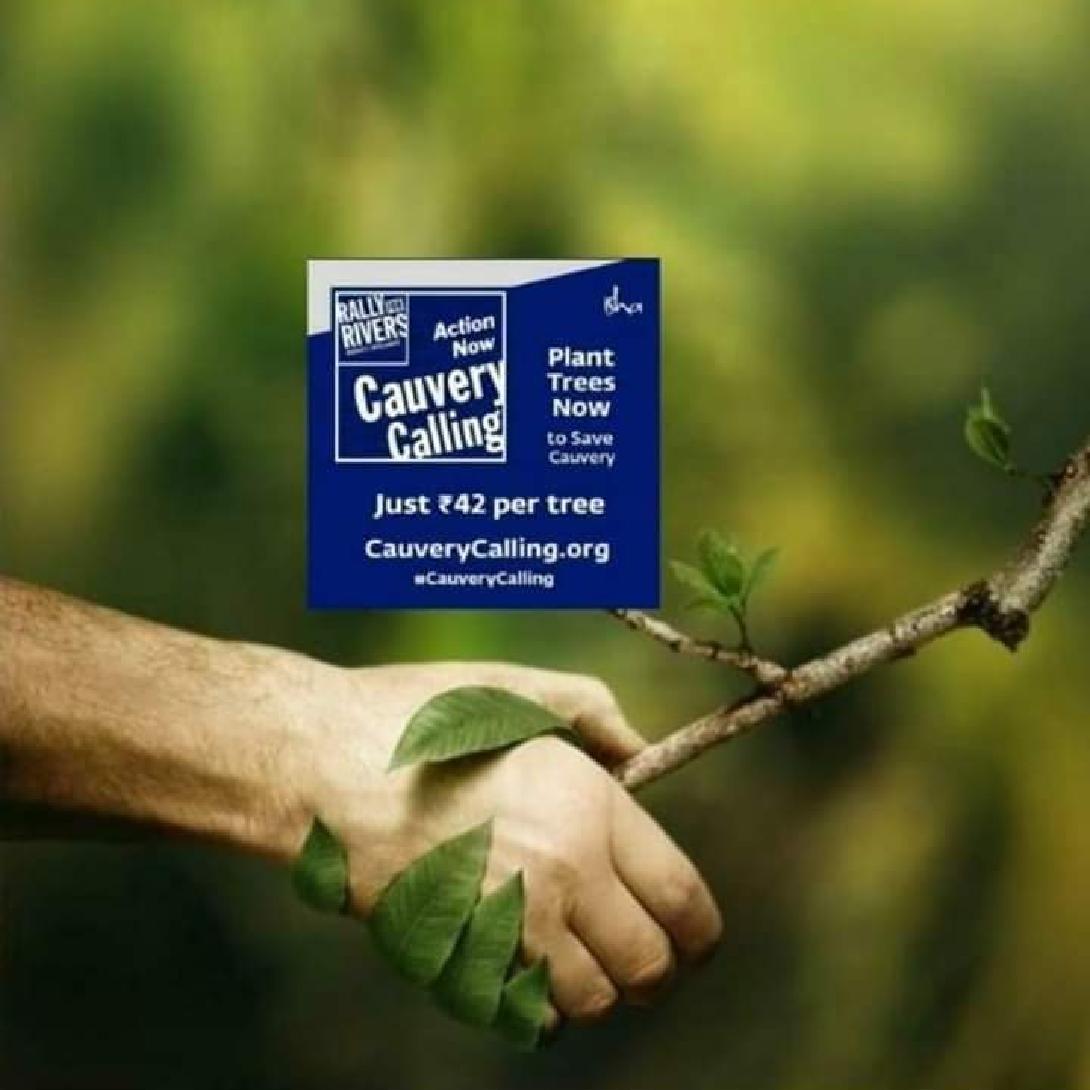
More Than a Number: How 13.4 Crore Trees are Rewriting the Future of the Cauvery River
If you’ve driven through parts of Tamil Nadu or Karnataka recently, you might have noticed something shifting. The landscape looks a bit softer, a bit greener, and—if you talk to the local farmers—a lot more hopeful.
The Save Soil – Cauvery Calling movement, envisioned by Sadhguru, just announced a massive milestone: 13.4 crore (134 million) trees have been planted so far. And they aren't slowing down. As the monsoon season kicks into gear for 2026-27, the initiative has set its sights on planting another 1.2 crore (12 million) saplings this year alone.
But if you ask anyone on the ground, they’ll tell you the exact same thing: this isn't just about hitting a massive statistical target. It’s about people, soil, and survival.
Why Trees? (And Why Public Land Drives Usually Fail)
We’ve all seen standard corporate or government plantation drives. A group of people gather in a public park, dig a few holes, take photos with saplings, and go home. Sadly, without anyone taking personal ownership, the survival rate of those trees is often heartbreakingly low.
Cauvery Calling does things differently. It focuses entirely on agroforestry—which simply means putting trees back onto private agricultural land.
“Thirteen crore trees is not just a number," explains Anand Ethirajalu, Project Director of the movement. "What it represents is 2.6 lakh (260,000) farmers who have permanently changed how they farm. That shift from monoculture to tree-based agriculture will determine whether the Cauvery flows year-round in the decades ahead.”
By offering high-value timber saplings (like teak, rosewood, and mahogany) at a heavily subsidized rate of just ₹5, and fruit or flower trees for ₹10, the movement turns trees into economic assets. Farmers take care of them because the trees quite literally take care of their financial future.
The Reality Facing the Cauvery
To understand why this is so urgent, we have to look at the river itself. The Cauvery is a forest-fed river, not a glacier-fed one. It relies entirely on the sponge-like capacity of the surrounding soil to hold onto monsoon rains and feed the river throughout the dry months.
Over the last 70 years, the Cauvery basin has lost 87% of its original tree cover, leading to a 40% drop in water flow. The soil, stripped of organic matter, turns to dust. When it rains, the water just washes away, causing a vicious cycle of floods and droughts.
The long-term goal of Cauvery Calling is to get 242 crore trees into the ground across the basin. It sounds like an impossible number, but breaking it down into milestones like this year's 1.2 crore target makes it a tangible reality.
Shifting From Survival to Prosperity: Valluvan’s Story
What does this look like in real life? Take Valluvan, a UN-awarded farmer from Tamil Nadu who transitioned his farm using these exact principles.
Instead of sticking to a traditional coconut monoculture (growing just one crop), he transformed his land into a multi-layered food forest, integrating timber, pepper, and fruit crops. He adopted regenerative practices like minimal tillage, mulching, and cover cropping to bring his soil back to life.
The results speak for themselves:
-
Less Dependency: A massive drop in the need for expensive chemical fertilizers and pesticides.
-
Climate Resilience: His farm easily withstood recent dry spells and sudden heavy downpours that devastated neighboring plots.
-
Economic Success: Over the years, his farm income multiplied six times over, allowing him to live comfortably and fund a great education for his children.
A Modern, Tech-Backed Ecosystem
What’s truly fascinating is how this massive grassroots movement is managed. It isn't just about handing out saplings and wishing farmers good luck. It's backed by a sophisticated support network:
-
Massive Scale: The project runs immense nurseries, including one in Cuddalore which is recognized as Asia’s largest single-site nursery, offering 54 distinct native varieties.
-
Real-Time Tech Support: Over 60,000 farmers are connected across 225 active WhatsApp groups where they can get immediate peer and expert advice.
-
A Dedicated Helpline: Operating from 9 AM to 9 PM daily, a helpline resolves complex agricultural queries within 24 to 48 hours.
The Road Ahead for 2026-27
On World Environment Day, the annual plantation drive kicked off simultaneously across 122 locations, putting over 100,000 saplings in the ground on day one. Across districts like Coimbatore—which is aiming for 8 lakh saplings this year—the momentum is undeniable.
When we think about environmental crises, it’s easy to feel overwhelmed and powerless. But the Cauvery Calling model offers a blueprint that works because it doesn't pit humanity against nature. It aligns the financial well-being of the farmer with the ecological health of the earth.
With 13.4 crore trees already breathing life back into the soil, the next 1.2 crore aren't just an environmental goal—they are the building blocks of a living, flowing future.