Shielding the Fields: Can Climate-Smart Farming Outsmart India’s El Niño Threat?
Every few years, a quiet anxiety creeps over rural India. It starts thousands of miles away in the tropical Pacific Ocean, where an unusual warming of surface waters triggers a massive atmospheric domino effect. For India, this weather phenomenon—known as El Niño—historically means one terrifying thing: a disrupted, erratic monsoon.
Given that nearly half of India's workforce relies on agriculture, and over half of our fields depend entirely on rain, a bad El Niño year can devastate rural incomes and trigger food inflation across the country.
We can’t change the temperature of the Pacific Ocean. But a growing movement of farmers, scientists, and policymakers are asking a better question: Can we change how we farm to make El Niño irrelevant?
The answer lies in Climate-Smart Agriculture (CSA).
The El Niño Problem: A Rigged Game
Traditionally, Indian farming operates on strict, predictable schedules. The monsoons arrive, the fields are flooded, and crops like rice are transplanted.
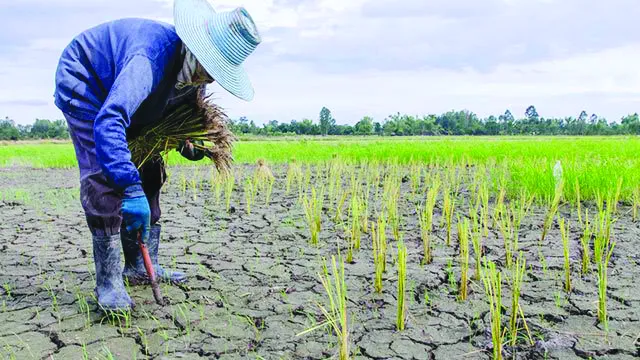
When El Niño strikes, it completely disrupts this rhythm. Rains are delayed, long dry spells scorch the crops mid-season, or sudden, unseasonal downpours wash away weeks of hard work. Standard farming practices simply aren't built to handle this level of volatility.
Enter Climate-Smart Agriculture: The Strategy
Climate-Smart Agriculture isn't a single technology. It is a shifting mindset that uses data, traditional wisdom, and modern science to build a buffer between the weather and the crop. Here is how it actively reduces El Niño risks:
1. Swapping Water-Guzzlers for Climate-Hardy Crops
Traditional paddy (rice) cultivation requires fields to be completely submerged in water. During a drought, this is a death sentence for the harvest.
Climate-smart farming introduces short-duration, drought-tolerant crop varieties. Instead of thirsty rice, farmers are encouraged to switch to millets (like Ragi, Jowar, and Bajra). Millets require a fraction of the water, can survive erratic dry spells, and pack a massive nutritional punch. Furthermore, new heat-tolerant varieties of wheat and rice can mature faster, escaping the worst of the mid-season dry spells.
2. Upgrading to Micro-Irrigation
When water is scarce, flooding an entire field is incredibly wasteful. Micro-irrigation techniques, such as drip and sprinkler systems, deliver water drop-by-drop directly to the roots.
By combining drip irrigation with liquid fertilizers (a practice called fertigation), plants get exactly what they need without wasting a single drop. Even if the local reservoir drops during an El Niño year, a drip-equipped farm can still thrive.
3. Rewriting Soil Chemistry: Direct Seeded Rice (DSR)
Instead of growing rice seedlings in a nursery and then transplanting them into flooded fields, Direct Seeded Rice (DSR) allows seeds to be sown directly into the soil.
This single operational shift reduces water consumption by up to 30% and dramatically cuts down on methane emissions. Because it doesn't require a flooded field to start, farmers aren't left helplessly waiting for the monsoon to break.
Turning Soil into a Sponge
One of the biggest culprits of crop failure during a drought isn't just the lack of rain—it's the soil's inability to hold onto the water it does get.
"Healthy soil acts like a sponge," says organic farming advocate Dr. Kavitha Kuruganti. "When we strip soil of its organic carbon through heavy chemical use, water just runs off or evaporates. By adding organic matter, mulching, and practicing zero-tillage, we ensure that even a light shower stays in the root zone for weeks."
Can it Scaled to Save the Monsoons?
The real challenge isn't the science; it's the scale. India has over 140 million farmers, most of whom manage less than two hectares of land. Getting them to adopt new seeds, buy drip irrigation equipment, or shift away from traditional cash crops takes immense effort.
Thankfully, initiatives like the government's National Innovations in Climate Resilient Agriculture (NICRA) are establishing "climate-smart villages" across vulnerable districts. These hubs act as live demonstrations, showing skeptical neighboring communities that these methods actually protect their pockets when the rains fail.
The Verdict
Can climate-smart farming completely eliminate India's El Niño risk? No. A severe drought will always pose a major challenge to our water systems.
But it can take the sting out of it. It can transform an El Niño year from a national economic crisis into a manageable hurdle. By building resilience directly into the soil and the seed, Indian agriculture is slowly moving away from gambling on the monsoon, and toward taking control of its own future.