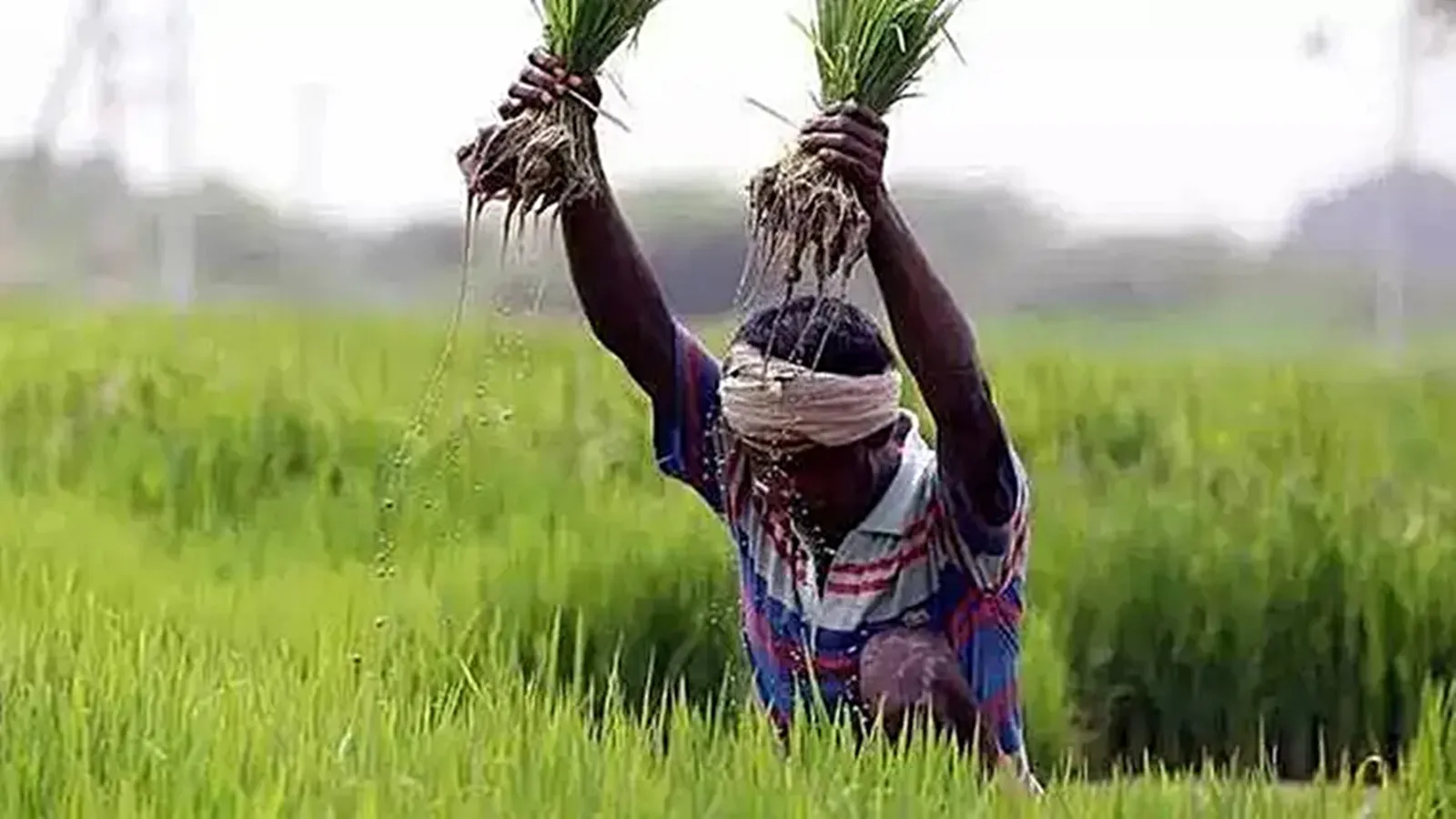
Direct Transfers and Safety Nets: Inside the New Crop Insurance & PM-Kisan Push
The financial tightrope of farming just received a major safety net. In a massive sweeping deployment of rural welfare and safety systems, Prime Minister Narendra Modi released the 23rd instalment of the Pradhan Mantri Kisan Samman Nidhi (PM-KISAN) scheme, directly injecting ₹18,880 crore into the bank accounts of more than 9.44 crore farmers across India.
But the real headline of the day came from Tarakeswar in Hooghly district. In a significant political and logistical shift, the Prime Minister officially launched the central Pradhan Mantri Fasal Bima Yojana (PMFBY) and the Restructured Weather-Based Crop Insurance Scheme (RWBCIS) in West Bengal—bringing what is recognized as the world's largest crop insurance framework to the state’s agricultural communities with a massive combined outlay of ₹12,200 crore.
1. Direct-to-Account Financial Fuel via PM-KISAN
The release of the 23rd PM-KISAN instalment acts as immediate working capital for seasonal expenses, bypassing traditional bureaucratic leaks through Direct Benefit Transfers (DBT).
-
The Scale of Inflow: Transferring nearly ₹19,000 crore in a single click directly reinforces the spending power of over 9.44 crore households right when input procurement is at its peak. In West Bengal alone, more than 45.35 lakh farmers received roughly ₹907 crore under this single payout.
-
Empowering Women Farmers: Reflecting an inclusive rural push, more than 2.18 crore women beneficiaries received funds directly into their Aadhaar-seeded accounts, driving financial autonomy in female-led agricultural households.
-
The Rural Multiplier Effect: These predictable, routine payments allow smallholders to secure high-quality seeds and basic farm necessities without falling into the debt traps of local, high-interest informal moneylenders. Total disbursements under this scheme since 2019 have now crossed a massive ₹4.46 lakh crore.
2. Launching the World's Largest Crop Insurance in Bengal
West Bengal's integration into the PMFBY network marks a massive turning point for the state’s climate vulnerability management. The sheer volume of this rollout effectively shifts the safety threshold for regional rice and cash-crop growers.
-
Massive Land and Human Coverage: The insurance drive aims to cover roughly 1.10 crore farmers cultivating across an estimated 30 lakh hectares of agricultural land in West Bengal during the 2026-27 cycle.
-
A Massive Financial Shield: The total insured value under this expansion is a staggering ₹28,140 crore, protecting families against total financial ruin from localized droughts, flash floods, or pest outbreaks.
-
Heavily Subsidized Premiums: Backed by substantial premium subsidies from both the Centre and State (amounting to roughly ₹777 crore), small and marginal farmers can safeguard their entire year's labor for a fraction of standard commercial insurance costs.
3. The Digital Agriculture Mission: Coding Transparency
The mega-launch wasn't just about financial payouts; it marked a deep technological overhaul of how rural services are distributed through the rollout of AgriStack in West Bengal.
-
The Unified Agri-Tech Platform: Part of a nationwide ₹2,817 crore digital public infrastructure mission, this new platform offers farmers a single, clean digital interface. It handles everything from streamlined fertilizer distribution and Kisan Credit Card (KCC) services to automated MSP-based government procurement.
-
Satellite-Backed Verification: By linking land records digitally to farmer profiles via AgriStack, the insurance framework can settle claims using satellite data and remote sensing, cutting down processing delays and putting money back into farmers' pockets when disaster strikes.
4. Rooting for the Earth: The National Natural Farming Mission
Hand-in-hand with high-tech software, the government launched a major ecological pivot in West Bengal to scale down farmers' dependency on volatile, expensive chemical inputs.
-
Natural Farming Clusters: The initiative is establishing 346 distinct natural farming clusters covering 17,300 hectares across the state.
-
The Power of Krishi Sakhis: Backed by on-the-ground bio-resource centers, over 43,250 farmers are being paired with 'Krishi Sakhis' (rural agricultural mentors) to receive training in organic, bio-based inputs and direct market linkages.
5. District-Specific Growth and Rural Arteries
A safety net is only as strong as the physical infrastructure supporting it. The agricultural announcements were explicitly paired with target programs to bridge regional divides and improve logistics.
-
The Dhan-Dhanya Krishi Yojana: Launched specifically across Purulia, Darjeeling, Alipurduar, and Jhargram districts, this localized scheme targets structural productivity gaps, funds crop diversification, and builds vital post-harvest processing and cold storage facilities.
-
Building Rural Arteries: The Prime Minister inaugurated 49 distinct road infrastructure projects worth over ₹213 crore under the Pradhan Mantri Gram Sadak Yojana (PMGSY-III). Spanning over 315 km across various Bengal districts, these all-weather routes ensure that fresh produce can move seamlessly from remote farm gates to major commercial hubs without spoiling on broken tracks.