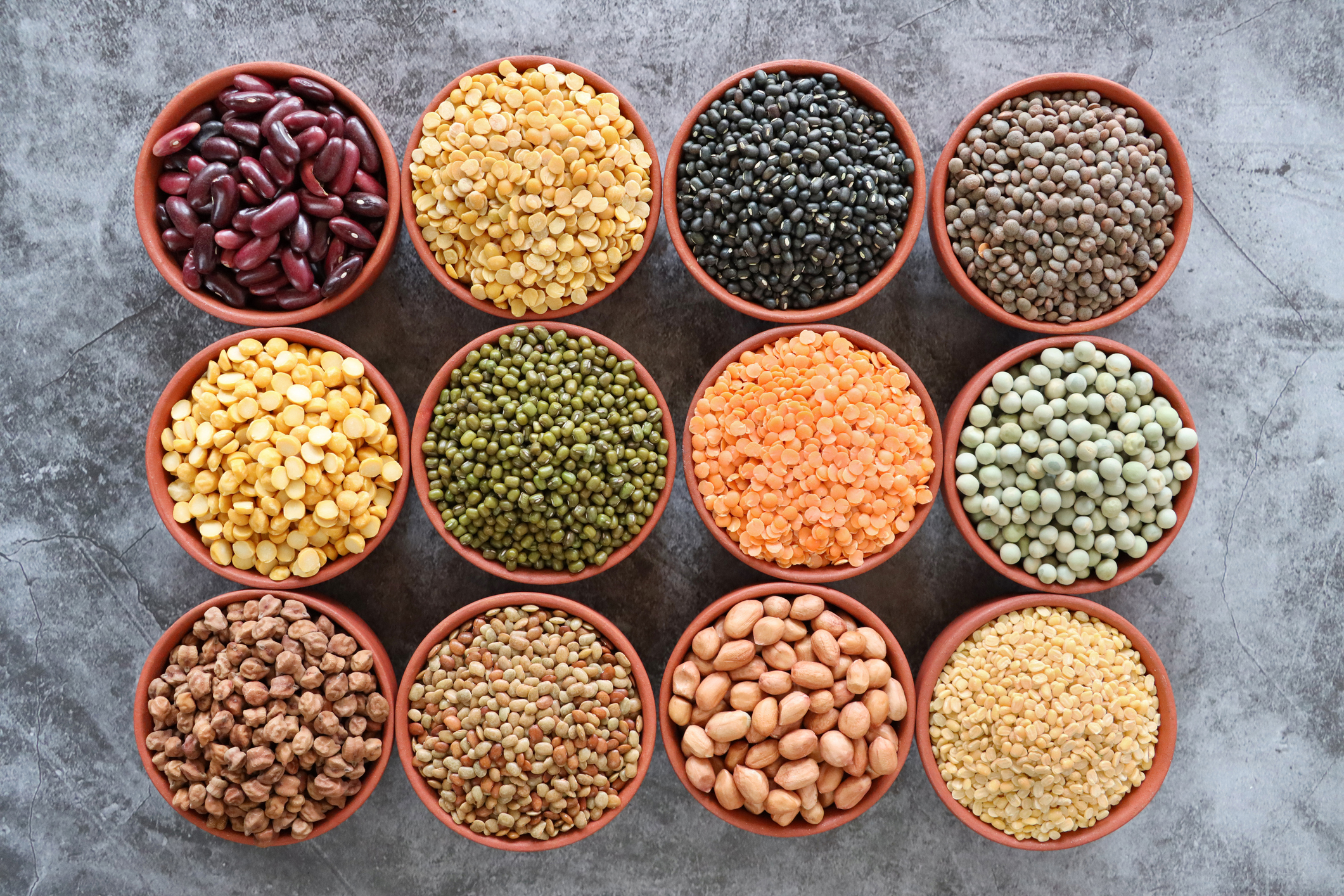
Breaking the Import Loop: Inside India’s ₹11,440 Crore Push for Self-Reliance in Pulses
For a country where a hot bowl of dal is the ultimate comfort food and the primary source of protein for millions, India has a surprising vulnerability: we don't grow enough of it. While domestic production has crawled up over the years, the gap between what we harvest and what we consume remains massive. India's pulse imports recently spiked to a nine-year high of 67 lakh tonnes, exposing the domestic market to volatile international price swings.
To break this cycle of foreign dependency, the government has launched the Mission for Aatmanirbharta in Pulses (also known as the Dalhan Aatmanirbharta Mission).
Backed by a massive financial outlay of ₹11,440 crore and running from 2025–26 to 2030–31, this central initiative targets absolute self-sufficiency in India’s most essential protein crops.
1. The Core Targets: More Acres, Better Yields
The math behind the mission relies on two primary levers: expanding the physical footprint of pulse cultivation and aggressively driving up productivity per hectare.
-
Acreage Expansion: The mission aims to add an extra 35 lakh hectares of land dedicated to pulses—comprising 24.5 lakh hectares in traditional zones and 10.5 lakh hectares in non-traditional areas—pushing India’s total footprint to 310 lakh hectares.
-
The Production Leap: The overarching goal is to scale domestic output from current stagnant levels to a massive 350 lakh tonnes by 2030–31.
-
Yield Correction: Right now, Indian pulse yields hover around a low 881 kg per hectare. The mission intends to boost this average to 1,130 kg per hectare by shifting farmers toward climate-resilient, high-yielding crop varieties.
2. Targeting the 489 Core Hub Districts
Rather than scattering financial resources thinly across the entire map, the mission relies on a highly targeted, localized cluster approach to maximize structural impact.
The Ministry of Agriculture has identified 489 specific focus districts across major pulse-growing states like Madhya Pradesh, Maharashtra, Rajasthan, and Uttar Pradesh. By concentrating investments on these verified clusters, agricultural extension offices can run large-scale demonstrations, deploy customized machinery, and help localized farmer collectives achieve immediate economies of scale.
3. The 100% Procurement Guarantee
The biggest reason farmers avoid pulses is market volatility. If everyone grows pulses, prices crash at the local mandi, leaving families broke. The mission tackles this head-on with an unprecedented financial safety net.
-
Guaranteed Procurement: For the first four years of the mission, the government guarantees 100% procurement at Minimum Support Price (MSP) for three critical focus crops: Tur (Arhar), Urad, and Masoor.
-
The Procurement Agencies: Central entities like NAFED and the National Cooperative Consumers' Federation (NCCF) will lead the physical buyout under the PM-AASHA price support scheme.
-
Direct Incentives: By removing market risk entirely, nearly 2 crore farmers are expected to confidently switch to pulses, knowing their profits are legally secured by the state via direct bank transfers within 48 hours.
4. SATHI Portal and the High-Yield Seed Revolution
You can't achieve self-reliance with low-quality, disease-prone seeds. The mission introduces an aggressive overhaul of the rural seed supply network to ensure farmers have access to top-tier genetics.
-
Massive Seed Grid Distribution: The state plans to distribute 126 lakh quintals of certified seeds alongside 87.5 lakh free mini seed kits directly to smallholders.
-
The SATHI Portal Safeguard: To ensure farmers aren't duped by counterfeit products, the entire seed lifecycle is being tracked using the SATHI Portal (Seed Authentication, Traceability & Holistic Inventory). This centralized framework tracks everything from initial breeder seed production by ICAR down to final sale, guaranteeing genetic purity.
5. Decentralized Mini-Mills and Capital Subsidies
To keep profits in rural pockets rather than big industrial zones, the mission is focusing heavily on post-harvest infrastructure and local value addition.
The government has approved the setup of 1,000 localized processing units (Dal Mills) across the country during the mission period, allocating a target of 528 units to states in the initial phase. To turn smallholders into micro-entrepreneurs, the mission is offering a substantial capital subsidy of up to ₹25 lakh per unit for establishing processing and packaging facilities. This allows local communities to clean, split, package, and sell their own pulses directly to consumer markets.