.jpg)
Agriculture is the undeniable backbone of India, employing over 40% of the population and contributing significantly to the nation's GDP. Yet, Indian agriculture has long been caught in a web of systemic struggles: low productivity, heavily fragmented landholdings, lack of access to formal credit, and the overarching threat of volatile climate change.
To bridge the gap between technological potential and real-world impact, the World Economic Forum (WEF)—in collaboration with the Office of the Principal Scientific Adviser to the Government of India and MeitY—released a groundbreaking report: Future Farming in India: A Playbook for Scaling Artificial Intelligence in Agriculture.
This playbook provides a comprehensive, actionable roadmap to scale artificial intelligence (AI) and machine learning (ML), turning complex data into simple, life-changing advice for millions of smallholder farmers. Let’s break down exactly how this framework aims to revolutionize Indian farming.
Why Do We Need an AI Playbook for Indian Agriculture?
Understanding the real-world boundaries of Indian farming is half the battle. The playbook highlights key challenges that currently hold back agricultural growth:
-
Massive Land Fragmentation: Close to 85% of India’s 150 million farmers are smallholders, managing an average landholding of just 1.08 hectares. Traditional, expensive tech setups simply do not fit these scales.
-
Limited Technology Exposure: Fewer than 20% of Indian farmers currently utilize advanced digital technologies in their day-to-day operations.
-
The Climate Crisis: Volatile monsoons, unpredictable heat waves, and sudden pest surges are actively depressing seasonal crop yields.
-
Financial & Validation Barriers: Low profit margins restrict a farmer's willingness to invest in unverified tech, creating a desperate need for trusted validation mechanisms.
The Core Core Core: The IMPACT AI Framework
At the very heart of the WEF playbook is the IMPACT AI framework (Inclusive Multistakeholder Pathway for the Accelerated Convergence of AI Technologies). This model aligns efforts across governments, private agritech startups, academia, and frontline workers into three functional pillars: Enable, Create, and Deliver.
1. Enable (The Government’s Role)
For AI to thrive, the right foundation must exist. This pillar focuses on how governments can catalyze growth by formulating region-specific AI strategies and establishing strong, trustworthy frameworks for data governance. Central to this is building out a Digital Public Infrastructure (DPI) that standardizes, secures, and cleanly aggregates agricultural data.
2. Create (The Innovator’s Sandbox)
This pillar is all about driving real-world innovation through agritech startups and research institutions. By setting up specialized "AI sandboxes," developers can test, refine, and commercially validate their models. This ensures that the AI products created are reliable, highly affordable, and directly tailored to local microclimates and languages.
3. Deliver (Reaching the Last Mile)
The best technology is completely useless if it sits on a computer in a city. The Deliver pillar focuses on empowering trusted local networks and agricultural extension systems. By retraining agricultural extension workers to integrate AI insights into their advisory loops, complex satellite and sensor data are translated into simple, actionable voice or text messages that a farmer can immediately use.
Transformative AI Use Cases Changing the Field
The playbook highlights several high-impact areas where AI-enabled precision farming is already showcasing extraordinary results:
-
Intelligent Crop Planning: By analyzing historical price trends, global import/export flows, and localized soil health metrics, AI models help farmers select the most profitable, climate-resilient crops to plant each season.
-
Rapid Soil Health Analysis: Instead of sending soil samples away to distant laboratories and waiting weeks for results, deep learning and satellite/drone image recognition can monitor soil stress and detect nutrient deficiencies almost instantly.
-
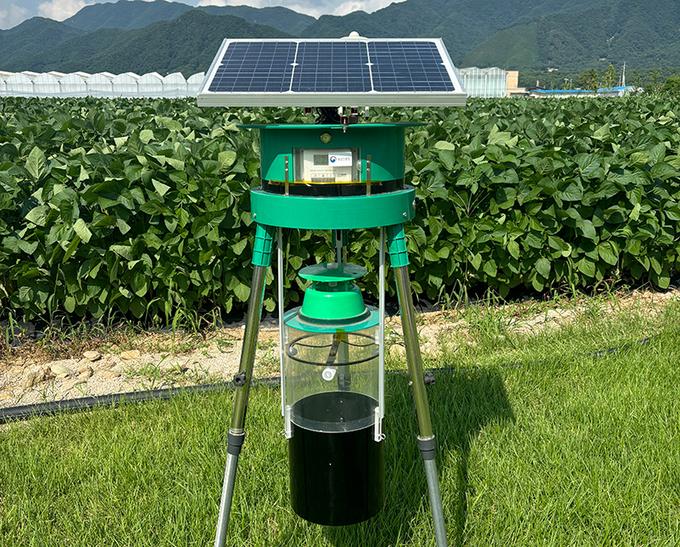
Smart Automation & Hyperlocal Advisories: Real-world implementations show that combining solar-powered field sensors with mobile AI platforms lets farmers monitor soil moisture and automate irrigation in real time. For example, early pilot rollouts in states like Tamil Nadu have helped farmers double crop yields, save thousands of kilowatt-hours of energy, and slash water waste by hundreds of thousands of cubic meters.
The Path to a Smarter Green Revolution
The WEF's Future Farming in India playbook serves as a timely reminder that technology can truly democratize agriculture when built with inclusivity in mind. By turning abstract data into practical, localized daily wisdom, responsible AI can shield smallholders from climate disasters, lower input expenses, and drastically improve profit margins.
As an ecosystem, embracing this structured framework will empower our farming communities, safeguard livelihoods, and nourish our planet in a resilient, highly sustainable manner.
Agriculture is the undeniable backbone of India, employing over 40% of the population and contributing significantly to the nation's GDP. Yet, Indian agriculture has long been caught in a web of systemic struggles: low productivity, heavily fragmented landholdings, lack of access to formal credit, and the overarching threat of volatile climate change.
To bridge the gap between technological potential and real-world impact, the World Economic Forum (WEF)—in collaboration with the Office of the Principal Scientific Adviser to the Government of India and MeitY—released a groundbreaking report: Future Farming in India: A Playbook for Scaling Artificial Intelligence in Agriculture.
This playbook provides a comprehensive, actionable roadmap to scale artificial intelligence (AI) and machine learning (ML), turning complex data into simple, life-changing advice for millions of smallholder farmers. Let’s break down exactly how this framework aims to revolutionize Indian farming.
Why Do We Need an AI Playbook for Indian Agriculture?
Understanding the real-world boundaries of Indian farming is half the battle. The playbook highlights key challenges that currently hold back agricultural growth:
-
Massive Land Fragmentation: Close to 85% of India’s 150 million farmers are smallholders, managing an average landholding of just 1.08 hectares. Traditional, expensive tech setups simply do not fit these scales.
-
Limited Technology Exposure: Fewer than 20% of Indian farmers currently utilize advanced digital technologies in their day-to-day operations.
-
The Climate Crisis: Volatile monsoons, unpredictable heat waves, and sudden pest surges are actively depressing seasonal crop yields.
-
Financial & Validation Barriers: Low profit margins restrict a farmer's willingness to invest in unverified tech, creating a desperate need for trusted validation mechanisms.
The Core Core Core: The IMPACT AI Framework
At the very heart of the WEF playbook is the IMPACT AI framework (Inclusive Multistakeholder Pathway for the Accelerated Convergence of AI Technologies). This model aligns efforts across governments, private agritech startups, academia, and frontline workers into three functional pillars: Enable, Create, and Deliver.
. Enable (The Government’s Role)
For AI to thrive, the right foundation must exist. This pillar focuses on how governments can catalyze growth by formulating region-specific AI strategies and establishing strong, trustworthy frameworks for data governance. Central to this is building out a Digital Public Infrastructure (DPI) that standardizes, secures, and cleanly aggregates agricultural data.
. Create (The Innovator’s Sandbox)
This pillar is all about driving real-world innovation through agritech startups and research institutions. By setting up specialized "AI sandboxes," developers can test, refine, and commercially validate their models. This ensures that the AI products created are reliable, highly affordable, and directly tailored to local microclimates and languages.
. Deliver (Reaching the Last Mile)
The best technology is completely useless if it sits on a computer in a city. The Deliver pillar focuses on empowering trusted local networks and agricultural extension systems. By retraining agricultural extension workers to integrate AI insights into their advisory loops, complex satellite and sensor data are translated into simple, actionable voice or text messages that a farmer can immediately use.
Transformative AI Use Cases Changing the Field
The playbook highlights several high-impact areas where AI-enabled precision farming is already showcasing extraordinary results:
-
Intelligent Crop Planning: By analyzing historical price trends, global import/export flows, and localized soil health metrics, AI models help farmers select the most profitable, climate-resilient crops to plant each season.
-
Rapid Soil Health Analysis: Instead of sending soil samples away to distant laboratories and waiting weeks for results, deep learning and satellite/drone image recognition can monitor soil stress and detect nutrient deficiencies almost instantly.
-
Smart Automation & Hyperlocal Advisories: Real-world implementations show that combining solar-powered field sensors with mobile AI platforms lets farmers monitor soil moisture and automate irrigation in real time. For example, early pilot rollouts in states like Tamil Nadu have helped farmers double crop yields, save thousands of kilowatt-hours of energy, and slash water waste by hundreds of thousands of cubic meters.
The Path to a Smarter Green Revolution
The WEF's Future Farming in India playbook serves as a timely reminder that technology can truly democratize agriculture when built with inclusivity in mind. By turning abstract data into practical, localized daily wisdom, responsible AI can shield smallholders from climate disasters, lower input expenses, and drastically improve profit margins.
As an ecosystem, embracing this structured framework will empower our farming communities, safeguard livelihoods, and nourish our planet in a resilient, highly sustainable manner.