.webp)
Uncoupling from the Clouds: Why the RBI Believes Indian Farming is Outgrowing Monsoon Panic
For generations, the financial health of rural India could be summed up in a single sentence: Indian agriculture is a gamble on the monsoon. If the clouds failed to deliver, rural demand dried up, food inflation surged, and the entire national economy took a hit.
However, according to the Reserve Bank of India's (RBI) freshly minted Annual Report, that old narrative is finally losing its grip.
While the central bank explicitly acknowledges that a developing El Niño setup poses real downside risks to the current summer sowing season, it delivered a highly reassuring piece of macro-analysis: Indian agriculture has become significantly less vulnerable to rainfall fluctuations.
Thanks to an intentional, decade-long push toward structural improvements, the umbilical cord connecting farm productivity directly to erratic rain clouds is slowly being severed.
The El Niño Warning vs. The Structural Shield
Let’s be clear—the RBI isn't wearing rose-colored glasses. The report notes that the India Meteorological Department (IMD) has forecast seasonal monsoon rainfall to sit at a below-normal 90% of the Long Period Average (LPA). In the past, a 90% forecast would have triggered immediate alarm bells in boardroom meetings and local markets alike.
So, why is the central bank keeping its cool?
“While the monsoon remains critical for Indian agriculture, the sensitivity of agricultural production to rainfall variability has moderated over time," the RBI noted. "This resilience is driven by rising irrigation intensity, improved crop management practices, and significant technological advancements.”
Furthermore, atmospheric scientists anticipate that a positive Indian Ocean Dipole (IOD)—often called the "Indian El Niño" because it brings heavy rains to the subcontinent—will emerge later in the season, acting as a natural counterweight to the Pacific dry spell.
Three Pillars Making India’s Fields Weather-Proof
The RBI highlights that this newfound agricultural stability didn't happen by accident. It is the result of three specific structural shifts built steadily over recent years:
1. The Irrigation Cushion
Historically, a dry spell meant immediate crop death. Today, India’s irrigation intensity is at an all-time high. A larger percentage of farmland is now connected to canal networks, tube wells, and highly efficient micro-irrigation (drip and sprinkler) systems. Additionally, entering the season, India’s major reservoirs stood at roughly 19% above their normal historical averages—providing an immediate backup water reserve to pull fields through dry patches.
2. Smart Input and Buffer Management
Even with global supply chains snarled by conflicts in West Asia, the government has maintained rigorous buffer management for critical inputs like fertilizers. Having massive, distributed stockpiles of urea and complex nutrients means that if a dry spell shortens the optimal window for sowing, farmers have immediate access to inputs the moment conditions stabilize, avoiding lost momentum.
3. The Tech Revolution: Enter Bharat-VISTAAR
One of the most exciting aspects highlighted in the central bank's report is the role of deep tech. The government is aggressively rolling out Bharat-VISTAAR (Virtually Integrated System to Access Agricultural Resources).
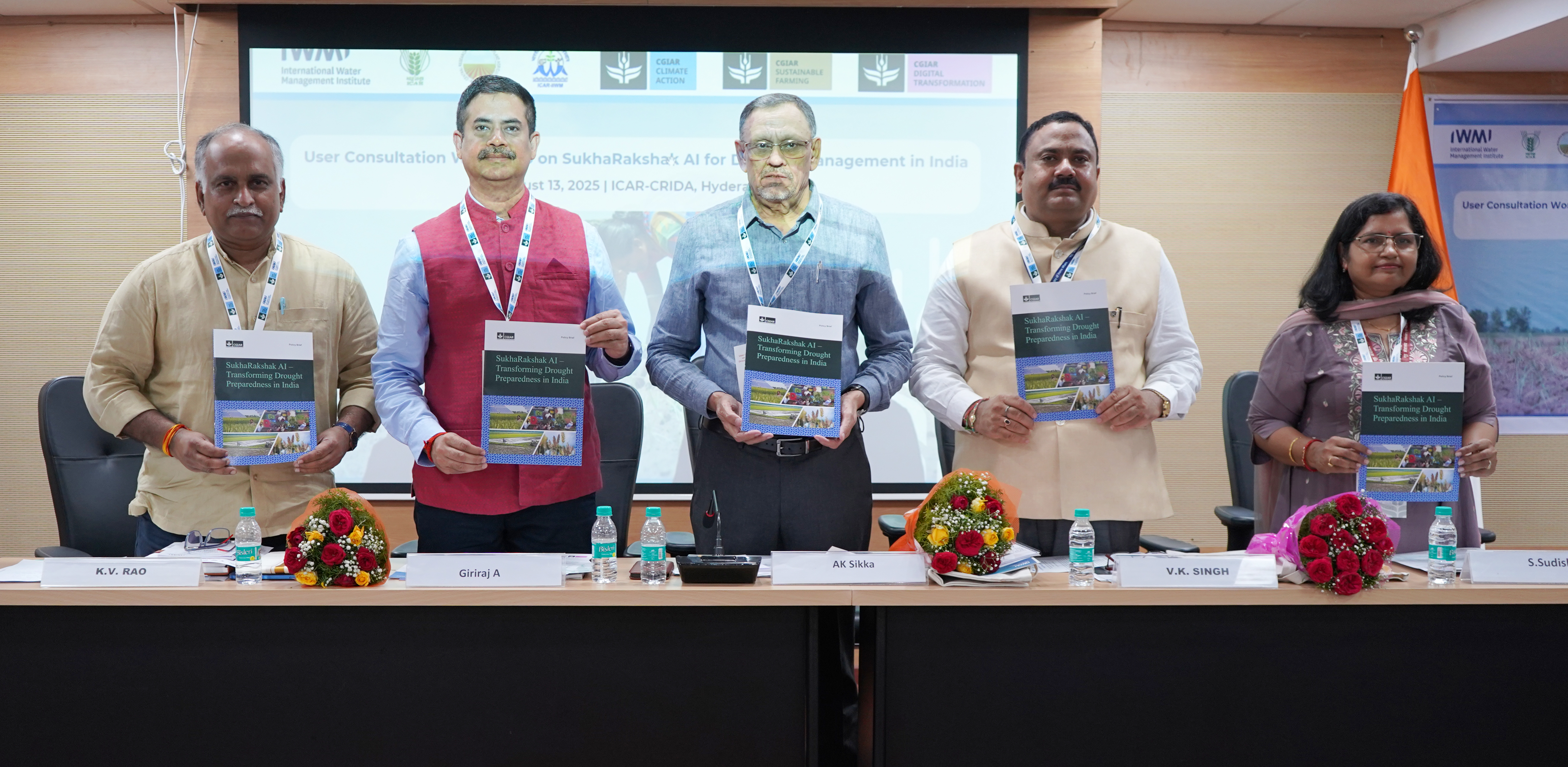
This is a state-backed, multilingual digital framework that integrates regional infrastructure with advanced Artificial Intelligence (AI) advisory systems. Instead of guessing when to water or spray during a chaotic weather cycle, farmers receive hyper-localized, real-time AI guidance based on satellite data and local conditions.
The Macro Picture: Why This Matters for Your Pocket
When farming becomes predictable, the entire country benefits. Stable agricultural output means the RBI can confidently navigate its broader economic goals:
| Macroeconomic Indicator | Current Pulse | The Agricultural Connection |
| Real GDP Growth Target | 6.9% | Kept robust due to resilient rural demand and steady farm incomes. |
| CPI Headline Inflation | Targeting 4.6% | Less vulnerable to the sudden "food shocks" that historically spike inflation. |
| Grain Reserves | Over 4x statutory requirements | A massive buffer stock that guarantees national food security regardless of seasonal swings. |
A Resilient Future
The 2026 monsoon season will undoubtedly present challenges. Certain rain-fed pockets will feel the heat, and local administrative teams will need to remain highly proactive.
But the overarching takeaway from the nation's financial gatekeeper is undeniably positive. India's agricultural heartland is no longer completely helpless at the mercy of the skies. By trading old vulnerabilities for infrastructure, technology, and data-driven farming, Indian agriculture