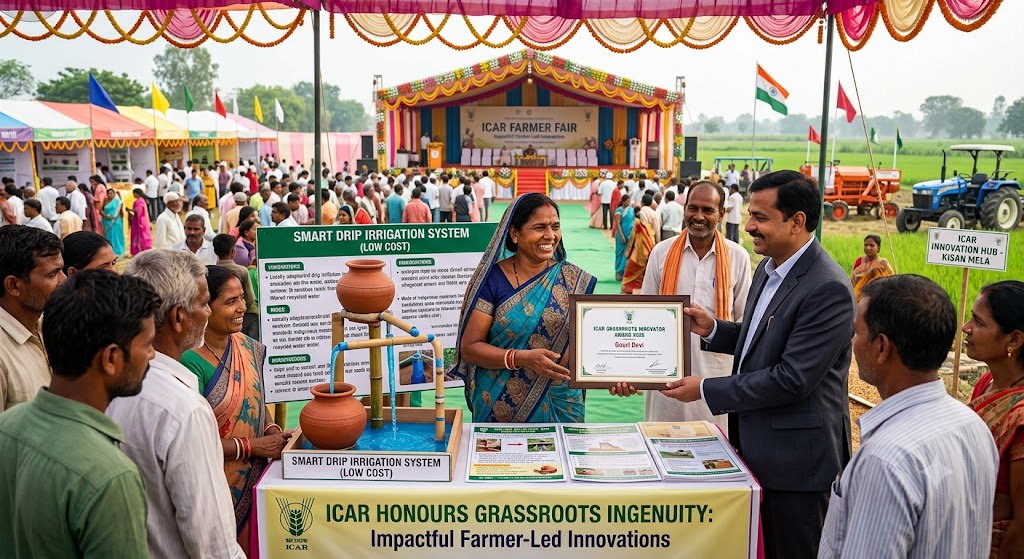
For generations, formal scientific laboratories have been viewed as the sole birthplace of agricultural progress. However, a silent revolution has always been at work right in the mud, under the open skies. Indian farmers are not just adopters of technology; they are prolific, practical inventors. Confronted daily by shifting monsoons, degraded soils, and expensive chemical inputs, grassroots growers consistently design, adapt, and refine their own solutions.
Recognizing this immense pool of practical wisdom, the Indian Council of Agricultural Research (ICAR) published a landmark compendium: Impactful Farmer-Led Innovations. This comprehensive publication serves as both a tribute and a roadmap, cataloging low-cost, sustainable, and highly climate-resilient farming techniques born directly from the ingenuity of Indian farmers. Let’s dive deep into why this compendium matters, the core modules it highlights, and how it is bridging the gap between traditional knowledge and modern science.
The True Value of Farmer-Led Innovation
Farmer-led innovation occurs when farmers actively step into the shoes of a researcher—identifying on-ground agricultural problems, designing experiments using local resources, and validating what actually works on a micro-level.
As highlighted by ICAR, these grassroots solutions hold deep systemic value:
-
Highly Tailored Solutions: Unlike rigid, generalized laboratory recommendations, these practices are developed by individuals who are intimately familiar with their local microclimates, ecologies, and social structures.
-
Low-Cost & Accessible: Built predominantly around readily available local materials and traditional knowledge, these innovations slash input expenses, making them affordable for smallholders.
-
Peer-to-Peer Scaling: When an idea works, it naturally spreads through informal community networks, fostering a powerful culture of collective learning and mutual self-reliance.
Key Breakthrough Areas in the ICAR Compendium
The documented innovations span across multiple critical dimensions of rural farm management, offering a multi-pronged defense against environmental stress:
1. Traditional Wisdom Meets Modern Agronomy
For decades, traditional practices were largely unrecorded and overlooked by formal intellectual property systems. The compendium systematically captures these ancestral methodologies—such as indigenous germplasm selection for hardy, region-specific crop varieties and natural plant-based extracts for crop protection. By documenting these, ICAR ensures that valuable community knowledge is safeguarded and legally recognized rather than lost to time.
2. Low-Cost Farm Engineering & Precision Tools
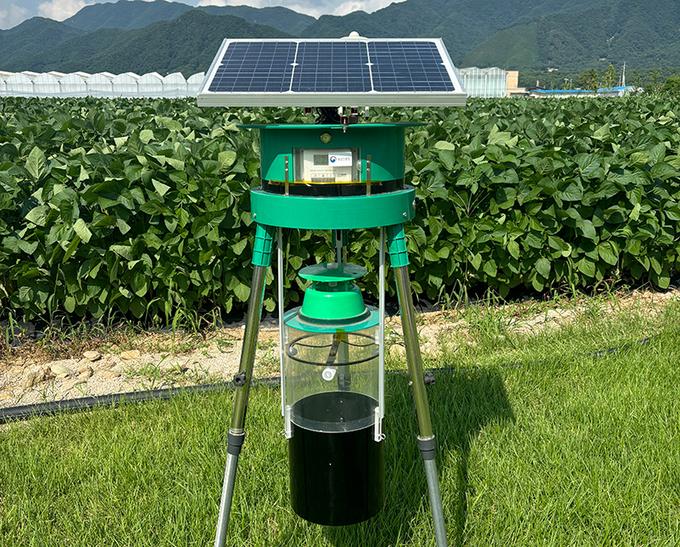
Faced with highly fragmented landholdings where expensive commercial machinery is financially unviable, smallholders have engineered a massive range of resource-efficient tools. From modified, low-cost weeders and customized animal-drawn implements to ingenious, localized processing equipment that enhances shelf-life, these farm-level fabrications massively maximize daily operational efficiency without plunging families into heavy debt.
3. Climate-Resilient Practices & Natural Resource Management
With climate change altering rain cycles and spiking summer heat waves, farmers have taken climate resilience into their own hands. The compendium outlines brilliant grassroots interventions focused on:
-
In-situ Rainwater Harvesting: Capturing every drop of erratic rain directly within the soil profile.
-
Alternative Mulching & Raised Bed Implementations: Protecting root networks from extreme heat and reducing evapotranspiration.
-
Custom Micro-Irrigation Tweaks: Repurposing everyday waste items to deliver localized drops of moisture directly to thirsty roots.
Pathways to Scale: Mainstreaming Grassroots Creativity
To ensure these local brilliant ideas don’t remain trapped within single villages, ICAR—led by initiatives showcased at global platforms like the International Agronomy Congress—has outlined a systematic, institutional network to scale them nationwide:
The KVK Linkage Bridge
India’s vast network of Krishi Vigyan Kendras (KVKs) serves as the central engine for validation. Scientists at local KVKs work alongside innovative farmers to scientifically refine, test, and formally document their practices. Once validated, these solutions are integrated directly into local extension advisories, transforming a single farmer’s discovery into a public asset.
Village Knowledge Registers & Student Engagement
Under institutional roadmaps, undergraduate and postgraduate agricultural students (such as those participating in the Rural Agricultural Work Experience - RAWE program) are actively deployed to map and compile "Village Knowledge Registers." This institutionalizes the search for grassroots genius, ensuring a continuous pipeline of co-created agricultural research.
The Path Forward
ICAR’s focus on farmer-led solutions marks a profound shift toward an inclusive agricultural model—one where the farmer is treated as an equal partner in scientific progress. Blending centuries-old traditional knowledge with modern validation frameworks doesn't just improve crop yields; it restores dignity to farming communities, protects local biodiversity, and unlocks a sustainable blueprint to feed our planet from the ground up.