.webp)
The Geopolitical Shockwave in the Field: Inside India's Surging Fertiliser Subsidy Crisis
When geopolitical tensions flare up in West Asia, headlines typically rush to track the price of a barrel of crude oil or the volatility of stock market indices. But a far more quiet, yet incredibly consequential crisis is traveling down the global supply chain, straight into the soil of rural India.
India’s Ministry of Chemicals and Fertilisers recently made a staggering move: they officially approached the Finance Ministry seeking to double the national fertiliser subsidy budget to ₹3.4 lakh crore for the current 2026-27 fiscal year.
Initially, the government had budgeted a substantial ₹1.71 lakh crore to shield farmers from fluctuating raw material costs. However, prolonged conflict in West Asia, shipping bottlenecks, and blockades near critical global trade checkpoints like the Strait of Hormuz have sent the cost of imported nutrients into overdrive—forcing the government to absorb massive losses to protect everyday citizens.
Why West Asia Dictates the Cost of Indian Crops
It might seem strange that a conflict thousands of miles away decides the fiscal math of a local Indian farm, but the connection is rooted in biological necessity. India’s farming engine is heavily import-dependent for high-efficiency, specialty nutrients:
-
Diammonium Phosphate (DAP): India relies on foreign suppliers to meet roughly 60% of its total DAP demand.
-
Potash: The country imports nearly 100% of its agricultural potash needs.
-
Urea: Even though domestic production has expanded, the manufacturing process depends heavily on imported Liquefied Natural Gas (LNG).
West Asia serves as the foundational hub for global energy and fertilizer manufacturing. When transit corridors become highly volatile, maritime insurance spikes, global tendering rules twist into knots, and the entire international pool of available fertilizer shrinks. Between February and April 2026 alone, international fertilizer prices shot up by an eye-watering 66%.
Shielding the Farmer: The Subsidy Shock Absorber
In an open market, a 66% spike in input costs would mean immediate financial ruin for a smallholder farmer. However, India’s agrarian policy relies on strict retail pricing controls to ensure stability.
No matter how chaotic the international market becomes, the Maximum Retail Price (MRP) for vital crop supplements remains tightly anchored:
| Fertilizer Type | Current Regulated Price to Farmers | The Reality Check |
| Neem-Coated Urea | ₹242 per 45 kg bag | The cheapest raw fertilizer in the region, heavily cushioned by the state. |
| Diammonium Phosphate (DAP) | ₹1,350 per 50 kg bag | Maintained at this price even as global import rates skyrocket. |
By choosing to seek a ₹3.4 lakh crore allocation, the government is stepping in to absorb the entire global price shock itself. If the state didn't pick up this multi-billion dollar tab, the spike would filter straight down to the consumer, leading to severe food inflation across domestic kitchen tables.
The Good News: Kharif Stocks are Secure
Despite the daunting financial strains, policymakers have delivered a vital piece of reassurance for the ongoing Kharif (monsoon) season: the physical supply of fertilizer is entirely secure.
According to Aparna S. Sharma, Additional Secretary in the Department of Fertilisers, the national requirement for this seasonal cycle was reassessed at 383.9 lakh tonnes. India entered the core sowing months with 197.56 lakh tonnes already stockpiled across its distribution networks.
“The available stock stands at more than 51% of the total seasonal demand,” Sharma noted. “This is significantly higher than our traditional baseline requirement of keeping a 33% buffer level.”
Furthermore, India's push toward local production has yielded massive dividends. In 2025, domestic manufacturing plants across the country hit a record output of 524.62 lakh tonnes, meeting roughly 73% of the country’s total fertilizer needs internally.
Moving Toward Nutrient Independence
While India has successfully built an impressive buffer to keep the 2026 summer crops safe, this subsidy stress highlights a long-term economic truth. Subsidy cushioning works brilliantly to put out short-term fires, but relying on it long-term can place immense pressure on broader national public funds.
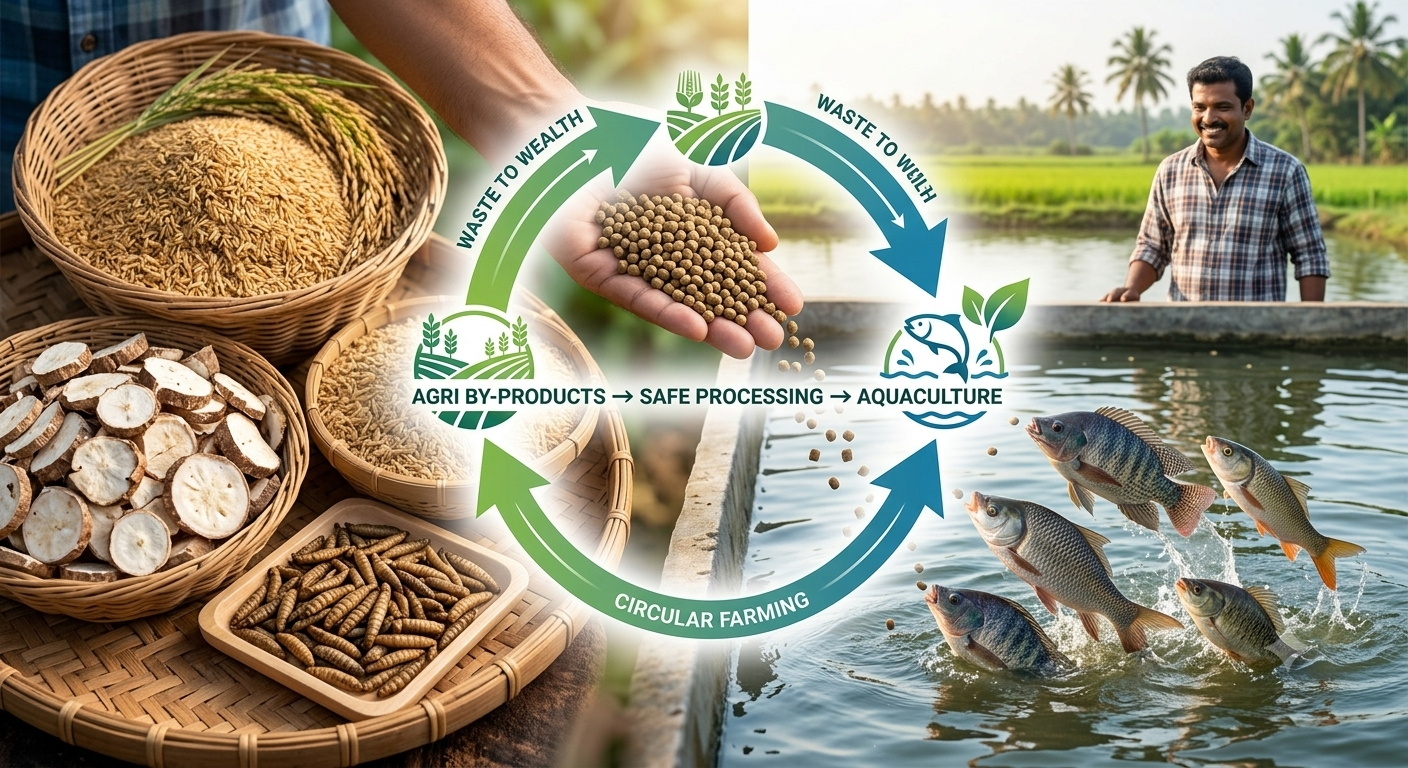
The current crisis acts as a powerful reminder of why programs encouraging alternative nutrient practices—like nano-fertilizers, organic composting, and balanced soil health management—are so vital. By building a diverse, self-sustaining loop right inside our own borders, we can ensure that a crisis in a distant shipping channel never threatens the food security of our nation.