For generations, the idea of talking or playing music to plants was brushed off as a fond myth whispered by passionate home gardeners. Today, that myth has evolved into a cutting-edge field of agro-ecological science.
As the environmental and financial costs of chemical fertilizers and synthetic growth stimulants continue to skyrocket, Indian agricultural researchers are looking toward non-invasive, eco-friendly alternatives. At the forefront of this green revolution is Plant Acoustic Frequency Technology (PAFT)—a groundbreaking methodology that uses precise, targeted sound waves to naturally supercharge a plant’s structural and biochemical growth.
Let's explore how this fascinating technology works, the science behind it, and why it is poised to reshape sustainable farming in India.
What is Plant Acoustic Frequency Technology (PAFT)?
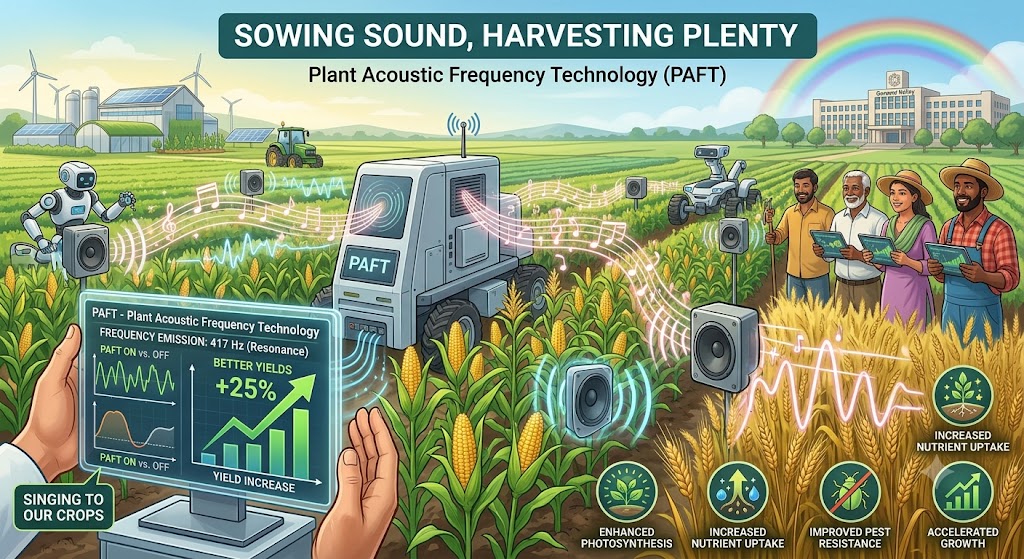
At its core, PAFT is the application of specific sound frequencies and sound pressure levels to crops during critical stages of their development. Rather than altering a plant's genetics or forcing growth through chemical absorption, PAFT relies on mechanoreceptors—tiny, specialized structures on plant cell membranes that can detect physical vibrations in the air.
When these sound waves hit the plant, they act as a gentle physical stimulus. This mechanical stress triggers a cascade of positive biological responses inside the plant, effectively optimizing its metabolism, nutrient absorption, and immune system entirely from within.
The Science: How Sound Waves Stimulate Growth
Plants may not have ears, but they are incredibly sensitive to their acoustic environment. PAFT influences crop health through several key biological pathways:
1. Opening the Stomata Gateways
Stomata are microscopic pores located primarily on the undersides of leaves, responsible for gas exchange and water transpiration. Research indicates that specific acoustic frequencies (typically ranging between 1 kHz and 5 kHz) encourage these stomatal pores to open wider and remain open more efficiently. This allows the plant to absorb carbon dioxide at a accelerated rate, directly boosting its photosynthetic capacity and speed of growth.
2. Accelerating Cell Division and Cytoplasmic Streaming
Sound waves generate micro-vibrations inside the plant tissue. This physical movement speeds up cytoplasmic streaming—the fluid movement within a plant cell that transports nutrients, proteins, and organelles. By keeping this internal transport system moving rapidly, cells divide faster, roots extend deeper, and the plant grows structurally stronger.
3. Supercharging Nutrient Uptake
When combined with fluid or leaf sprays, PAFT acts as an invisible accelerator. Because the stomata are open and cell walls are highly receptive due to the sound vibrations, the plant can absorb liquid bio-fertilizers and micronutrients far more efficiently. This means farmers can achieve the same—or better—growth results while using significantly less input material.
The Key Benefits of Tuning into PAFT
Embracing sound-based agriculture offers powerful solutions to some of modern farming's toughest dilemmas:
-
Bypassing Chemical Dependency: PAFT gives farmers a clean tool to stimulate growth without relying heavily on synthetic growth hormones. This helps reduce chemical residue in food, keeps regional soils alive, and keeps hazardous chemical runoff out of precious local water systems.
-
Boosting Defenses and Climate Resilience: Studies have shown that sound acoustic stimulation triggers the production of endogenous hormones (like salicylic acid and jasmonic acid) and stress-resistant proteins. These natural chemicals act as the plant's immune system, making the crop significantly more resilient against sudden drought, extreme temperature shifts, and aggressive insect pests.
-
Improving Shelf Life and Quality: Crops grown under optimal acoustic frequencies don't just grow faster—they often yield higher concentrations of essential sugars, vitamins, and antioxidants. This results in more nutritious produce with a naturally longer shelf life after harvest.
Bringing PAFT onto the Field: Implementation
Implementing PAFT doesn't require complex laboratory conditions; it is designed to scale directly into open fields and greenhouses:
-
The Hardware Setup: The system utilizes specialized acoustic frequency generators paired with weather-proof, multi-directional field loudspeakers positioned strategically across the crop canopy.
-
The Routine Matters: Plants respond best to regularity. Typically, sound waves are broadcast for 1 to 2 hours in the early morning, aligning perfectly with the plant's natural daily cycle when dew is present and stomata are already inclined to open.
-
Tailored Playlists: Different crops respond to different sound profiles. What stimulates a field of paddy or wheat might not have the same effect on a cotton crop or a block of leafy green vegetables. Researchers are continuously mapping the perfect frequency "playlists" for India’s staple crops.
The Sonic Path to Sustainable Abundance
Plant Acoustic Frequency Technology represents a beautiful convergence of natural physics and plant biology. By shifting our mindset from "forcing" growth with chemicals to "stimulating" growth with clean sound waves, PAFT offers a truly sustainable, high-yielding pathway for the future of Indian agriculture. As this technology transitions from research stations to commercial farmlands, it promises to help our farmers cultivate cleaner food, protect rural ecosystems, and harmonize technology with nature.