From Berlin to Bapatla: How the ACRAT Initiative is Rewriting Climate Resilience in Telangana
Climate change is no longer a distant threat for the smallholder farmers of Telangana—it is a weekly operational challenge. Unpredictable monsoons, sudden temperature spikes, and aggressive pest migrations are making traditional farming methods increasingly unreliable.
To tackle these environmental shifts, a powerful international alliance has emerged. Through ACRAT (Accelerating Climate-Resilient Agriculture in Telangana), the Ag-Hub at Prof. Jayashankar Telangana Agricultural University (PJTSAU) has joined forces with the Fraunhofer Heinrich Hertz Institute (HHI) in Germany. Funded by the German Federal Ministry of Food and Agriculture (BMEL), this project uses high-tech tools like Artificial Intelligence (AI) and the Internet of Things (IoT) to shield small-scale farms from climate volatility.
Here is how this cross-continental partnership is turning localized fields into data-driven, climate-resilient ecosystem "TestHubs."
The Core Mission: Low-Cost Tech for Agroecological Impact
The true genius of the ACRAT project lies in its philosophy: merging low-cost, edge digital technologies with agroecological principles. Instead of proposing expensive, heavy-machinery overhauls that everyday smallholders cannot afford, ACRAT focuses on precise, invisible micro-interventions that optimize resources.
The project addresses three fundamental agricultural vulnerabilities:
1. Slashing Pesticide Use with IoT "iTraps"
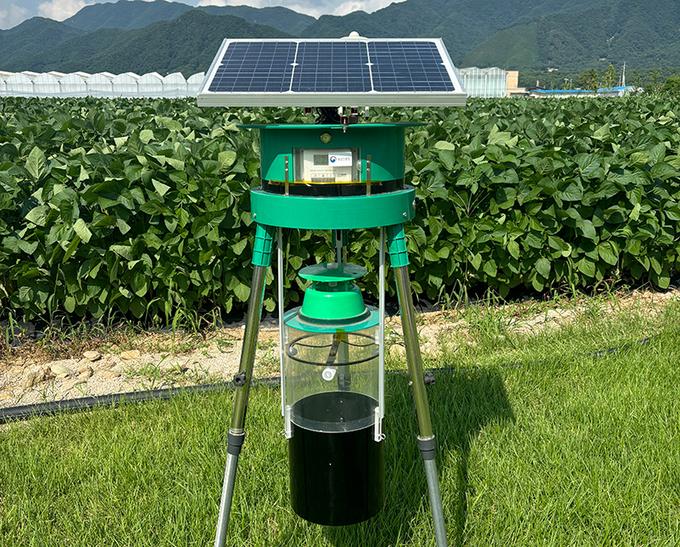
Traditional pest management relies heavily on routine, calendar-based chemical spraying, which degrades soil quality and impacts human health. ACRAT introduces IoT-enabled smart insect traps (iTraps).
These solar-powered devices use integrated cameras and edge-AI computer vision to capture, identify, and count specific pest populations in real time. Farmers receive early warning notifications only when pest thresholds are actually breached. The result? Early deployments show an impressive 40% to 50% reduction in chemical pesticide usage, protecting both the environment and the farmer's wallet.
2. Upgrading Soil Health from the Ground Up
Climate resilience begins beneath the surface. Through localized testing networks, ACRAT helps farmers map soil variability and track precise moisture and nutrient deficits.
By feeding this data into specialized machine learning models, the system generates customized, hyper-local digital "soil health cards." Rather than universally broadcasting fertilizers, farmers apply exactly what their specific plot lacks, improving long-term soil fertility and resource efficiency.
3. Early Stress Detection via Satellite & Drones
Waiting until a crop visibly wilts or turns yellow means losing precious response time. ACRAT leverages the International Telecommunication Union (ITU) reference architecture to fuse multi-source data—combining ground-level sensors with satellite and Unmanned Aerial Vehicle (UAV) drone imagery.
By monitoring changes in light reflectance (vegetation indices), the AI can detect structural crop stress caused by drought or disease long before it is visible to the human eye, giving farmers a vital head start.
A Bridge for Global Innovation
ACRAT isn't just a localized pilot; it acts as an open, interoperable data testbed. While it equips Telangana's farmers with data sovereignty and precision tools, it simultaneously provides critical data standards and insights that help shape innovative digital farming applications back in Germany.
Scaling to the Future
By moving beyond abstract theory and putting actual IoT devices into the hands of local farmers and Farmer Producer Organizations (FPOs), Ag-Hub and Fraunhofer HHI are demonstrating what modern climate adaptation looks like.
The ACRAT project proves that when global tech engineering pairs seamlessly with deep, localized agronomic expertise, smallholder farms don't just survive changing climates—they thrive.