When you think of the driving forces behind the future of sustainable farming, insects probably aren’t the first things that come to mind. In fact, most farmers spend their time trying to keep bugs out of their operations.
However, a brilliant structural shift is happening within India's poultry and aquaculture sectors. Facing skyrocketing costs for traditional feed ingredients like soybean meal and marine fishmeal, forward-thinking agritech and biotech startups are deliberately breeding insects. Specifically, they are cultivating the larvae of the Black Soldier Fly (BSF)—and the results are changing the economics of livestock farming.
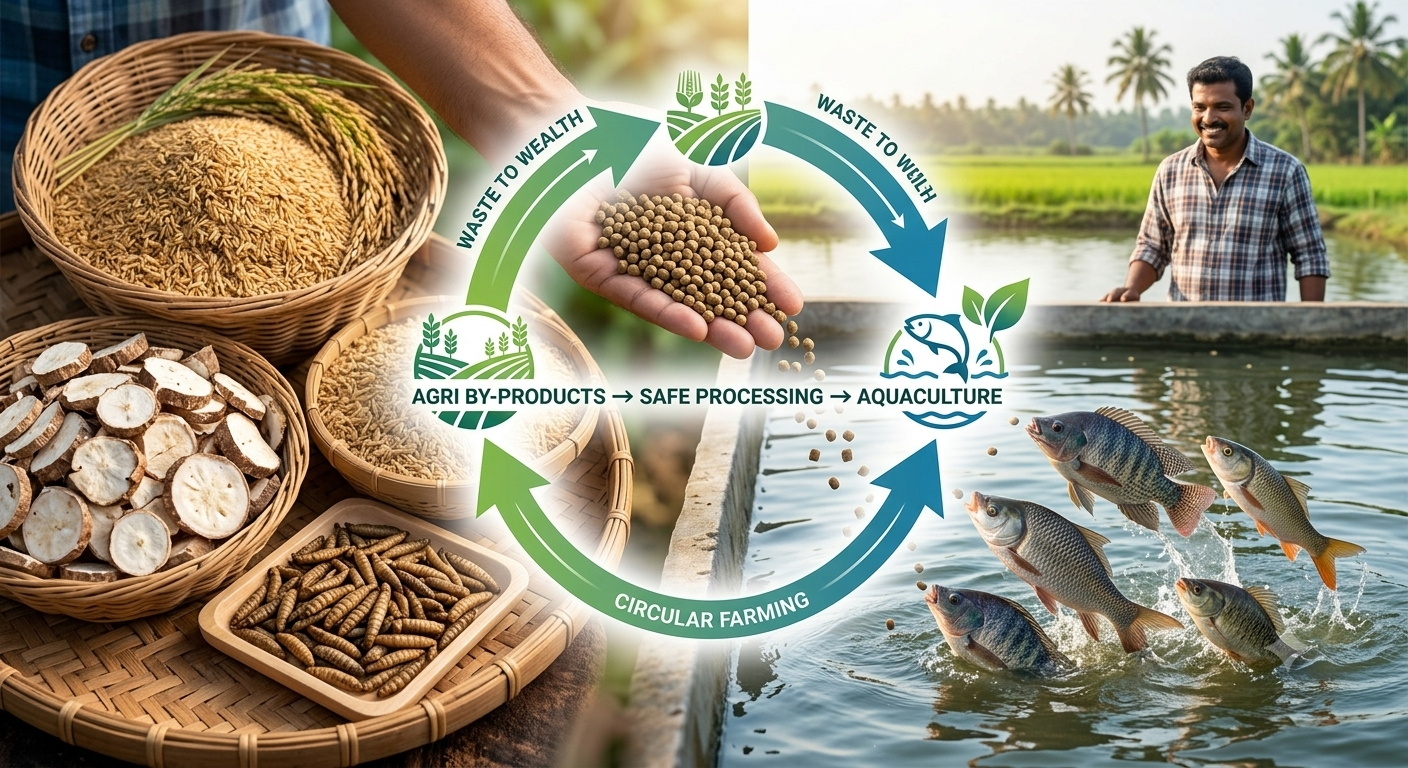
By turning waste management into a high-yield protein source, this innovative approach is proving that the future of feed is circular.
Turning Waste Into Wealth
Traditional livestock and fish feed production is incredibly resource-heavy. It requires massive tracts of land for soybeans or contributes to overfishing to produce fishmeal. Meanwhile, Indian cities and rural hubs generate millions of tons of organic food waste daily, most of which ends up rotting in landfills.
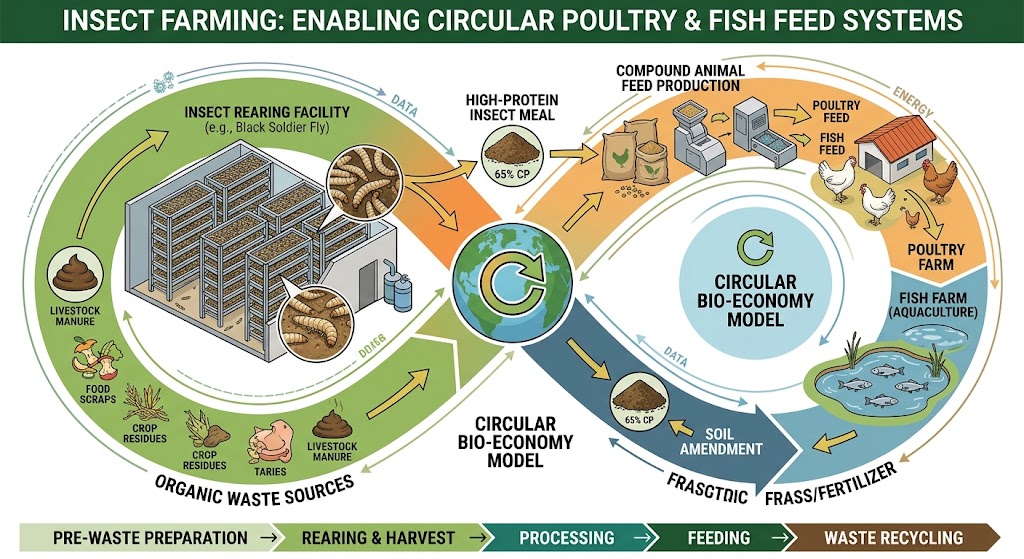
BSF larvae act as nature's ultimate recycling machines. Biotech startups are leveraging this superpower through a beautifully simple process:
-
The Diet: Massive populations of BSF larvae are fed locally sourced organic food waste—ranging from vegetable market leftovers to agricultural byproducts.
-
The Transformation: In just a matter of days, these larvae consume the waste and multiply their body weight exponentially, converting low-value trash into high-quality protein biomass.
-
The Harvest: The nutrient-rich larvae are then harvested, dried, and processed into clean, highly digestible, high-protein feed for chickens and fish.
The Closed-Loop Bonus: Organic Frass
The circular economy doesn't stop at feed. As the larvae consume organic waste, they leave behind a byproduct known as frass (insect manure).
Far from being waste, this frass is a highly potent, pathogen-free organic fertilizer packed with beneficial microbes and essential plant nutrients. Farmers can return this fertilizer right back to the soil, boosting crop health without relying on expensive chemical alternatives. It is a completely closed, zero-waste loop.
Why This Matters for the Bottom Line
For poultry and fish farmers, feed typically accounts for up to 60–70% of total operational expenses. With traditional ingredient prices fluctuating wildly due to climate impacts and global market stresses, profitability has been razor-thin.
By shifting to locally cultivated insect protein, startups are helping farmers cut feed overhead costs by up to 40%.
Scaling the Future
Insect farming is proof that solving major agricultural challenges doesn’t always require inventing complex, artificial chemicals. Sometimes, it just means looking at how nature handles recycling and scaling it up. By embracing the Black Soldier Fly, Indian agriculture is simultaneously tackling food waste, reducing pressure on oceans and forests, and putting money back into the pockets of local farmers.