For a smallholder farmer in rural India, the hours immediately following a harvest are filled with anxiety rather than celebration. You’ve put months of sweat, water, and hope into rearing a beautiful crop of tomatoes, capsicums, or strawberries. But the moment they are plucked, the clock starts ticking.
In the scorching heat of rural summers, a fresh harvest can spoil in less than 48 hours. With no cold storage nearby, farmers are forced into a heartbreaking corner: sell the produce immediately to middlemen for pennies on the dollar, or watch it rot. Traditional cold storage requires massive, uninterrupted grid power—something that remains a luxury in the remote agricultural belts of Bihar, Odisha, or Maharashtra.
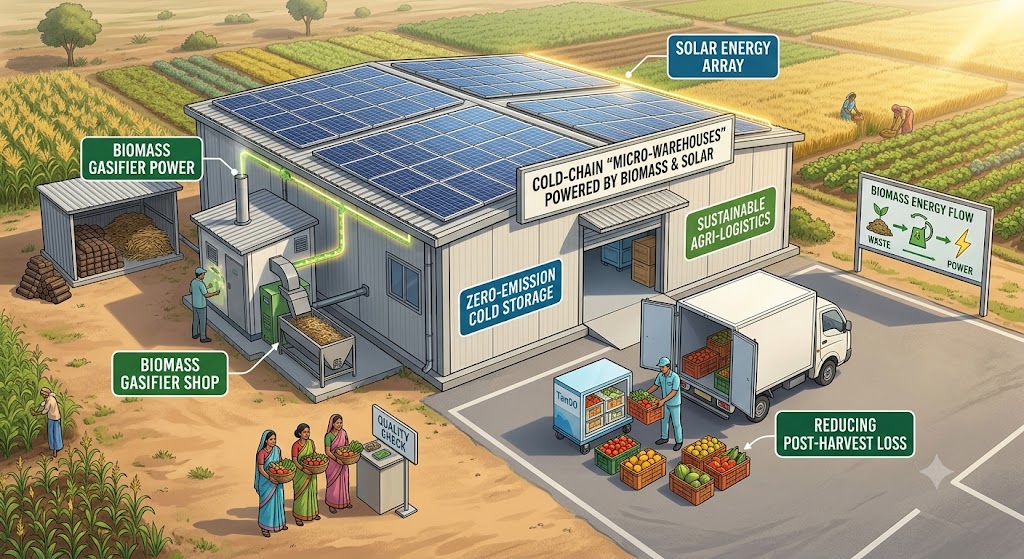
Enter a brilliant, decentralized solution that is changing the rules of the game: Modular, off-grid "Micro-Warehouses" powered entirely by thermal solar energy and agricultural waste.
The Innovation: Cooling Without the Grid
Innovators have designed portable, walk-in cold rooms that can be literally dropped right at the farm gate. What makes them magical is that they don’t consume a single unit of traditional electricity, nor do they rely on heavy, expensive chemical batteries that degrade in the heat.
Instead, they combine two abundant rural resources: The Sun and Crop Waste.
1. Solar Thermal Energy & Ice Banking
During the day, solar panels capture energy. But instead of storing it in lithium batteries, systems designed by pioneers like Inficold and Ecozen (Ecofrost) use that energy to freeze "phase-change materials" or specialized thermal ice banks. At night, the system turns off its mechanical components and naturally draws cold air from this giant thermal battery, keeping the chamber cold for up to 30 hours without sunlight.
2. Biomass Thermochemical Cooling
What happens during a week of heavy monsoon clouds? That is where biomass integration shines. Clean-tech companies like Bajaj Processpack (with their GreenCOOL systems) and NuGreen Energy have integrated modules that burn agricultural waste like rice husk, wheat stalks, or coconut shells. The heat from burning this waste drives an absorption refrigeration cycle.
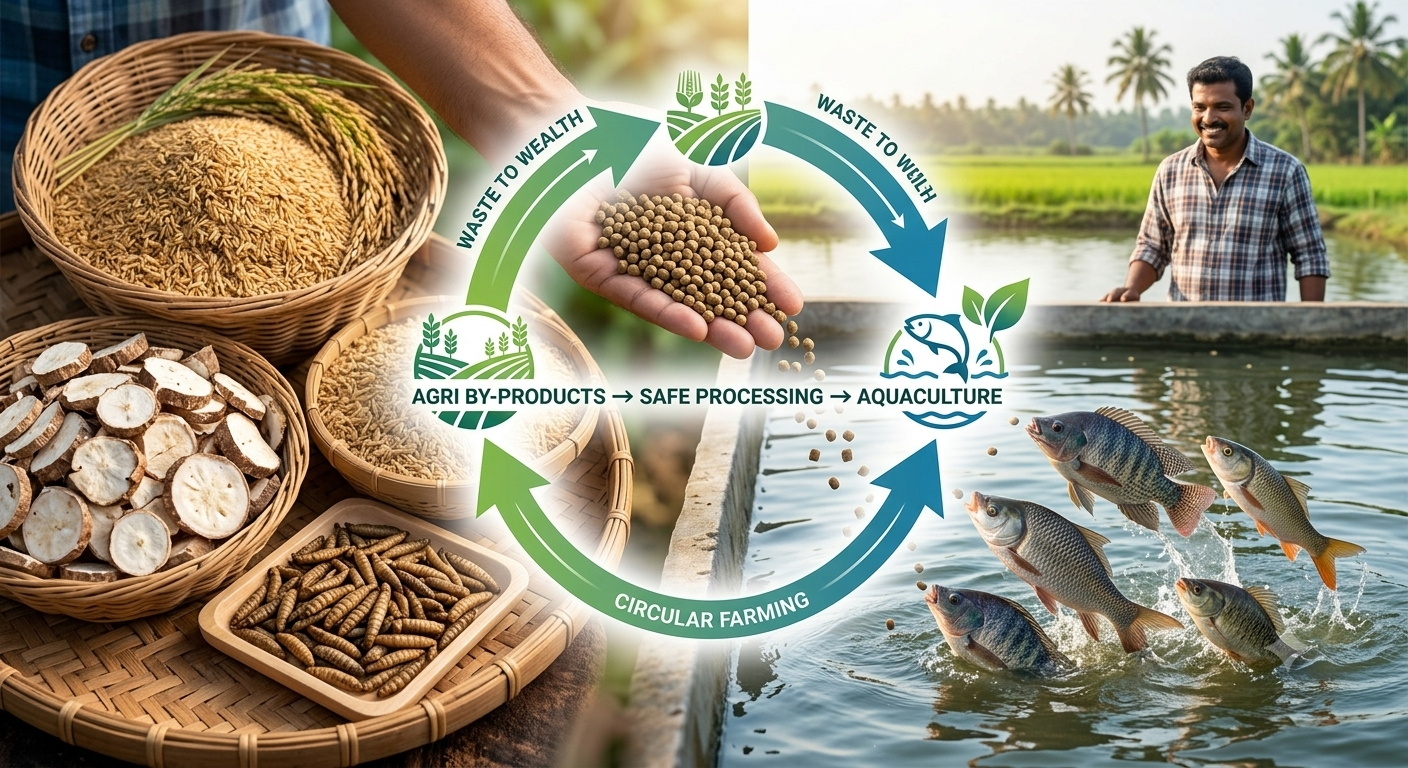
The ultimate circular economy: The very crop waste that farmers used to burn—causing massive air pollution—is now being fed into a mini-generator to keep their vegetables fresh.
Real Impact: On-the-Ground Programs and Success Stories
This isn’t just a laboratory concept; it is actively transforming communities across India through field deployments and targeted pilot programs.
The "Cooling-as-a-Service" (CaaS) Initiative
The biggest hurdle for a small farmer is the upfront cost of buying a cold room. To solve this, organizations like the BASE Foundation partnered with local enterprises like Koel Fresh in Odisha to launch the Cooling-as-a-Service initiative.
Instead of buying the asset, Farmer Producer Organizations (FPOs) manage the micro-warehouses at local market gates. Farmers bring their crates of fruits and vegetables and pay a micro-fee (e.g., a few rupees per crate per day) to store their goods.
-
The Result: In pilot programs across Odisha, local women's self-help groups and smallholders reported a 40% to 60% increase in their monthly income. Because they could store their produce for up to three weeks, they waited out market gluts and sold only when market prices recovered.
Defeating the Middleman in Maharashtra
In the horticultural belts of Maharashtra, standalone 2-to-5 metric ton solar cold rooms developed by Ice Make Refrigeration were deployed directly at village collection centers. Prior to this, farmers lost nearly 20-30% of their highly perishable leafy greens during transport on bumpy, non-refrigerated rural roads. By cooling the produce down to its optimum holding temperature immediately after harvest, the shelf life traveled with the vegetable, slashing transportation spoilage down to less than 5%.
The Human Benefits: Why This Matters
Beyond the fascinating thermodynamics and engineering, the true value of these micro-warehouses is measured in human impact:
-
Dignity and Bargaining Power: Farmers are no longer at the mercy of predatory daily market pricing. They have "holding power." If the market price of tomatoes drops to ₹2/kg today, they can lock them safely in the micro-warehouse and wait until it bounces back to a sustainable rate.
-
A Breath of Fresh Air: By creating a monetary value for agricultural waste (husks and stalks), these systems provide a powerful incentive against stubble burning, contributing to cleaner air in surrounding regions.
-
Empowering Women in Agriculture: Many of these FPO-led cold rooms are managed by women's collectives. With smartphone-enabled apps provided by tech developers, rural women are managing inventory, tracking temperatures, and controlling the systems digitally, bringing tech literacy to the heart of rural India.
Looking Ahead
Decentralized, solar-biomass hybrid cold storage proves that solving climate change and solving rural poverty can go hand-in-hand. By moving the cold chain away from massive, centralized urban hubs and placing it directly at the farm gate, India is empowering its smallholders to transition from vulnerable laborers to resilient, tech-savvy agricultural entrepreneurs.