Thinner Than a Hair: How This Mumbai Startup Is Saving Dust-Choked Solar Panels and Millions of Liters of Water
Rooftop solar panels are rated for high efficiency under pristine laboratory conditions. But once deployed in the real world—especially across dust-heavy, pollen-choked Indian landscapes—that performance drops significantly. Layers of grime can quickly cut electricity output by up to 30%.
For a long time, the only solution was regular, aggressive cleaning cycles. This maintenance creates a frustrating catch-22: to generate clean energy, operators are forced to consume massive amounts of a dwindling resource—clean water. In fact, clean-tech innovators have witnessed operators using precious drinking water to scrub solar glass arrays simply because they couldn't afford the compounding financial losses from leaving them dirty.
Now, a deep-tech startup out of Mumbai is changing those numbers. Incubated at the Society for Innovation and Entrepreneurship (SINE) at IIT Bombay, TriNANO Technologies has engineered a molecular shield that revitalizes degraded panels while slashing maintenance water requirements by over half.
The Technology: Nature-Inspired Molecular Engineering
Founded by Dr. Harsh Sethi, TriNANO’s core innovation isn't a complex mechanical scrubber or a harsh chemical wash. It is an ultra-thin, solid nano-coating—measuring roughly 400 nanometers thick (hundreds of times thinner than a human hair)—that bonds directly with solar glass at the molecular level.
Instead of rewriting solar science from scratch, the team looked to natural architecture, combining three distinct biomimetic principles into a single layer:
-
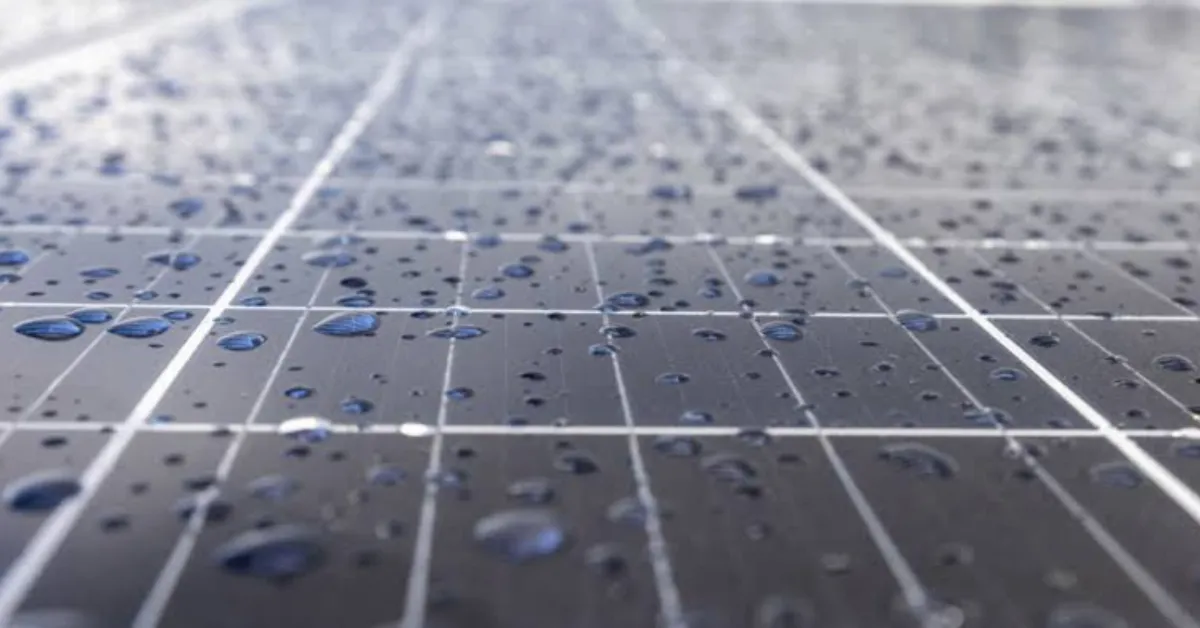
Self-Cleaning (Inspired by the Lotus Leaf): The coating creates a super-hydrophilic, ultra-slick surface. When morning condensation, rain, or a light breeze passes over the glass, the dust cannot cling to the panel and easily slides off.
-
Anti-Reflection (Inspired by Moth Eyes): Standard glass reflects a notable portion of incoming light away unused. TriNANO’s structure minimizes this reflection loss, allowing the panel to catch more stray photons.
-
Light-Trapping (Inspired by Super-Black Bird Feathers): The molecular geometry acts like a microscopic funnel, trapping sunlight and directing it straight into the active photovoltaic cells beneath.
The Impact: Better Yields, Less Waste
The results of real-world field deployments across diverse panel brands and locations demonstrate that advanced nanotechnology can dramatically shift clean energy economics:
Performance & Environmental Statistics
| Operational Impact | Field Metric |
| Direct Power Output Increase | Average 10%+ boost in performance ratio from day one |
| Cleaning Water Saved | 55% reduction (saving over 1 million liters of water per Megawatt annually) |
| Panel Temperature Drop | 2°C to 3°C cooler operations (preventing heat-induced degradation) |
| Asset Longevity Extension | Adds 2 to 3 years of viable service life to older, scratched glass |
Because the coating reflects a significant portion of heat-heavy, non-usable infrared light, it keeps the panels operating at a lower base temperature. This thermal reduction is vital; overheated solar modules suffer from voltage drop and age far quicker over time.
Elevating Existing Assets
What makes TriNANO’s solution particularly impactful for commercial, industrial, and rural installations is its flexibility. It does not require specialized factory line integrations. The liquid formulation can be meticulously applied directly to panels already mounted on warehouse roofs, rural water pumps, or massive solar farms.
By restoring light absorption to older, scratched, and environmentally degraded glass arrays, the clean-tech solution effectively brings underperforming, "dead" panels back to peak economic health.
As cities expand their reliance on localized clean energy infrastructure through initiatives like the PM Surya Ghar scheme, solving the dust-and-water bottleneck is no longer just a maintenance goal—it is a baseline necessity for keeping green infrastructure truly sustainable.