Out of the Smoke: How Two Bengaluru Friends Use AI to Turn Crop Waste into a Farmer's Asset
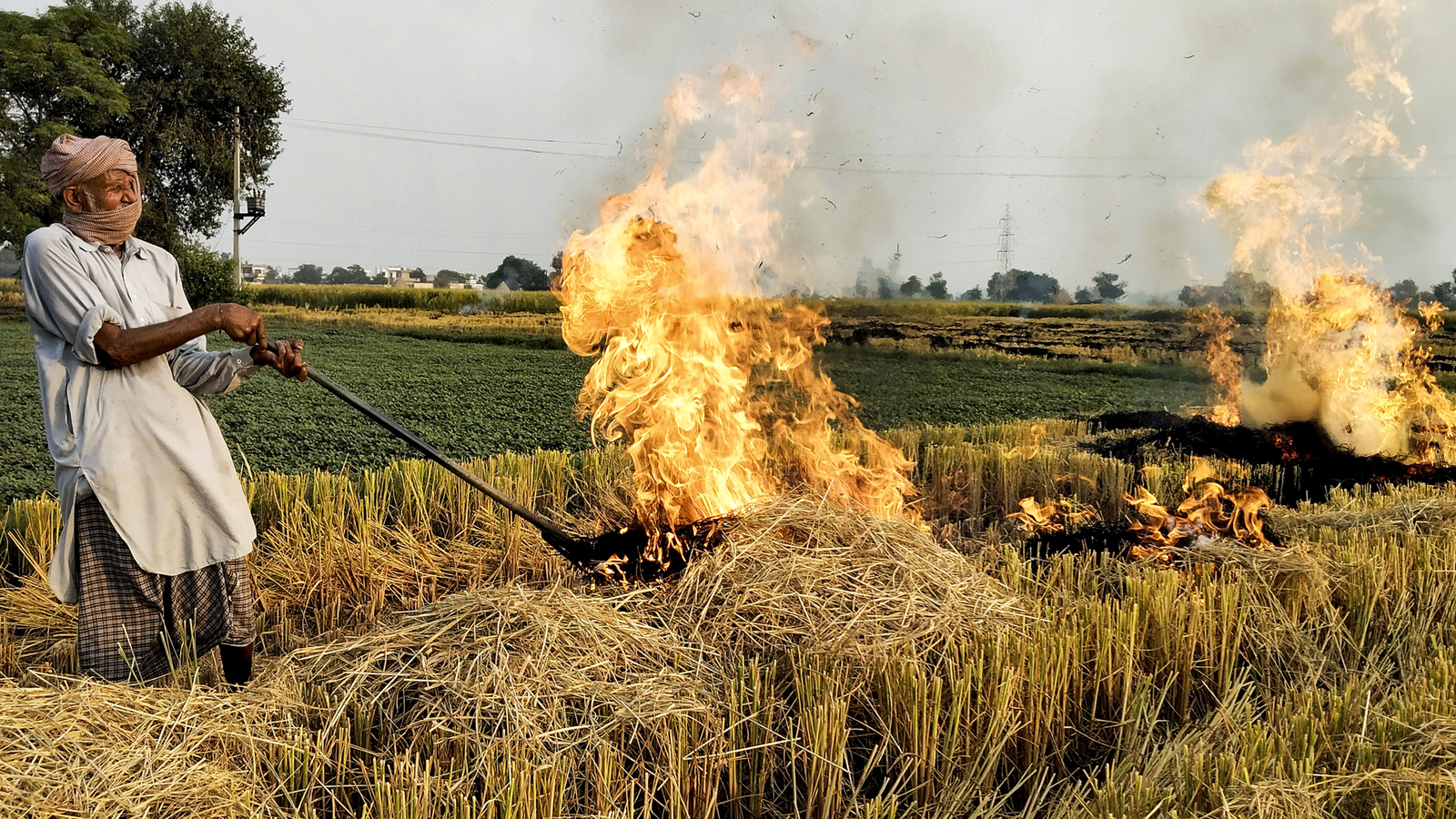
Every harvest season, a familiar crisis blankets sections of rural India. Fields are filled with mountains of crop residue—rigid straw, corn cobs, and stalks—that must be cleared immediately to make way for the next planting cycle. For a smallholder farmer balancing labor costs, tight deadlines, and unpredictable weather, manual clearing is financially exhausting. Consequently, millions resort to open stubble burning simply because a matchstick costs next to nothing.
But what solves a temporary logistical hurdle on the farm triggers a massive environmental footprint, releasing carbon back into the atmosphere and choking regional air quality.
Recognizing that farmers burn residue out of economic necessity rather than choice, lifelong friends Abhimanyu Rathi and Yogendra Panchal launched RenewCred out of Bengaluru. Their mission? Deploying an advanced digital framework that stops the smoke by transforming crop waste into verified carbon credits, funneling reliable parallel income directly back into rural households.
The Breakthrough: Lock the Carbon, Don't Release It
The platform's model rests on an elegant, science-backed foundation: plants spend months pulling carbon dioxide out of the air as they grow. When a farmer burns residue, that trapped carbon is instantly re-released.
RenewCred breaks this cycle through a clean-tech alternative:
-
The Transformation: The startup works alongside regional agrotech partners to collect crop waste right from the fields. Instead of being set on fire, the biomass is heated inside specialized, low-oxygen processing units.
-
The Yield: This process, known as pyrolysis, locks the carbon permanently into biochar—a dense, charcoal-like substance. When farmers mix biochar back into their acreage, it acts as a permanent sponge that retains soil moisture and cuts fertilizer runoff.
Behind the Scenes: The Three-Layer AI Watchdog
The biggest challenge in global carbon markets isn’t making biochar—it is proving to international buyers that the carbon was actually captured and that the data hasn't been faked. To solve this credibility issue, RenewCred built a data-driven verification engine.
The platform tracks the journey from field to facility using a custom three-layer Artificial Intelligence and Machine Learning framework:
[Layer 1: Data Verification] ──> [Layer 2: Fraud Detection] ──> [Layer 3: Algorithmic Math]
(Flags missing/odd metrics)       (Cross-checks GPS & weights)    (Calculates exact net carbon locked)
-
Integrity Layer: Checks all incoming field uploads for completeness, automatically filtering out unusual readings or manual data inconsistencies.
-
Anomaly & Fraud Prevention: Uses satellite telemetry and localized logistics data to verify that the biomass actually exists, confirming that a tractor did indeed pick up a specific volume from a specific geolocated farm plot.
-
Net Sequestration Math: Calculates the exact volume of net carbon safely locked away, factoring in the fuel used during transportation and processing.
Once verified by the AI, the credits are instantly minted onto a blockchain-enabled registry, creating a permanent, tamper-proof audit trail that global climate buyers can trust completely.
Real Farm Impact: Cash Flows from Waste
The economic shifts for early adopters are highly encouraging. For farmers like Hardik Vaghasiya from Gujarat, agricultural waste has evolved from an expensive headache into a legitimate revenue stream.
"As farmers, we think about crops, rainfall, soil, and market prices," Hardik reflects. "Carbon credits were not something we discussed. Earlier, we treated residue mainly as waste. Now we understand that it has real value if used properly."
Through this decentralized registry, participating smallholders are on track to generate thousands of verified credits, yielding an extra ₹30,000 to ₹45,000 in annual income per farm entirely from material they previously spent money to burn.
By building a science-led infrastructure that values grassroots actions, these two Bengaluru entrepreneurs are proving that the most sustainable way to protect the atmosphere is to make climate action a highly profitable choice for the people who feed us.