Democracy on Livestream: Inside the Tiny Indian Village Using AI to Redefine Local Governance
For the vast majority of India’s 2.5 lakh gram panchayats (village councils), local governance has historically been an analog, paper-heavy affair. If a resident needs to file a grievance, check village expenditures, or ask an agricultural expert for advice, it usually requires taking a day off work, traveling to a government office, and navigating long queues.
But in Mallaram, a quiet village of about 2,500 people tucked away in Telangana’s Rajanna Sircilla district, local governance now looks a lot like a forward-thinking tech ecosystem.
By building a hyper-local, smartphone-friendly digital command center from scratch, this small community achieved a national first: winning the top prize at the prestigious "Digital Krishi-Samridhi Gaav" competition, hosted by the Quality Council of India.
The Dynamic Duo Behind the Code
What makes Mallaram’s digital transformation remarkable isn’t a massive corporate grant or an expensive consultant team. The entire architecture was born out of a grassroots collaboration between a newly elected local leader and a college student.
When Sangam Arpitha assumed office as the village sarpanch (chief), she was determined to remove the opacity that often bogs down rural administration. To build the tools she envisioned, she partnered with her son, Samhith Reddy, a BTech student with a practical grasp of modern software development.
Together, they launched an official, comprehensive digital platform tailored specifically for their community. Crucially, they designed the entire interface in Telugu, eliminating the language barrier that frequently causes English-centric digital governance tools to fail in rural regions.
AI in the Soil: Closing the Information Gap
At the absolute center of Mallaram's platform is a suite of AI-driven agricultural utilities designed to take the guesswork out of farming.
Instead of broadcasting generic, one-size-fits-all weather updates, the platform uses intelligent data mapping to deliver highly localized, actionable field insights directly to farmers:
-
Predictive AI Crop Care: The system monitors real-time weather fluctuations, seasonal patterns, and soil indicators to push field-relevant crop care and pest management advice directly to growers' devices.
-
IVR Emergency Infrastructure: If a sudden thunderstorm or heavy rain anomaly is detected by regional sensors, the platform automatically triggers Interactive Voice Response (IVR) alerts, calling farmers directly to warn them before crops are ruined.
-
The Procurement Slot-Booker: Historically, harvest season meant farmers had to queue for hours—sometimes days—at local Indira Kranthi Patham (IKP) center points to sell their yield. Mallaram’s platform introduced an automated slot-booking tool, allowing farmers to reserve a precise drop-off time window and completely eliminating wasted logistical hours.
Radically Transparent: Livestreaming the Gram Sabha
While the agricultural tools secured the village's economic foundation, its transparency measures have rewritten the rules of rural democracy.
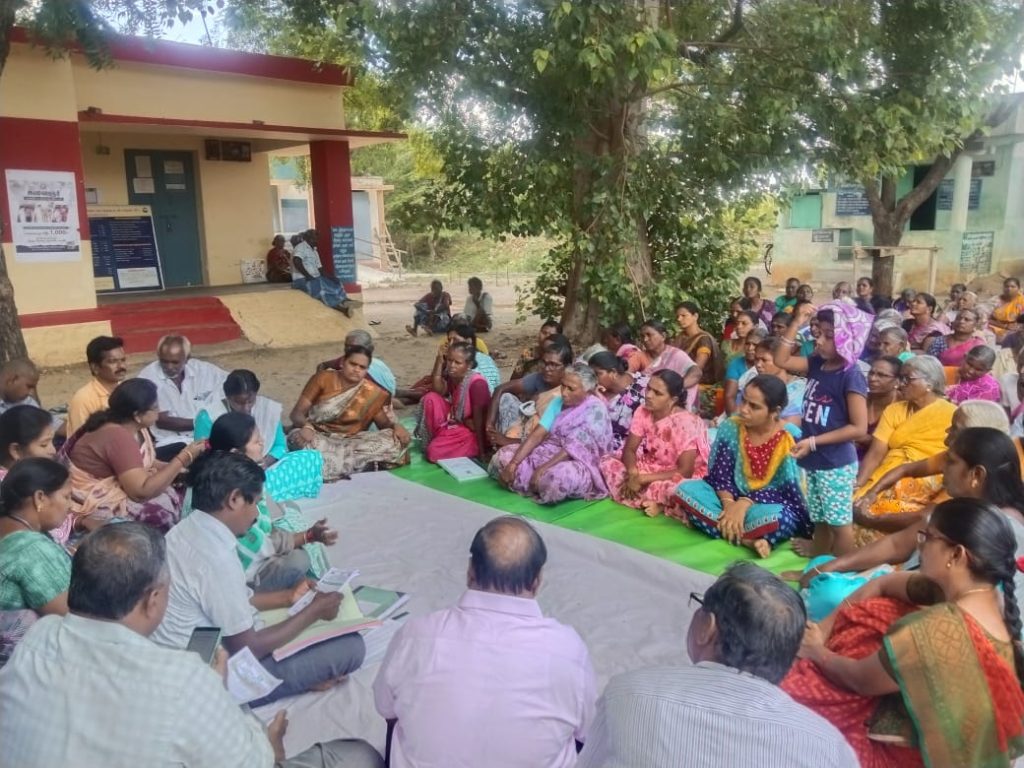
In an unprecedented move for an Indian village council, Mallaram began livestreaming its entire Gram Sabha (town hall) meetings directly through the community portal.
[Local Assembly Hall] ──(Real-Time Stream)──> [Official Village Portal] ──> [Accessible Globally to Migrants & Elders]
This simple digital window opened up participation to community members who traditionally found it difficult to attend in person—including the elderly, women managing household duties, and mobile laborers working outside the village lines.
The move has also struck a deeply personal chord with the village's diaspora. "There are around 200 to 300 youth from our village living abroad in various countries," sarpanch Sangam Arpitha noted. "Now, they are able to easily see and understand exactly what development is going on in their native village."
Alongside the live video feeds, the portal features a completely public ledger detailing every single rupee the panchayat receives, where funds are allocated, and exactly how development budgets are spent.
48-Hour Accountability
The transparency loop closes with an automated grievance redressal pipeline. When a resident encounters a broken street light, a water line issue, or a civic bottleneck, they log it directly onto the portal and instantly receive a digital tracking number.
The administrative backend mandates that complaints must be resolved within 48 hours or automatically escalated to higher district authorities.
Mallaram’s Digital Ecosystem at a Glance
| Feature Portfolio | Core Practical Benefit |
| AI Crop Advisories | Delivers customized pest and soil advice via Telugu interface |
| Digital Slot-Booking | Ends multi-hour wait times at harvest procurement centers |
| Open Ledger System | Displays real-time council income and development expenditure |
| Global Livestreams | Connects migrant youth and local residents to live town halls |
| 48-Hour Grievance Rail | Replaces slow, manual complaints with tracked digital resolutions |
Within just three months of going live, an astonishing 60% of Mallaram's entire population had become active users of the digital platform.
The Bottom-Up Blueprint
While state and central ministries roll out broad, macro-level digital policies across the country, Mallaram has proven that the fastest way to bridge the digital divide is from the bottom up. By matching advanced tech architecture with a deep, intuitive understanding of a village’s daily frustrations, this mother-and-son team didn't just build a highly functional website—they created a scalable blueprint for the future of clean, democratic rural governance.