AI Fruit and Vegetable Grading: How Technology Can Help Farmers Sell by Quality
Growing a good crop is only part of a farmer’s work. Sorting harvested produce by quality can help farmers prepare consistent batches, meet buyers’ requirements and explore better market opportunities.
When large, small, damaged and good-quality fruits are sold together, buyers may find it difficult to recognise the value of the better produce. Grading helps separate that harvest into clearly defined categories.
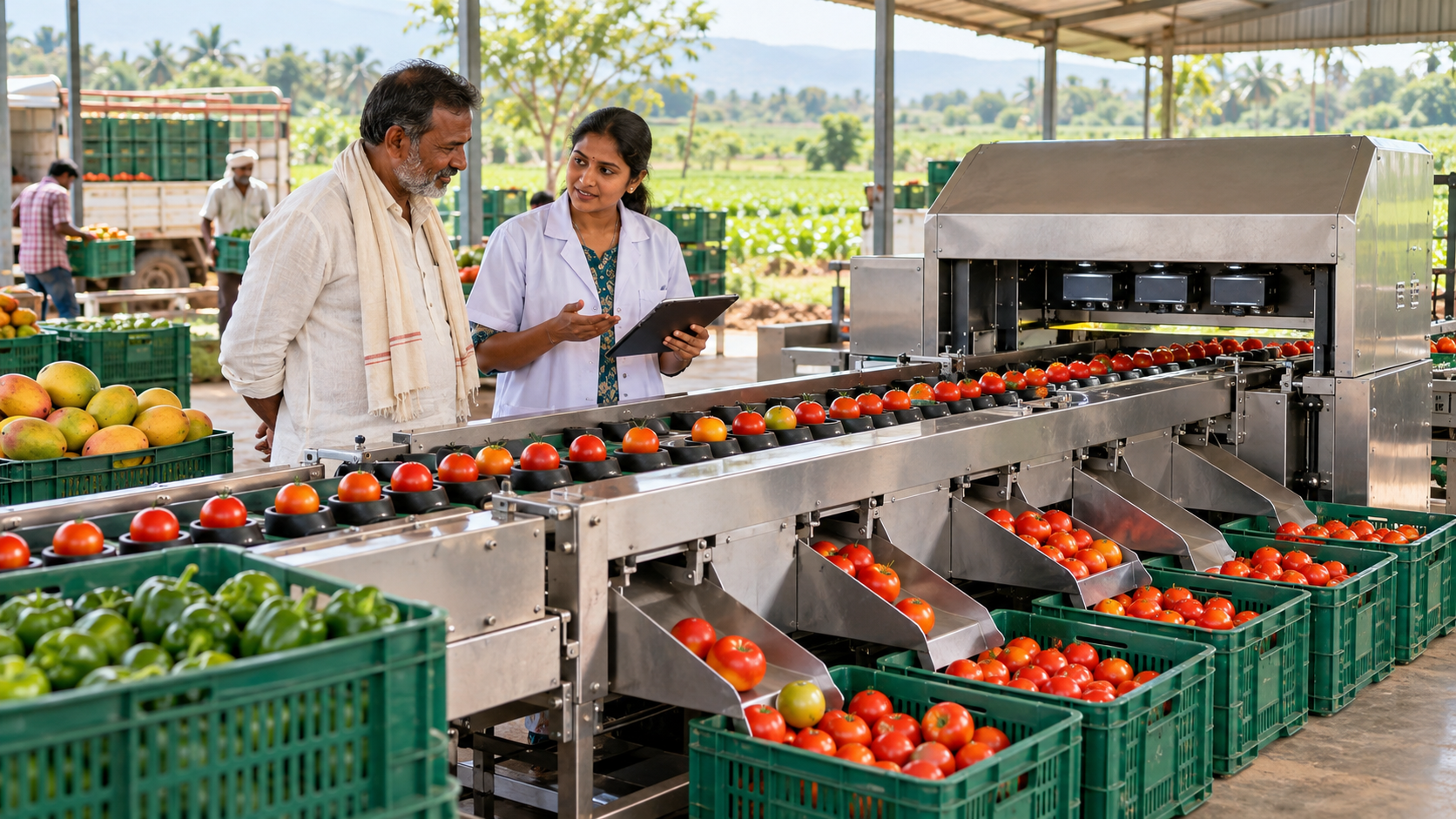
Indian agricultural technology company Sickle Innovations, through its Marsh Harrier brand, offers AI-powered sorting and grading solutions for fruits and vegetables. These machines bring camera-based inspection and automation into post-harvest handling.
What Is Fruit and Vegetable Grading?
Grading means separating produce according to characteristics such as size, weight, colour, shape and visible defects.
For example, a harvested batch can be divided into groups of similar-sized produce, with damaged items separated for further assessment. This helps sellers prepare batches that match a buyer’s specifications.
Grading does not improve the quality of a fruit or vegetable itself. It makes differences in quality easier to identify and manage.
Why Is Manual Grading Difficult?
Sorting a large harvest by hand takes time and labour. Different workers may judge size or appearance differently, making it difficult to maintain consistent standards across batches.
Automated grading machines can help carry out repetitive inspection and separation using selected criteria. Their usefulness depends on the crop, the machine’s capabilities and how carefully the system is configured.
The Innovation: Marsh Harrier Grading Machines
Marsh Harrier is owned and promoted by Sickle Innovations. The company offers machines for crops including apples, mangoes, pomegranates and citrus, alongside graders designed for multiple fruits and vegetables. Its headquarters is in Banda Thimmapur, Mulug, Telangana.
Different models offer different grading features. Farmers should check the specifications of the exact machine rather than assume every model can identify the same characteristics.
How Does Camera-Based Grading Work?
The process generally follows four steps:
-
Produce enters the machine. A conveyor carries individual fruits or vegetables through the inspection area.
-
Cameras capture images. These images provide information about the produce’s appearance.
-
Software analyses the selected characteristics. Depending on the model, these can include size, shape, colour and visible defects. Machines equipped for weighing also use weight measurements.
-
The machine separates the produce. Items are directed into different outlets according to the grading settings.
According to Marsh Harrier, its Small & Medium Size Vegetables Grader grades by size, shape, weight and external defects. The manufacturer lists a capacity of 1.5 metric tonnes per hour and says the machine can grade more than 18 types of fruits and vegetables on a single line. Actual performance should be confirmed through a demonstration with the intended crop.
How Can Grading Help Farmers?
Consistent grading can make it easier to explain produce quality to buyers and prepare suitable batches for packaging and sale. It can also help farmers and businesses identify which produce meets a particular buyer’s requirements.
However, grading does not guarantee a higher selling price. Returns depend on market demand, buyer preferences, transport costs and the cost of operating the machine.
Before investing, farmers should find out whether their buyers pay differently for separate grades.
An Opportunity for FPOs and Collection Centres
For small farmers, shared access through a Farmer Producer Organisation (FPO) or collection centre may be worth exploring.
Pooling produce can help a group assess whether there is enough daily volume to justify a grading machine. Marsh Harrier identifies collection centres, FPOs and small packhouses among the intended users of its multiple-produce grader.
What Should You Check Before Buying?
Ask for a demonstration using your own crop. Check the machine’s suitability, grading accuracy, handling damage, electricity requirements, cleaning needs and daily operating costs.
Also confirm installation charges, training, spare-parts availability and local service support. Compare the full cost with the likely benefit from your expected volume and market opportunities.
Grading can help farmers present their harvest more clearly and consistently. Its value grows when the right machine is matched with the right crop, sufficient volume and buyers who recognise different quality grades.
Follow Kisan360.in for practical information about agricultural tools, farm machinery and innovations that help farmers make informed decisions.
Sources: Marsh Harrier product specifications | About Sickle Innovations and Marsh Harrier