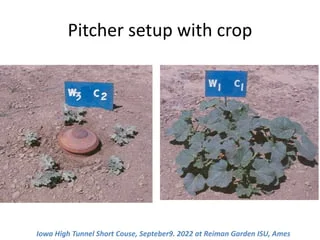
When water is scarce, traditional surface watering methods often result in high evaporation and wasted water. Pitcher irrigation offers an ancient yet highly efficient solution using simple unglazed clay pots buried in the ground near plant roots.
How Does Pitcher Irrigation Work?
-
An unglazed clay pot (pitcher) is buried neck-deep in the soil adjacent to crops or young plants.
-
The pot is filled with clean water and covered with a lid to stop evaporation.
-
Water slowly seeps through the natural micro-pores of the pot's walls directly into the surrounding root-zone soil as the plants consume moisture.
Why Use Pitcher Irrigation?
-
Ideal for Small Farms & Kitchen Gardens: Highly effective for growing vegetables and supporting young fruit saplings in dry regions.
-
Direct Root-Zone Hydration: Eliminates surface runoff and minimizes weed growth by keeping the topsoil dry while maintaining sub-surface soil moisture.
-
Efficient Water Usage: Significantly reduces the total volume of water needed per crop cycle.
Best Practices for Farmers:
-
Regular Monitoring: Routinely inspect the water levels inside the pots and check surrounding soil moisture.
-
Factors to Consider: Irrigation frequency depends on the size and porosity of the clay pot, soil texture, crop type, and local temperatures.
-
Trial Strategy: Start with a small pilot plot to observe crop performance before expanding across larger farm areas.